
Last updated November 23, 2026
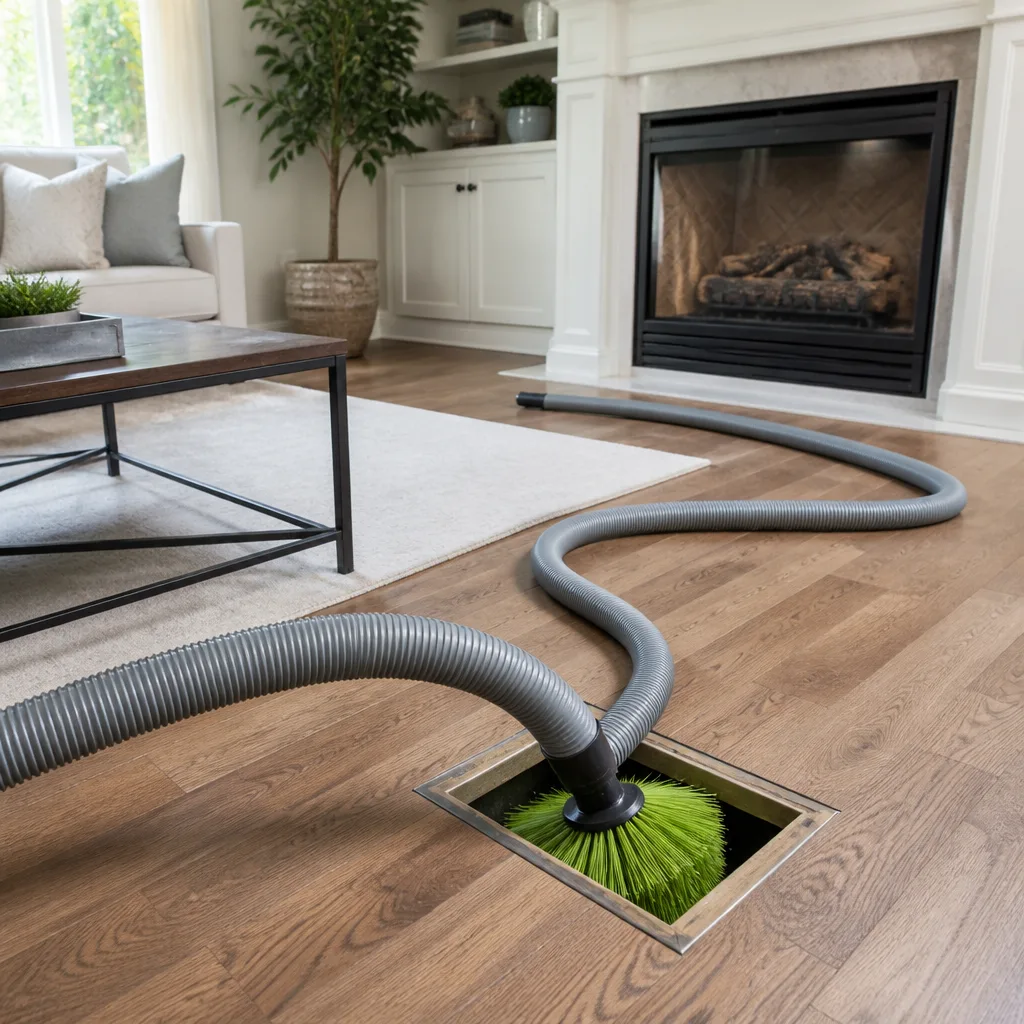 Whole-home duct cleaning
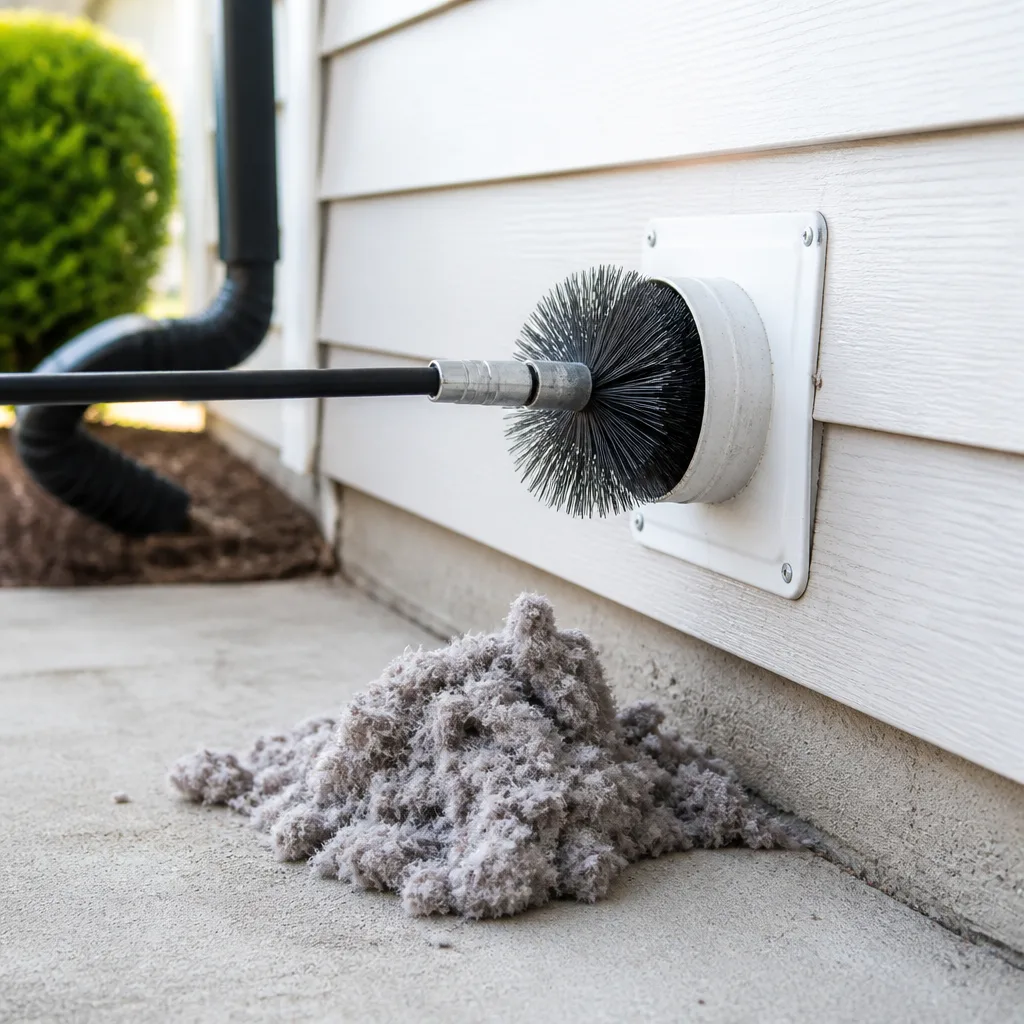 Dryer vent cleaning
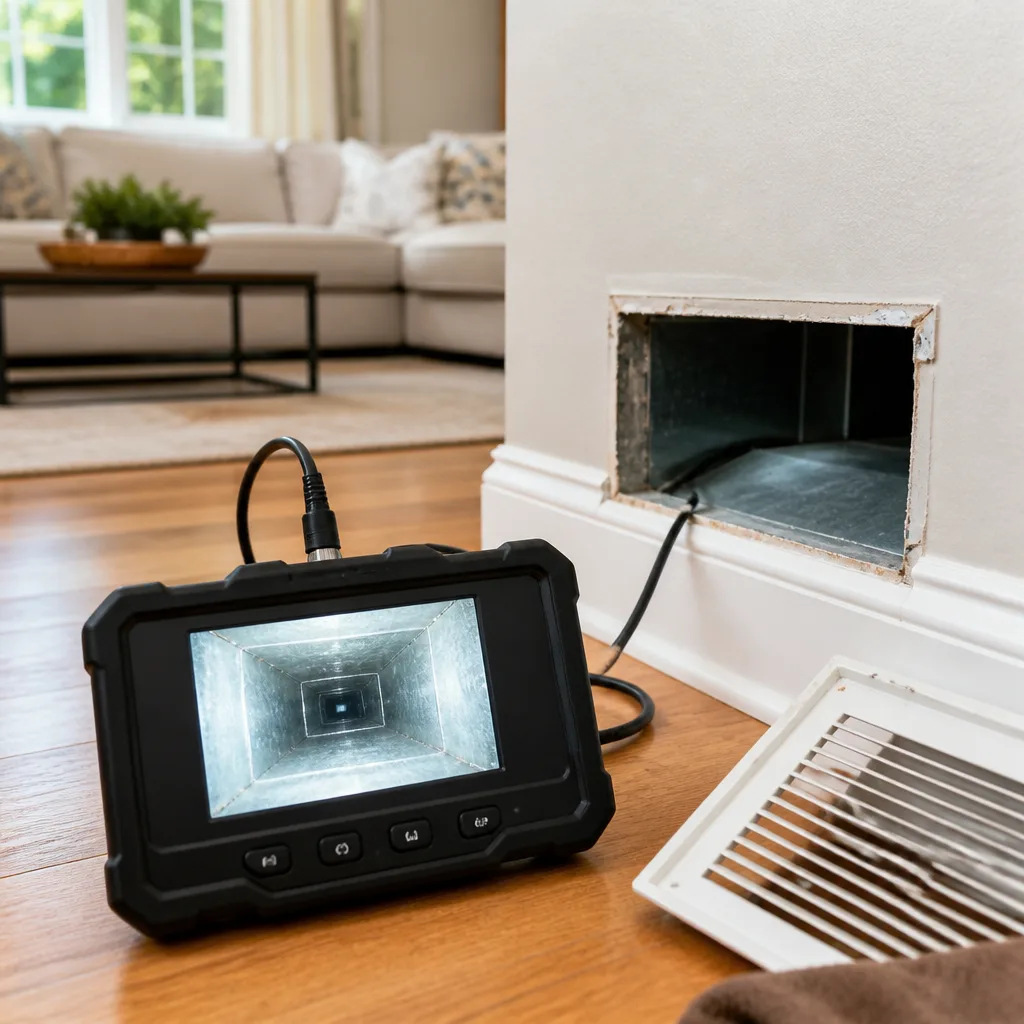 Camera inspection
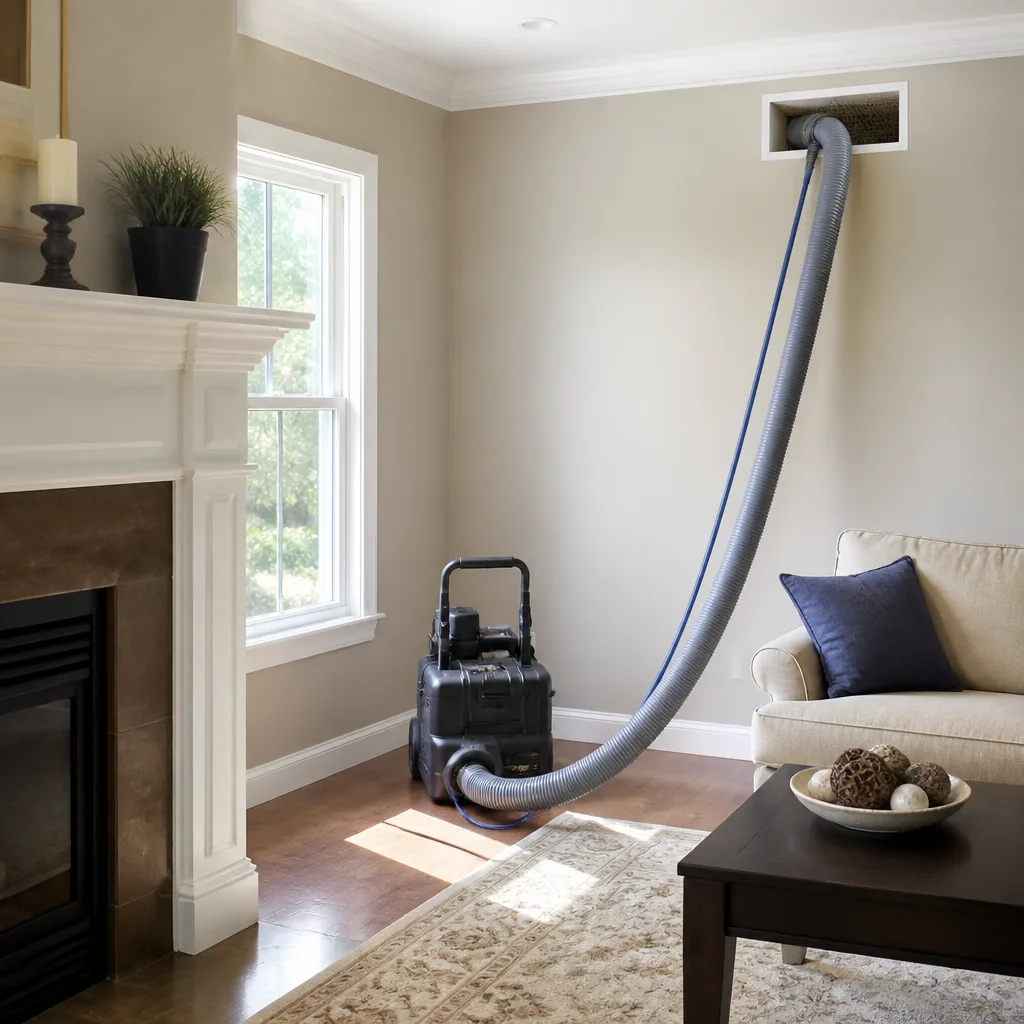 Sanitizing & deodorizing
Whole-system duct and dryer vent check with before-and-after photos - you see exactly what came out of your vents
That "$99 whole-house special" is a bait ad - the real number appears once they are in your hallway, or the "clean" is a shop-vac at the register. We photograph the inside of your ducts before and after instead.
DIY vs Professional Air Duct Cleaning: The Westpark Homeowner’s Decision Guide
Here’s a detail most duct cleaning advice skips: a homeowner with a shop vac and a brush attachment can genuinely clean the first 18 inches of a duct run. It’s the section a trained technician would clean last, because it’s the least contaminated part of the whole system. The dust, dander, and settled debris that actually matter are further down the trunk lines and inside the plenum, where a consumer vacuum loses its pull long before it reaches. The DIY vs. professional question usually gets framed as a matter of effort or budget. It’s really a matter of physics, and specifically negative pressure. This guide walks through what consumer tools can and can’t do, what’s worth handling yourself, when a DIY attempt makes things worse, and how the cost comparison looks once you account for equipment rental and incomplete results. Westpark Air Duct Cleaning works on Westpark systems every week, and we’ll point you to the right answer either way.
Quick Answer
DIY air duct cleaning is fine for register grilles, filter swaps, and routine dryer vent upkeep, but it cannot replicate what a professional system does inside the ductwork, because no consumer vacuum creates enough negative pressure to contain and extract dislodged debris. A pro uses high-CFM equipment, rotary brushes, and on-site air filtration to pull contamination out of the system without redistributing it into your living space. For any Westpark home where the ducts haven’t been cleaned in years, where someone has allergies or asthma, or where a renovation just wrapped up, professional cleaning is the correct call.
Styles & brands we work with
- Whole-home duct cleaning
- Dryer vent cleaning
- Camera inspection
- Sanitizing & deodorizing
Table of Contents
- Why Negative Pressure Is the Whole Ballgame
- What You Can Actually Accomplish with Consumer Tools
- Where DIY Duct Cleaning Goes Wrong
- The Flex Duct Problem in Westpark Homes
- Real Cost Comparison: Rental, Time, and Follow-Up
- When DIY Makes Sense Before a Professional Visit
- How a Professional Cleaning Actually Works
- What Goes Beyond Cleaning: Sealing, Sanitizing, Dryer Vents
Why Negative Pressure Is the Whole Ballgame
Air duct cleaning is a containment problem before it’s a cleaning problem. When you agitate dust inside a duct, that dust has to go somewhere. If the system is under enough negative pressure, the loose material gets pulled toward the vacuum source and captured. If it isn’t, that same dust plume rides the airflow back out through every open register in the house. That’s the difference between cleaning a system and stirring one up.
Professional equipment from Rotobrush and Nikro is built around that principle. Rotary brush systems create mechanical agitation inside the duct while a high-CFM vacuum holds negative pressure on the whole run, so the moment a brush disturbs caked-in debris, it’s already moving toward the collector rather than the nearest vent. During a Westpark Air Duct Cleaning job, we also run Abatement Technologies air filtration units in the work area to catch whatever escapes the duct during the process. That’s a second layer of containment, and it’s the piece most DIY setups skip entirely.
Why a consumer shop vac can’t substitute:
- Airflow, not suction rating. Shop vacs are rated for static suction in a sealed test, not for sustained CFM through a long duct run. By the time the hose reaches the far end of a trunk line, the pull is negligible.
- No rotary agitation. A static vacuum loosens very little that’s actually adhered to duct walls. Rotary brushes and air whips do the disturbing work that makes extraction possible.
- No containment on the exhaust side. Even a HEPA shop vac exhausts fine particles back into the room where it’s running, which means you’re trading duct dust for airborne dust.
- No whole-system coverage. The plenum, the trunk lines, the branch runs, and the coil area need to be addressed as one system. A shop vac reaches one register at a time.
That last point matters most. Debris that gets dislodged without containment doesn’t disappear. It settles back onto duct floors, onto coils, and onto living-room surfaces. A partial job can leave a home visibly dirtier than it started, which is why we treat containment as the core of the process, not an accessory.
What You Can Actually Accomplish with Consumer Tools
Before we make the professional case, let’s be honest about what a homeowner can do well. There’s a real list here, and it isn’t short. Register-level cleaning, filter maintenance, and dryer vent upkeep all fall comfortably within reach of a homeowner with basic tools and an hour to spare. Doing these tasks regularly means a future professional cleaning has less to fight through.
What’s worth doing yourself:
- Register grille cleaning. Pop the grille off, vacuum both faces with a brush attachment, wash it in the sink if it’s plastic, and let it dry fully before reinstalling. Do this once a season in Westpark homes with pets.
- Visible dust around the register boot. The first few inches past the grille often collect a ring of dust that a hand vac can lift without danger to the duct.
- Filter changes. Swap the return-air filter on the schedule the manufacturer specifies. In Westpark, dust load varies with the season and with nearby construction, so check the filter monthly rather than trusting a fixed interval.
- Dryer vent upkeep. Clear the lint trap every cycle. Vacuum the exhaust path behind the dryer with a long brush kit. Keep the outdoor flap clear of obstruction. This is the most important maintenance task a homeowner can own outright.
- Ductwork inspection from outside. Look at exposed ducts in the garage or attic for disconnected joints, obvious tears in the outer jacket, or visible lint accumulation. Note what you find so a technician can plan around it.
These tasks reduce surface contamination and airflow restriction from the vent side. They don’t clean the inside of a duct run, and they won’t touch a coil or a plenum. If your only concern is that a register looks dusty, DIY is genuinely enough. If you’ve got allergies, pets, recent renovation dust, or a system that hasn’t been touched in years, the register view understates the problem.
Where DIY Duct Cleaning Goes Wrong
The failure mode with DIY duct cleaning isn’t usually a visible disaster. It’s a quiet redistribution, followed by a homeowner who can’t figure out why the air smells worse two weeks after they tried to fix it. That happens because the consumer tools that loosen debris are not the tools that capture it, and the household HVAC system is a closed loop that recirculates what’s inside it.
Common ways a DIY attempt makes things worse:
- Blowing instead of pulling. Leaf blowers and compressed air aimed into a vent push dust deeper into the trunk and into the coil, where it’s harder to remove later.
- Ripping flex duct liner. Flexible duct has a thin inner liner. A consumer brush snags it, tears it, and leaves an open flap that birds, moisture, and dust all find their way into.
- Dislodging a connection. The friction-fit joints at boots and trunk takeoffs come apart under sideways pressure from a shop vac hose. Once a joint separates, conditioned air leaks into the wall cavity or attic instead of into the room.
- Coil damage. The evaporator coil fins bend easily. A homeowner poking around the plenum can flatten them, cutting system efficiency and creating a repair bill that far exceeds what cleaning would have cost.
- Amplifying allergen load. In a home with allergies or asthma, a DIY attempt that stirs up mold spores or pet dander without containment can trigger symptoms within hours.
- Missing the contaminant source. A musty smell coming from a return line usually means moisture intrusion somewhere in the system. Vacuuming the duct doesn’t fix a moisture problem, it just gives it somewhere new to grow.
We’ve seen all of these in Westpark homes. The pattern is consistent: the more aggressive the DIY attempt, the more likely the follow-up call involves duair duct cleaning work alongside ct repair to undo what the shop vac did before the actual cleaning can start. That’s a costly way to learn the lesson. If you’re going to try DIY at all, stay in the register-to-filter lane and leave the duct interior alone.
The Flex Duct Problem in Westpark Homes
Flex duct shows up widely in Westpark homes, especially in additions, converted garages, and upper-floor runs where rigid ductwork was difficult to route. It has a lot of advantages: cheaper to install, faster to route, and forgiving of odd angles. It also has one significant limitation for anyone doing DIY cleaning work. The inner liner is a thin polymer skin stretched over a wire helix, and it tears easily.
Once that liner tears, three things happen. First, the tear becomes a trap for dust and lint, so the duct gets dirtier faster than it was before. Second, the exposed wire helix catches even more material. Third, conditioned air bypasses the liner and leaks into the surrounding cavity, wasting energy and pulling in unconditioned air. A torn flex liner is one of the most common things we find behind registers in Westpark, and it almost always traces back to a homeowner or a previous service attempting to clean without knowing how flex behaves.
Professional equipment handles flex duct differently. Rotary brushes run at low speed and specific torque on flex runs, and technicians work the brush from the inside of the duct rather than dragging it in and out from the register. The vacuum holds the liner in its expanded shape while the brush passes through. That control is difficult to reproduce by hand, and the cost of getting it wrong is a duct replacement.
Rigid sheet metal ductwork is more forgiving. It can take more mechanical agitation, and if a joint comes loose, it’s a simple reseal. But rigid runs are typically the ones buried behind walls or run through the attic, which means a homeowner with a shop vac is unlikely to access them in the first place. That’s the practical reality for most Westpark homes: the ductwork you can reach is the ductwork you shouldn’t be cleaning, and the ductwork you should be cleaning is the ductwork you can’t reach.
Real Cost Comparison: Rental, Time, and Follow-Up
The cost comparison between DIY and professional duct cleaning looks different once you account for three things most comparisons leave out: equipment rental, real time, and the odds of needing a professional follow-up anyway. A truck-mounted or high-CFM portable system is not the kind of equipment you rent for a weekend project, and what you can rent at a home improvement store is a step above a shop vac but still falls well short of the negative-pressure requirement.
A line-by-line view of what the two paths actually involve:
- DIY time investment: a full Saturday for register cleaning and filter swaps, or two days if you’re trying to reach exposed duct in an attic.
- DIY equipment rental: a shop vac rental, a brush kit, and a HEPA filter run a modest total, and none of it addresses negative pressure.
- DIY coverage: registers, boots, and whatever exposed duct the homeowner can reach. Plenum, coil, and trunk lines remain untouched.
- DIY follow-up odds: high in any home with pets, allergy sensitivities, renovation dust, or low airflow complaints. You end up paying for the professional visit anyway, plus whatever repair the DIY attempt required.
- Professional cost: one flat price per system, agreed before work starts. That price covers the whole air pathway, including the parts a homeowner can’t reach.
- Professional containment: included. Nothing gets redistributed into the living space.
- Professional visible result: before-and-after photos of your own ducts, so you can see what changed.
In our experience, the honest cost comparison in Westpark is this. DIY wins clearly if the task is register cleaning, filter changes, or dryer lint upkeep. It loses once the system itself needs cleaning, because the equipment required is not rentable at a consumer price point, and the likelihood of a professional follow-up turns a “cheaper” DIY attempt into a higher total. That’s the calculation worth running before the shop vac comes out.
When DIY Makes Sense Before a Professional Visit
There are real scenarios where a bit of DIY work before the professional arrives makes the professional visit more effective. Doing a quick pass first isn’t wasted effort; it clears the way for the work that matters. This is the one area where DIY and professional aren’t opposed. They stack.
When to do a DIY pass first:
- Right after a renovation. Sweep and vacuum the construction-adjacent surfaces before the ducts are professionally cleaned, so the professional extraction isn’t fighting a fresh dust layer on top of the system.
- When moving into a home. Swap filters, clean registers, and inspect for visible damage before scheduling a full cleaning. It helps the technician distinguish pre-existing issues from anything found during the service.
- Before allergy season. Register-level cleaning and filter swaps reduce the surface load going into the seasonal worst weeks, and make professional cleaning more efficient.
- When a single vent smells off. Clean the grille and boot first. If the smell persists, that’s the signal to call.
- Right after a dryer vent inspection. Clear the accessible lint path so a professional check focuses on the parts you can’t reach.
The general rule: DIY handles the surface, professional handles the system. If a task can be done without disconnecting anything, opening a duct, or running a tool inside a duct run, it’s fair game. If it requires opening the system, it belongs to a technician.
How a Professional Cleaning Actually Works
If you’ve never watched a professional duct cleaning process, the sequence may surprise you. It’s more orderly than a homeowner with a shop vac, and each step exists because skipping it would cause the next step to fail. Westpark Air Duct Cleaning follows the same sequence on every system, whether it’s a small ranch or a multi-story with several trunk runs.
The typical sequence:
- Inspection and system mapping. We identify every register, return, and trunk line, note flex vs. rigid duct, and check for existing damage before touching anything.
- Containment setup. Register grilles come off, and Abatement Technologies air filtration units are placed in work areas to capture anything that escapes.
- Negative pressure. A Nikro HVAC vacuum connects to the trunk line, drawing the whole system into negative pressure before cleaning begins.
- Rotary brush agitation. Rotobrush rotary brush systems work through each branch run and trunk, loosening caked debris from duct walls while the vacuum pulls it toward the collector.
- Plenum and coil area. The areas near the air handler get attention next. Coils get gently brushed, and the plenum gets vacuumed without disturbing the coil fins.
- Register and boot cleaning. Once the ducts are clean, the visible portions come last, since they’re the least contaminated and cleaning them first would just mean re-soiling them.
- Verification and photos. Before-and-after photos of the duct interior give the homeowner a record of what was removed.
That sequence is why the “clean the first 18 inches” approach never works as a substitute. It’s genuinely the last step in a real cleaning, not the first. And it’s why a professional visit can surface a duct repair need that a DIY pass would have missed entirely.
What Goes Beyond Cleaning: Sealing, Sanitizing, Dryer Vents
Cleaning removes contamination, but it doesn’t fix the reasons the system got contaminated in the first place. A leaking joint pulls in attic or crawlspace air, which brings dust and moisture with it. A torn liner catches debris faster. A system that hasn’t been sealed will be dirty again sooner, no matter how thorough the cleaning was. That’s why Westpark Air Duct Cleaning treats duct cleaning as part of a broader indoor air quality service rather than a standalone job.
The service menu beyond cleaning:
- Duct repair and sealing. Loose joints, torn flex liner, and disconnected boots get repaired and sealed so the system stops pulling in contaminants and stops bleeding conditioned air.
- Sanitizing. Guardsman-grade treatment products get applied inside clean ducts to address residual microbial growth once the source has been removed.
- Air quality products. As an authorized supplier of Honeywell and Aprilaire products, we can install filtration and humidity control equipment that addresses air quality at the source, not just once a year.
- Dryer vent cleaning. A separate service that matters for safety. Lint accumulation in the exhaust path is a documented fire risk, and clearing the exhaust improves drying performance as a side benefit. It’s worth scheduling alongside regular duct work.
Each of these services answers a question a DIY attempt can’t. DIY removes surface dust. A full indoor air quality approach asks why the dust was there, seals the path that let it in, and installs filtration that keeps the air cleaner between cleanings. That’s what “your entire air system, cleaned, sealed, and treated” means in practice.
Common Mistakes to Avoid
- Assuming the shop vac reached the whole duct. It didn’t. Suction drops below useful levels within a few feet of the hose, so what you cleaned was a fraction of the actual run.
- Using a leaf blower or compressed air inside a vent. This pushes dust deeper into the trunk line and onto the coil, where it’s harder and more expensive to remove.
- Dragging a brush through flex duct. The inner liner tears easily, and a torn liner turns a maintenance task into a duct replacement. This is the most common DIY error we see in Westpark homes.
- Poking around the plenum without knowing what’s where. Coil fins bend under very light pressure, and the plenum is not a safe part of the system to explore.
- Ignoring the dryer vent. Lint buildup in the exhaust path is a fire hazard and one of the simplest things to check. Skipping it is the highest-cost shortcut on this list.
- Cleaning registers but not filters, or vice versa. A clean register with a clogged filter just means the dust comes back within weeks.
- Hiring on price alone. If a quote seems very low, ask what it includes, whether the whole system is covered, and whether containment is part of the process. A cheap sweep of registers isn’t the same job as a full cleaning.
See the difference
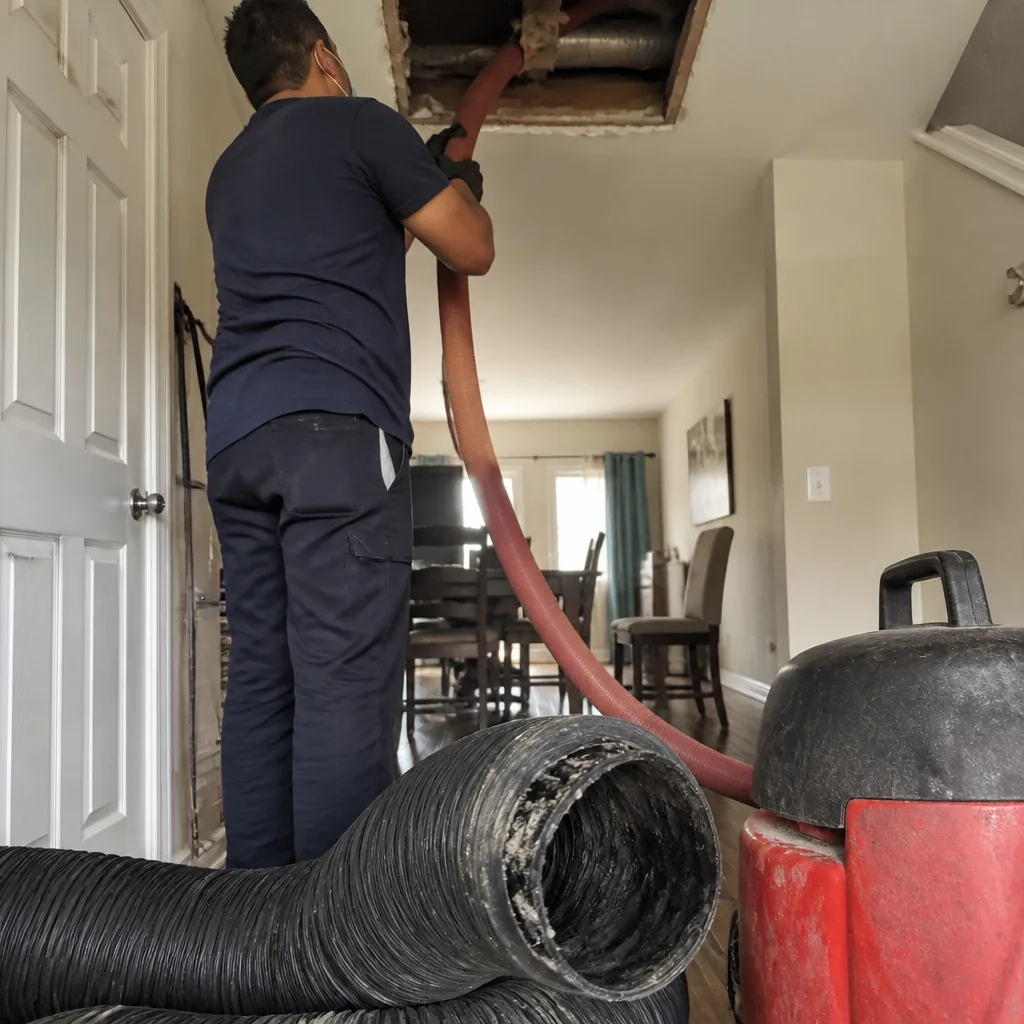 Before
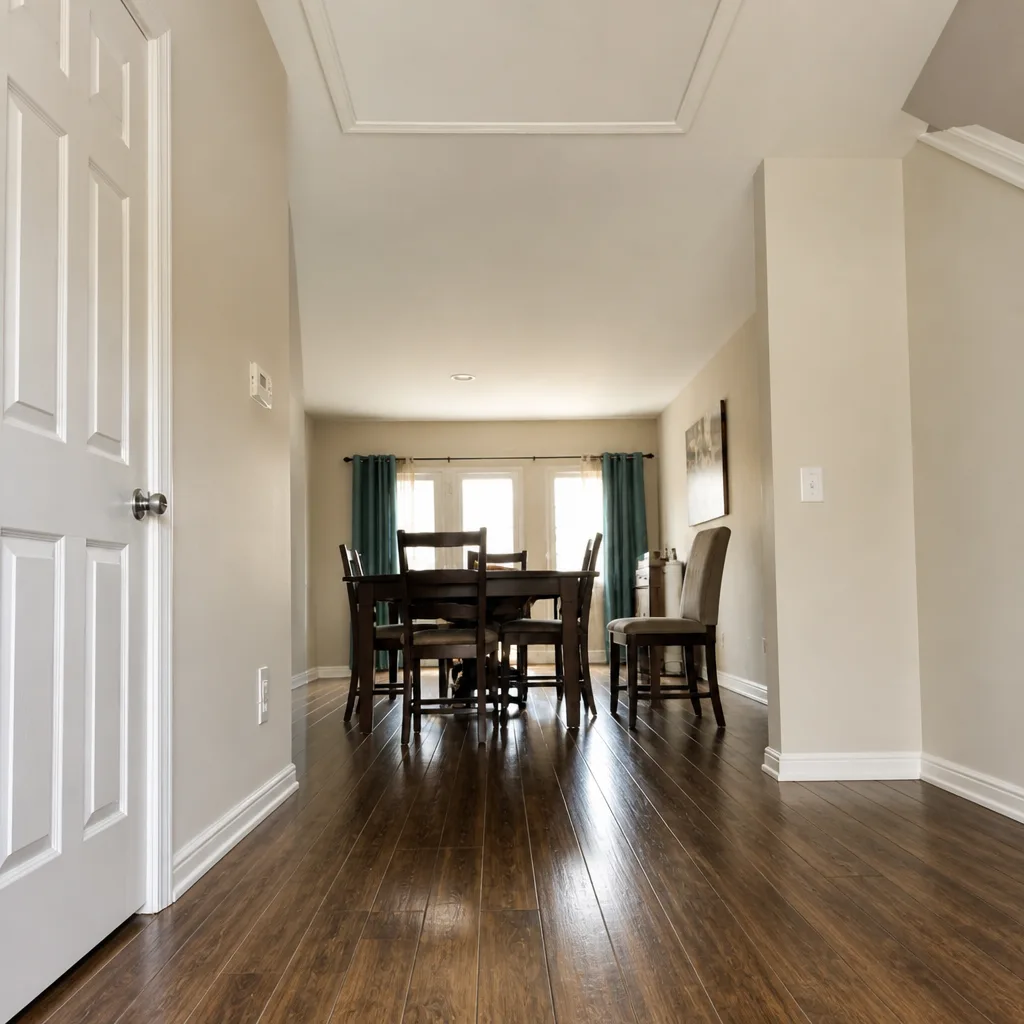 After
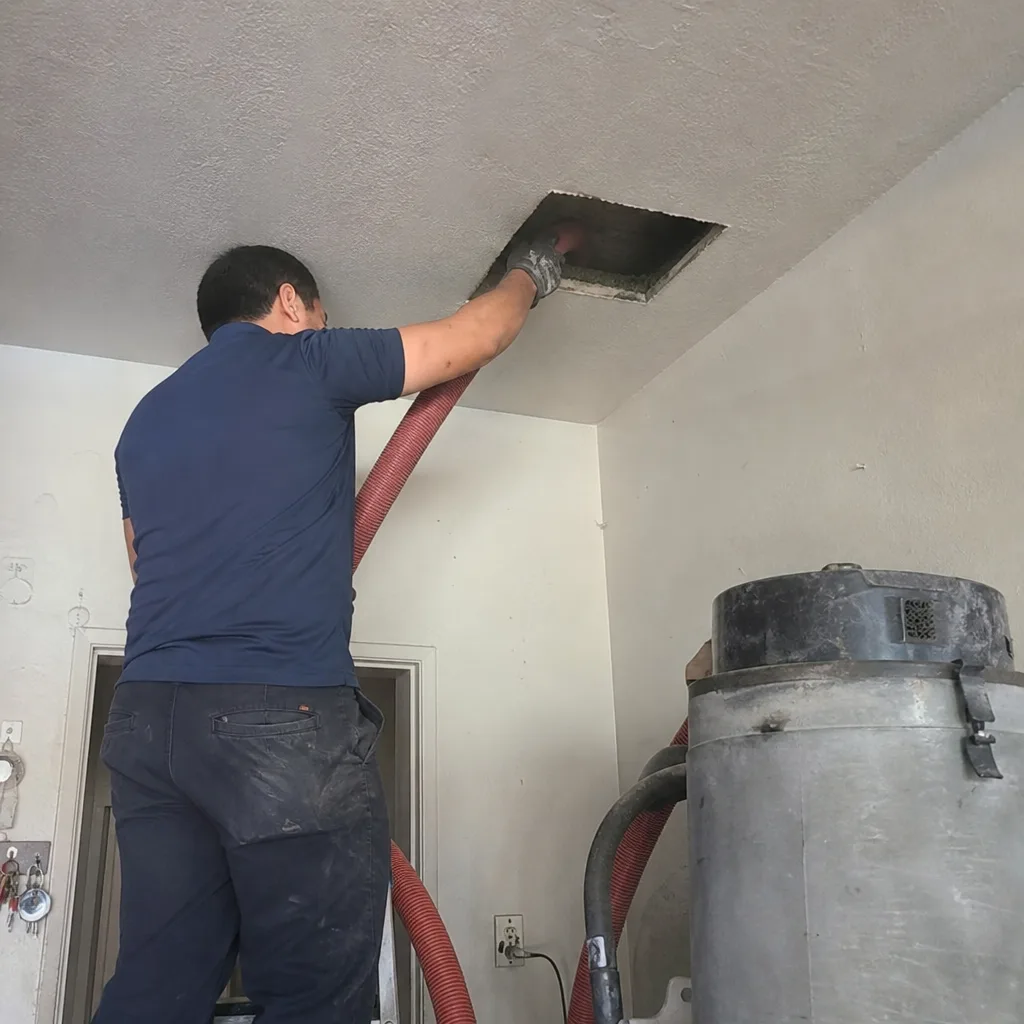 Before
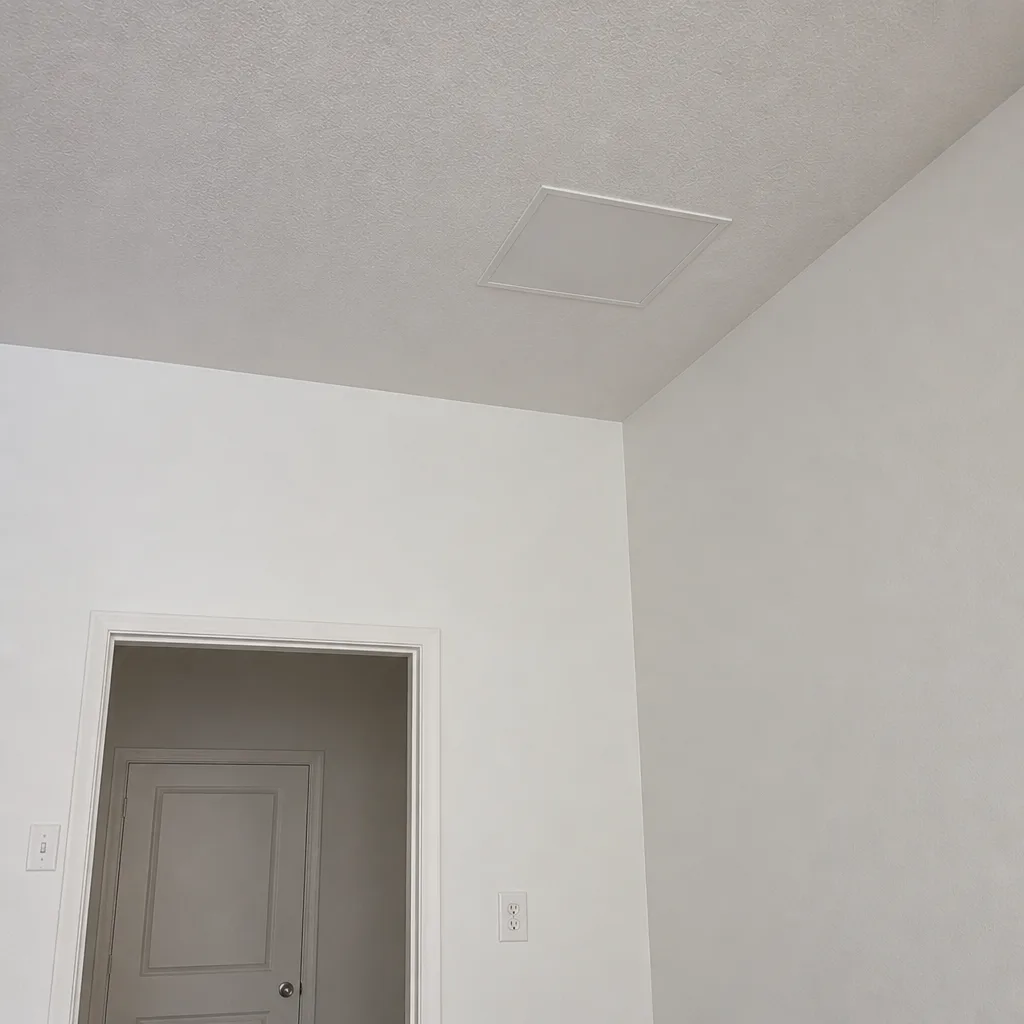 After
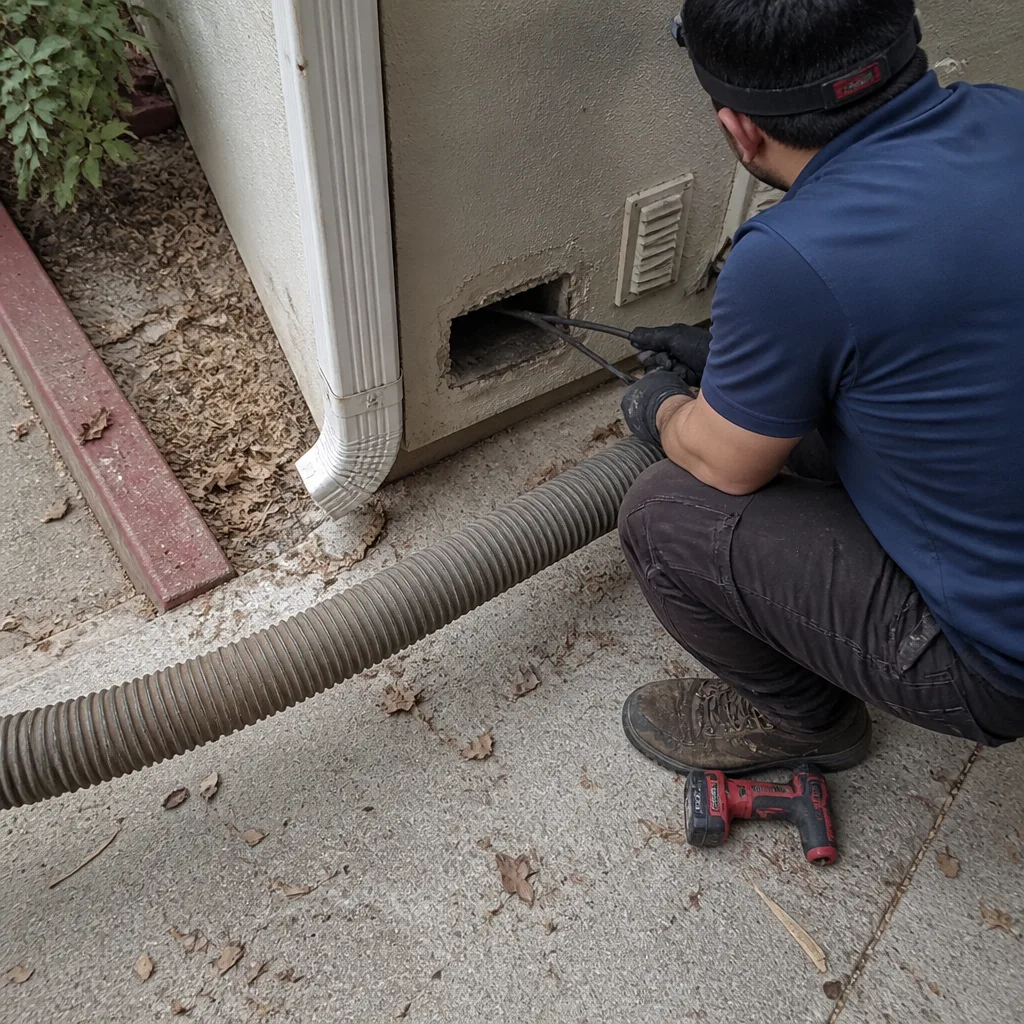 Before
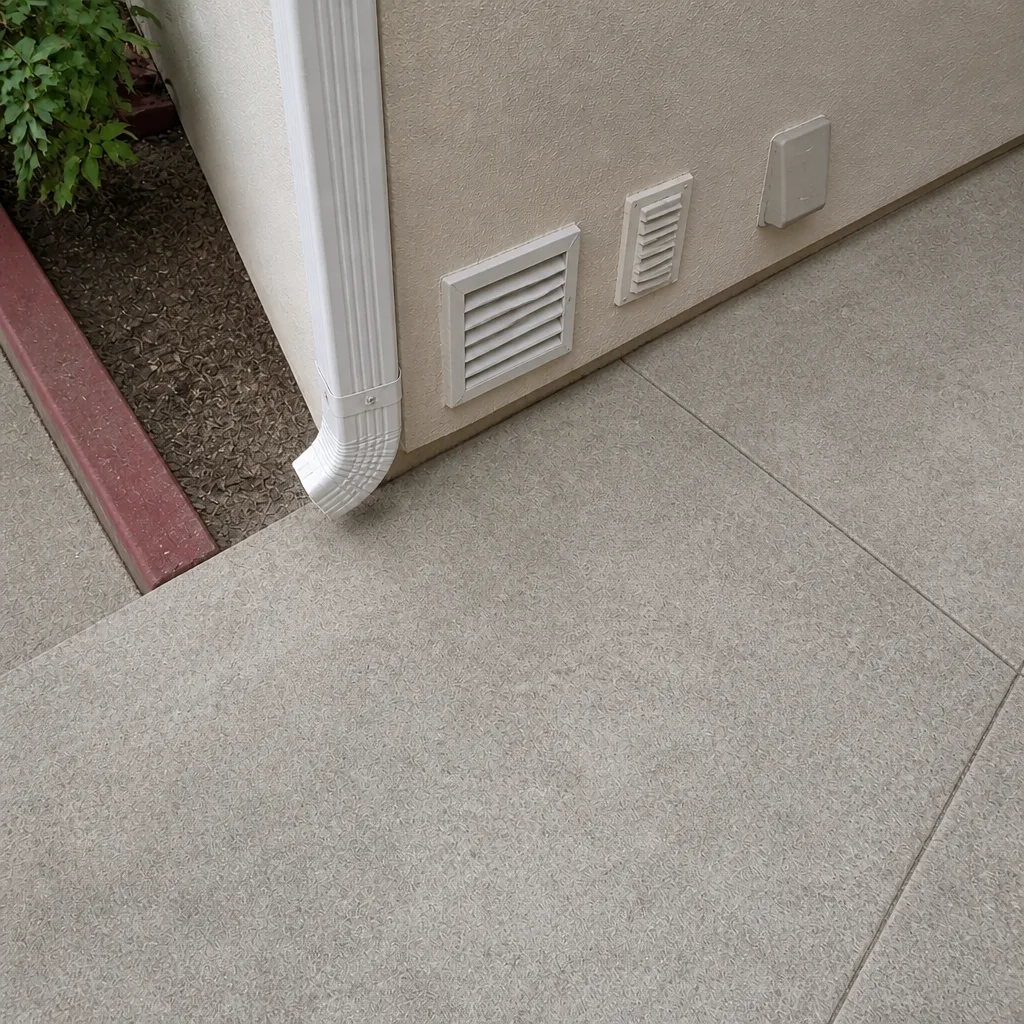 After
When to Call a Professional
Call for professional help when the situation crosses from surface to system. That means any of the following: the ducts haven’t been cleaned in years and the system runs regularly, someone in the home has allergies, asthma, or other respiratory sensitivities, the home has pets that shed, a renovation recently wrapped up, airflow has dropped noticeably at multiple registers, dust reappears on surfaces within days of wiping them down, or you can see damage to ductwork, joints, or the air handler area. In any of these scenarios, a DIY attempt is more likely to stir up contamination than address it.
Westpark Air Duct Cleaning offers free estimates in Westpark, and we’re happy to walk you through what your system actually needs before you spend anything. Call (877) 820-9652. We answer 24/7. Fast dispatch from 7am to 7pm, Sunday through Friday.
Frequently Asked Questions
Cost depends on system size, number of registers, and whether additional services like repair, sealing, or sanitizing are needed. We give one flat price per system, agreed before work starts, so the written estimate sets the final price. Call (877) 820-9652 for an exact quote – estimates are free.
Because they cover less. A low quote often means a register-only sweep rather than a full-system cleaning, no containment equipment, and no coverage of the plenum or coil area. The number looks small because the scope is small, not because the work is efficient. Ask any provider what the quote includes, and compare on scope rather than headline price. Call (877) 820-9652 for a walkthrough of what a full-system cleaning involves.
Yes, up to a point. Clearing the lint trap every cycle, vacuuming the exhaust path behind the dryer, and keeping the outdoor flap clear are all reasonable homeowner tasks. A professional dryer vent cleaning is the right call if you haven’t had the full exhaust run cleared in a while, if the dryer takes noticeably longer to dry clothes, or if you have no way to reach the exterior termination point. Call (877) 820-9652 to schedule.
Ask for before-and-after photos of your own ducts. At Westpark Air Duct Cleaning, we document the interior of the ductwork before and after the cleaning so the homeowner has a record of what was removed, not just a claim that it was. If a provider can’t show you photos, ask why. Call (877) 820-9652 to schedule with documentation included.
Most homes do well with a professional cleaning every few years, and the interval shortens if the home has pets, allergy-sensitive occupants, recent renovation dust, or a history of smoking indoors. If you’re seeing dust reappear within days of wiping surfaces clean, airflow has dropped, or a musty smell shows up when the system runs, that’s the signal to schedule sooner rather than later. Call (877) 820-9652 for a system assessment.
Rotobrush rotary brush cleaning systems and Nikro HVAC vacuum equipment for the cleaning itself, Abatement Technologies air filtration units for on-site containment, and Guardsman-grade treatment products for sanitizing. We also install Honeywell and Aprilaire indoor air quality equipment when a home needs filtration or humidity control beyond a one-time clean. All of this matters to the result, and we’re happy to explain each part of the process before we start. Call (877) 820-9652 to book an estimate.
The Bottom Line
The DIY vs. professional question has a clear answer once you understand what separates the two: negative pressure. Consumer tools can clean registers, swap filters, and maintain a dryer vent. What they cannot do is create enough negative pressure to contain and extract dislodged debris from inside a duct run. And the duct interior is where the contamination that affects air quality actually lives. Westpark homeowners have three good moves available. Keep up the register-and-filter maintenance, schedule professional HVAC cleaning when the system itself needs attention, and address any duct damage before it becomes a bigger repair. That combination keeps the air clean between service visits and keeps cost predictable. Explore the full range of services at Westpark Air Duct Cleaning to see what fits your home.
Written by the team at Westpark Air Duct Cleaning.
Ready for a Cleaner Air System?
If this guide answered your question and you’re leaning toward professional service, we’re ready to help. Call (877) 820-9652 for a free estimate. We answer 24/7. Fast dispatch from 7am to 7pm, Sunday through Friday. Our technicians have up to 12 years of experience assessing systems like yours, and the price is set per job by a written estimate you approve before any work starts. You’ll see before-and-after photos of your own ducts when the job is done. Whether you’re in Westpark and dealing with allergy season, post-renovation dust, or a system that hasn’t been touched in years, the first step is a conversation. Call (877) 820-9652.