
Last updated November 23, 2026
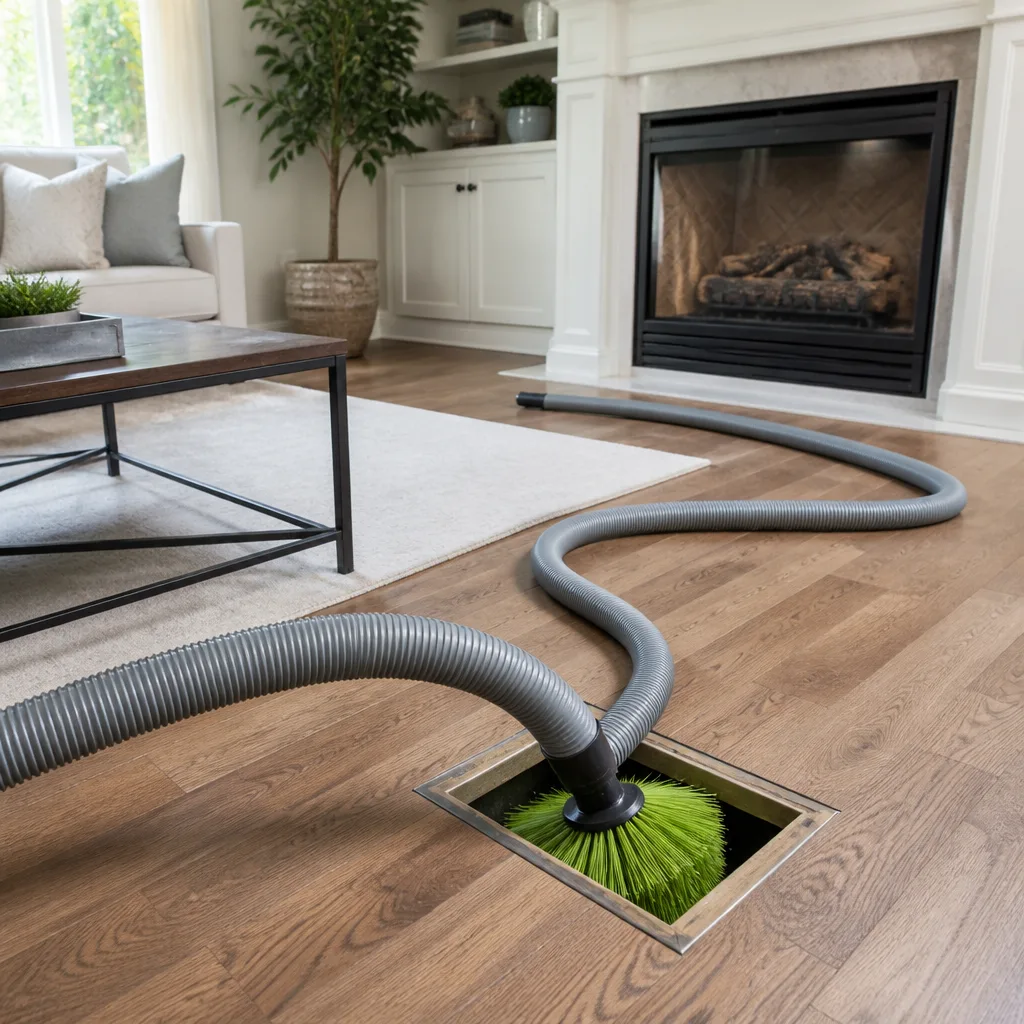 Whole-home duct cleaning
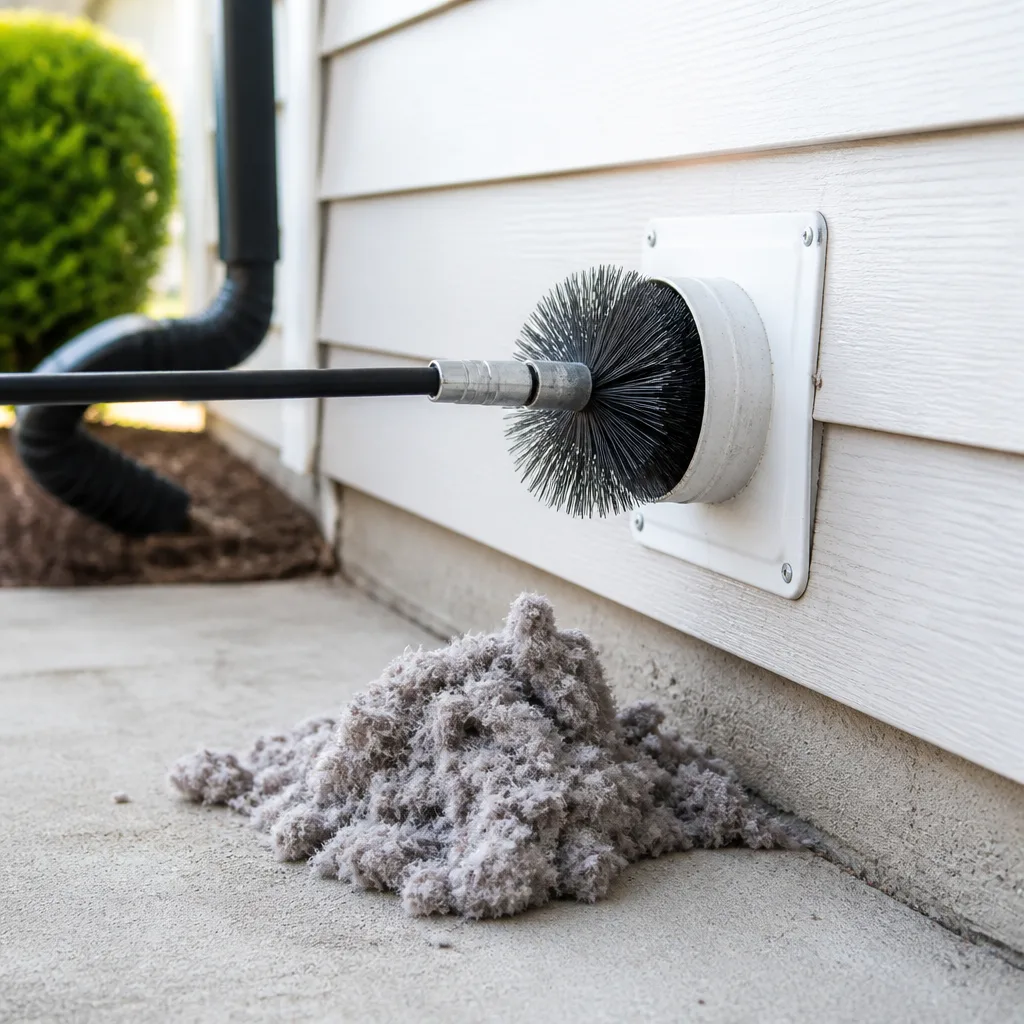 Dryer vent cleaning
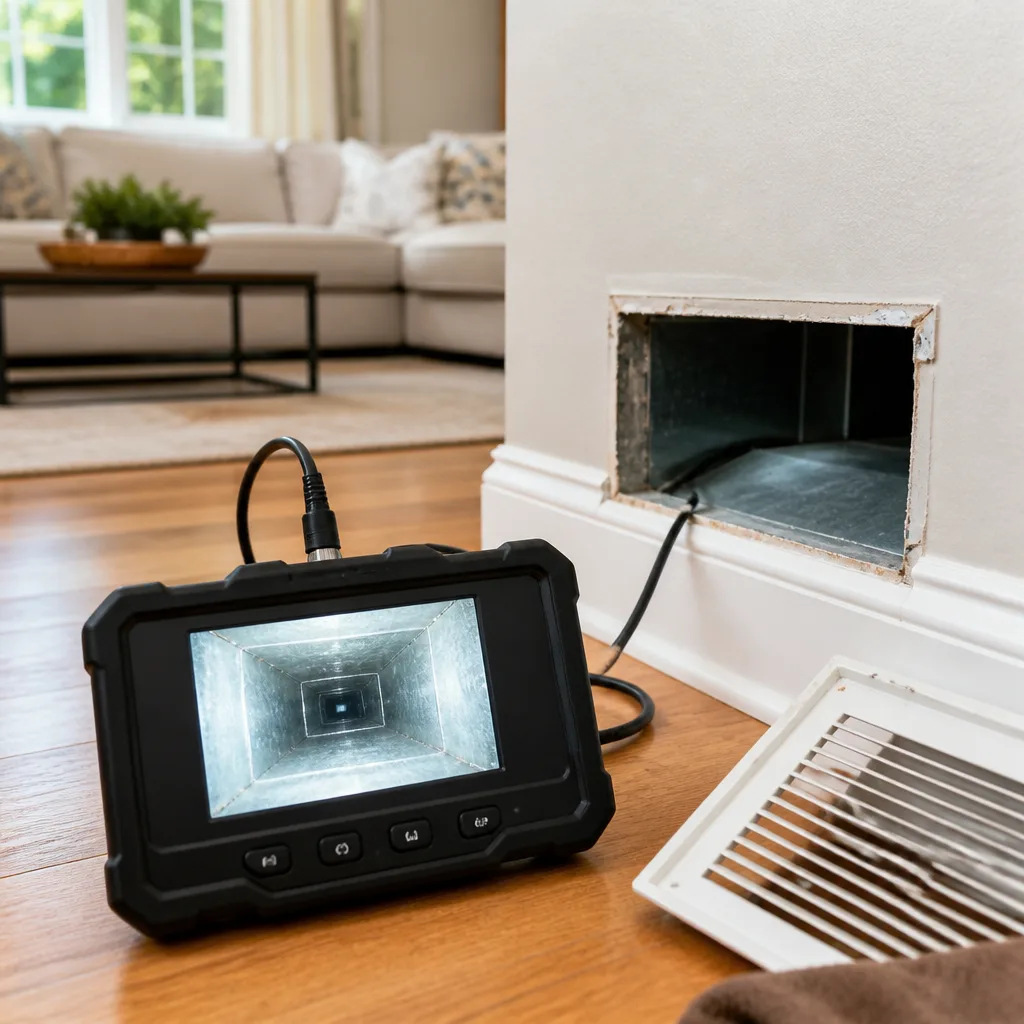 Camera inspection
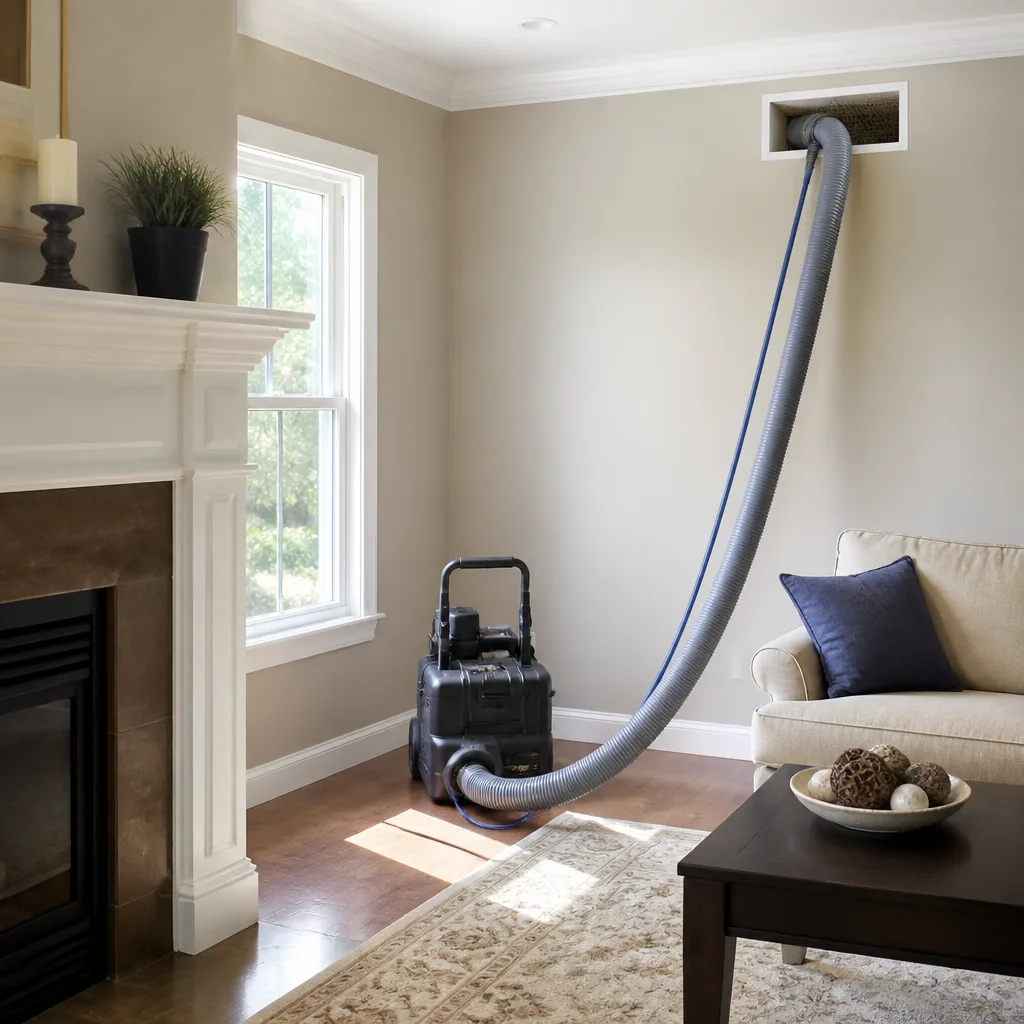 Sanitizing & deodorizing
Whole-system duct and dryer vent check with before-and-after photos - you see exactly what came out of your vents
That "$99 whole-house special" is a bait ad - the real number appears once they are in your hallway, or the "clean" is a shop-vac at the register. We photograph the inside of your ducts before and after instead.
Air Duct Cleaning Emergency Preparedness Guide for Westpark Homes
Here’s the counterintuitive part: after a wildfire smoke event, running your HVAC system to chase the smell out of the house is the move that makes things worse. Air moving through smoke-filled ducts drives ultrafine ash particles deeper into duct liner, into coil media, and into the joints where nobody can reach them. The instinct that feels helpful is the one that turns a surface problem into a remediation project. This guide lays out what to actually do – not just after fire, but after flooding and after rodents find their way into the supply lines. Three emergencies, three different protocols. You’ll learn when to shut the system down, when filter changes are enough, when they aren’t, and how to document it all so a claim stands up.
Quick Answer
In Westpark, the right duct-system response depends on the event. After wildfire smoke, shut the system off, upgrade filtration before any restart, and get the duct interior professionally cleaned and the system sanitized – a filter alone won’t reach smoke residue that has settled. After water intrusion, assume any wet flex duct must be replaced within about 48 hours, well before visible mold shows. After rodent intrusion, you need HEPA-protocol cleaning with containment, and sometimes full replacement of contaminated sections. Getting the timing wrong in any of the three cases is what causes permanent damage or ongoing exposure.
Styles & brands we work with
- Whole-home duct cleaning
- Dryer vent cleaning
- Camera inspection
- Sanitizing & deodorizing
Table of Contents
- Why Westpark’s Climate and Housing Shape Duct Emergency Risk
- Wildfire Smoke Protocol: When to Shut Down and How to Restart Safely
- Water Intrusion: The Mold Clock in Flex Duct
- Rodent Intrusion: Why This Is Not Standard Duct Cleaning
- Documenting Duct System Condition for Insurance
- Pre-Event Preparedness That Pays Off Later
- Why Duct Sealing Is an Emergency Measure Too
- When to Call a Professional
- Frequently Asked Questions
Why Westpark’s Climate and Housing Shape Duct Emergency Risk
Westpark sits in inland Southern California, which means the duct emergencies here don’t look like the ones in cold-climate guides. No basement to flood. No freeze-thaw cycle to crack a plenum. What we do have is a long dry season, periodic wildfire smoke pushed through the valley, flash flooding from intense rainfall hitting surfaces that don’t absorb it fast enough, and an older housing stock where flex duct was installed as a time-saver and then never revisited.
That combination produces a specific set of failure modes:
- Smoke residence time is longer than people think. In dry, still air, fine ash and smoke residue settle into duct interiors and stay there. Without movement, they don’t disperse. They sit in liner, in joints, and on coil fins.
- Flex duct is everywhere and it hates moisture. The inner liner is porous plastic over a wire helix, with insulation sleeved around it. Once water reaches the insulation, air can’t dry it out on its own.
- Rodents follow the plumbing and the insulation. Attic runs, crawlspaces, and garage-to-house penetrations are the standard entry paths, and once inside a duct run, contamination spreads the whole length of the system.
At Westpark Air Duct Cleaning, our technicians have up to 12 years of experience and have worked all three of these events in the same year on different properties. The protocols below are built from what actually works, not from a generic checklist. If you’ve just bought a home, or just finished a renovation, the same logic applies – drywall dust and construction debris behave like smoke residue in terms of where they settle, and that’s why we treat a post-renovation clean the same way we treat the aftermath of a smoke event.
Wildfire Smoke Protocol: When to Shut Down and How to Restart Safely
The most common error is running the system during and immediately after a smoke event. Do the opposite. Here’s the sequence we recommend in Westpark, step by step:
- Shut the system down while smoke is in the air. Turn off the thermostat. If you have a window unit or a mini-split, turn those off too. Moving air during active smoke pulls particulates into the duct interior.
- Close the home up and seal the obvious gaps. Weatherstripping, door sweeps, and window seals matter. The goal is to reduce the rate at which outside air enters. There’s no perfect seal on a house that has to breathe, but reducing the inflow is worth doing.
- Upgrade filtration before you restart. A standard 1-inch fibreglass filter is a dust blocker, not a smoke filter. Before restarting, install a pleated filter with a higher particulate capture rating. If your system can take a deeper filter cabinet, a media filter is a better long-term answer, and Honeywell and Aprilaire filter cabinets are designed for exactly this.
- Run the fan on a low setting for circulation only, after the filter upgrade. The fan circulates air through the new filter. That’s the step that starts cleaning the air the system is moving. It does not clean the ducts.
- Schedule professional cleaning of the duct interior and coil. This is the step filters can’t do. A filter captures what passes through it. It does not remove ash that has already settled into the lining of the duct, the supply boots, or the coil fins. Rotary brush cleaning with containment is what reaches those surfaces.
- Sanitize, then verify airflow. After cleaning, we run a sanitizing treatment. Products formulated for HVAC interiors, including Guardsman-grade antimicrobials, are applied where contamination was present. Then we check static pressure and airflow to confirm the system is back where it should be.
What filter changes cannot fix: settled residue in the liner, contamination on the evaporator coil, and odor that keeps reappearing weeks later. Those are duct-interior problems, and they need equipment that can reach. That’s why professional air duct cleaning is the second half of a smoke-event response. The filter is defense. The cleaning is remediation.
Water Intrusion: The Mold Clock in Flex Duct
Mold can begin colonizing damp building materials within roughly 24 to 48 hours after water exposure. In flexible duct, the clock runs on the insulation sleeve, not the liner. Water that gets past the liner wets the insulation and stays there because there’s no airflow inside the wall of the duct. That’s why we tell Westpark homeowners to treat any wet flex duct as a replacement candidate, not a dry-it-out candidate.
What the response looks like in order:
- Stop running the system. A fan moving air through a wet duct distributes moisture and mold spores throughout the house.
- Find the source and confirm it’s stopped. Roof leak, plumbing leak, condensation line failure – the water has to be off before anything dries.
- Inspect the affected run end to end. Not just the wet spot. Water travels along the liner and insulation.
- Same-day or next-day drying of structural material in the air handler closet, plenum, and surrounding framing. Those are hard materials and can sometimes be dried. The flex duct cannot.
- Remove and replace saturated flex duct sections. Cut the failed section, verify the plenum and trunk are dry and clean, reconnect, and retape and mastic the joint properly. This is also when we look for the leaks that made water entry possible in the first place.
Two things we see repeatedly. First, a homeowner dries the visible wet spot and leaves damp insulation in place. Second, a repair crew replaces the wet duct section without cleaning the trunk line downstream of it, and residual spores stay behind. The right answer is replacement plus cleaning plus sealing the joint. This is where duct repair and sealing earns its place in a remediation – a leaking system is never truly clean, and a repaired joint prevents the next intrusion.
Rodent Intrusion: Why This Is Not Standard Duct Cleaning
Rodent contamination in ductwork is a biohazard situation, not a housekeeping one. Rodent droppings and urine carry pathogens, and dried material becomes airborne when disturbed. A shop vac, a household vacuum, or a leaf blower is the wrong tool for this job – it aerosolizes what you’re trying to remove. We treat it as its own protocol.
What HEPA-protocol cleaning looks like on a rodent job:
- Containment first. Negative pressure with HEPA filtration at the work area, and sealing of the duct openings being serviced, so contamination can’t migrate into living space. Abatement Technologies filtration equipment is what we use to hold the containment.
- Full PPE. Respiratory protection, gloves, and disposable coveralls. This is the part we take most seriously. If you’re handling this yourself, don’t – call us.
- Physical removal of droppings and nesting material before any vacuuming of the duct surface, using HEPA-rated vacuum equipment. Nikro HVAC vacuums are rated for this class of material.
- Wash and sanitize every affected surface with a product formulated for HVAC interiors. Uniform carbon filtration equipment is not a substitute for the wash step.
- Assess the insulation. Rodents urine-soak insulation and gnaw at the liner. Where the damage reaches the sleeve, the section comes out. That’s when duct replacement is required rather than cleaning.
- Close the entry point – attic penetrations, soffit gaps, plumbing chases, garage walls – and seal the duct joints the animal disturbed. Cleaning without exclusion just restarts the clock.
The exclusion work matters as much as the cleaning. Rodent damage in a duct system is a symptom of an entry not being closed. Our HVAC cleaning and repair work covers the air handler and cabinet too, because rodents often nest in the cabinet insulation as well as the duct runs.
Documenting Duct System Condition for Insurance
Insurance claims for duct damage go smoother when the evidence is captured before anything gets cleaned. Once remediation starts, the ability to prove the pre-loss condition drops sharply. If your carrier will need to see the damage, document first.
What to document, in order:
- Date and cause of the event. Wildfire name, storm date, discovery date for rodent intrusion. Note it as close to the event as you can.
- Photographs before any cleaning. Wide shots of the air handler, plenum, accessible duct runs, and the supply boots. Close-ups of soot staining, visible moisture, mold growth, or rodent activity. Include a reference object or a tape measure in a shot so scale is clear.
- Moisture meter readings on any material suspected of being wet, with the location noted.
- Written description of affected areas. Room-by-room. “Daughter’s bedroom supply boot, soot visible on register face, liner discoloration in first four feet.” Specific details get approved. Generalities get delayed.
- Any receipts or invoices for the initial mitigation – the filter upgrade, the emergency water extraction, the pest control visit. Those support the loss.
- Contractor’s written findings and photos from our inspection. We supply pre-cleaning photos of the duct interior and a written scope. That scope is what supports your claim.
One practical note: take photos before you call us, and take them before the emergency plumber or the pest control tech leaves. Most carriers want to see the condition as it was found. If your policy covers the remediation, we can work with your insurer and provide the documentation they need. The claim is yours; we just give you the material to support it.
Pre-Event Preparedness That Pays Off Later
The best time to prepare for a duct emergency is when nothing is happening. Here’s what we suggest checking now, while there’s no urgency.
- Know your system. Find the air handler, note the filter size, and understand whether your duct is flex, rigid, or a mix. Write the filter size on a piece of tape inside the air handler door – it saves a wrong-size trip later.
- Photograph the system today. Wide shots of the air handler, plenum, and visible ductwork. Store them in cloud photos. When a loss happens, you’ll have a pre-loss baseline that proves the system was clean and intact.
- Upgrade your filter cabinet if the system can take it. A proper media filter cabinet (Honeywell and Aprilaire are the standard options, and we carry both) gives you a smoke-filtration response that a 1-inch slot can’t match. It’s a preparedness purchase, not a repair.
- Check dryer venting. The dryer vent is the fire-safety branch of the same air pathway. Lint accumulation in the exhaust run is a documented fire hazard, and it’s easy to overlook when you’re focused on air quality. dryer vent cleaning is worth scheduling on a dry-season checklist, especially in older homes where corrugated venting is still in place.
- Seal the obvious leaks now. Joints at the plenum, the boot-to-floor connection, and any duct run passing through an unconditioned attic. Sealed ducts keep smoke, dust, and rodents out better than unsealed ones. The preparedness benefit is recovery time – a tighter system contaminates less.
- Set a filter change reminder. Whatever interval works better for your household, put it on the calendar. After a smoke event, a clean filter is the first defense.
Why Duct Sealing Is an Emergency Measure Too
Sealing sounds like an efficiency upgrade. In an emergency context, it’s a contamination barrier. Every gap in the duct system is a path. In a wildfire smoke event, it’s a path for smoke. In a rodent event, it’s an entry door. In a water-intrusion event, it’s where moisture can enter a run during a heavy rain.
We do sealing as part of remediation, not as an afterthought. The sequence is: clean, verify clean, then seal with mastic and mesh at the plenum and trunk joints, with tape at the run joints. Unsealed systems leak at every connection, and the difference is measurable in small static-pressure differences on the new system.
For Westpark homes with accessible attic runs, sealing also reduces the amount of dust and allergy-triggering material that can enter living space. Airborne particles that move through the attic into unsealed duct connections make their way to the supply registers. That’s a comfort issue in normal times and a contamination issue after an event. Either way, the answer is the same. We repair ducts, not just clean them – because a leaking system is never truly clean.
See the difference
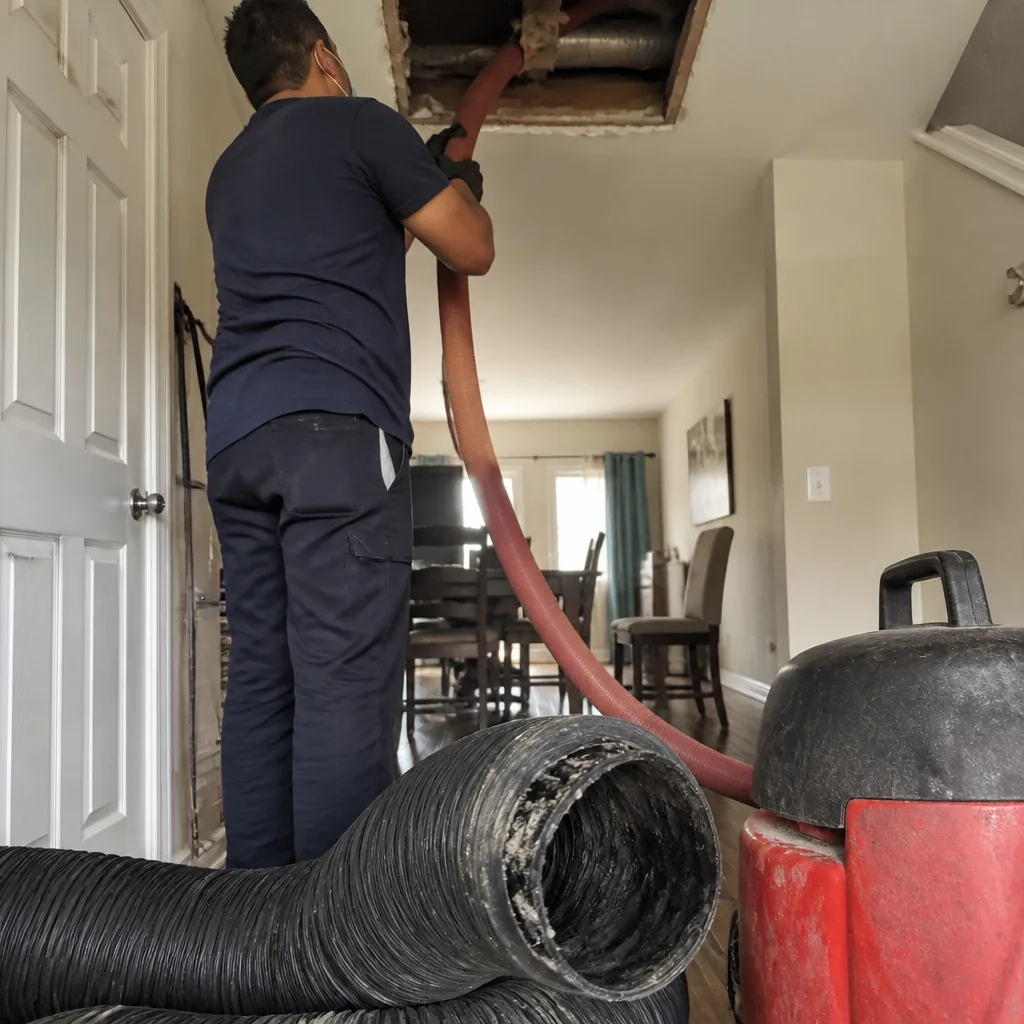 Before
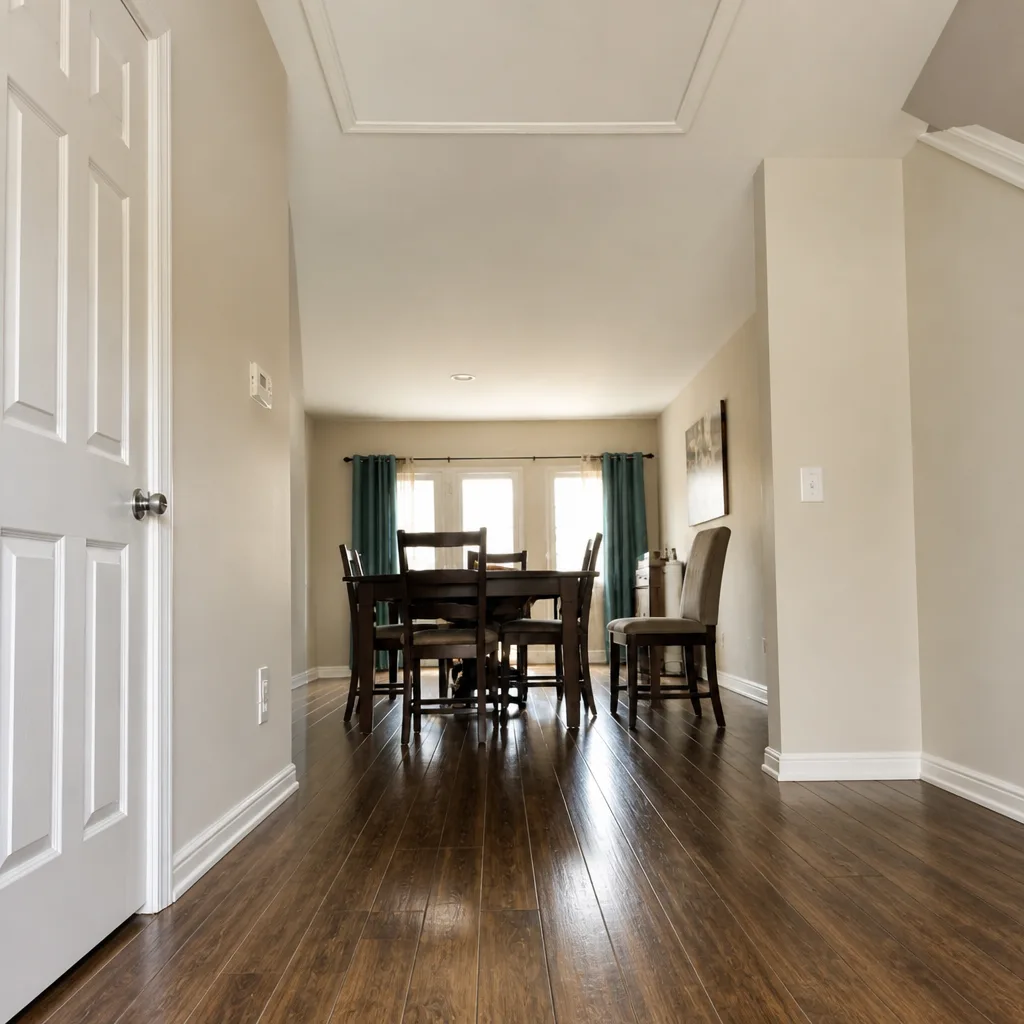 After
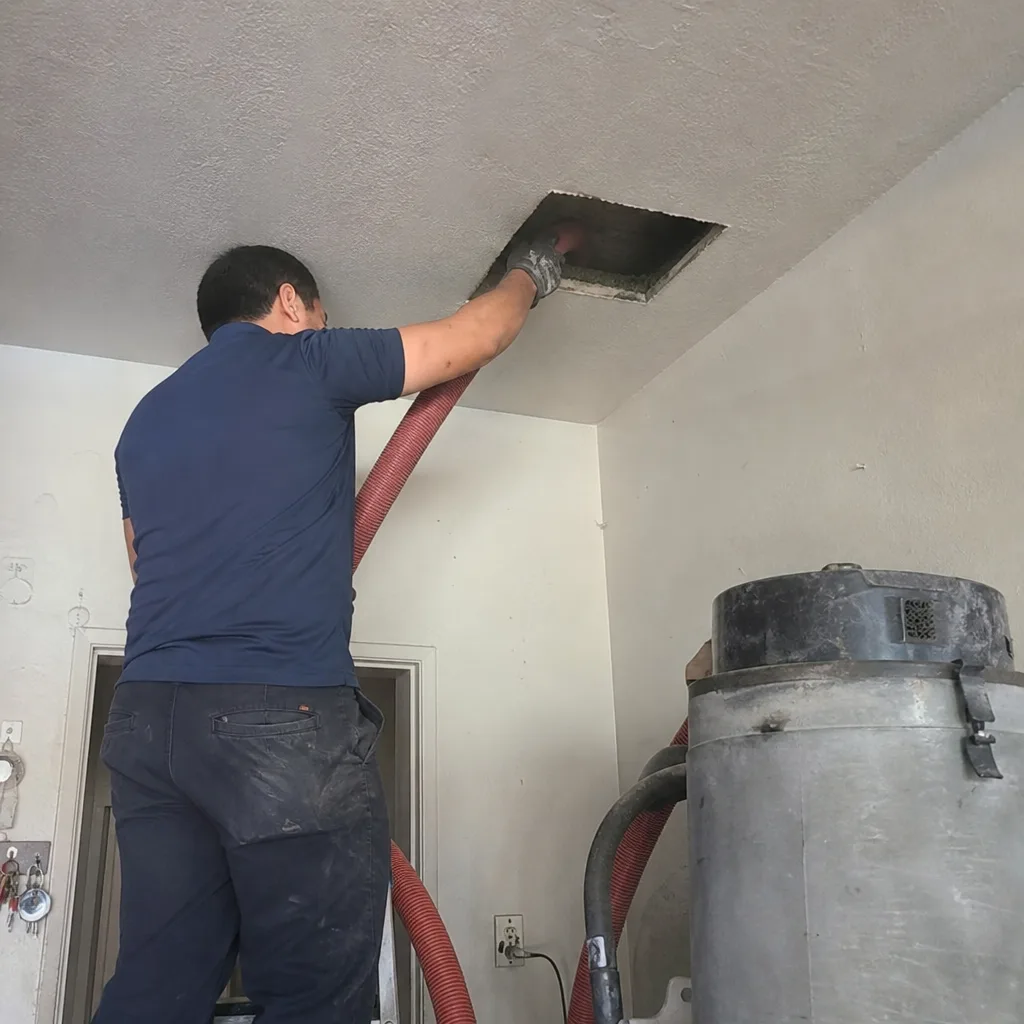 Before
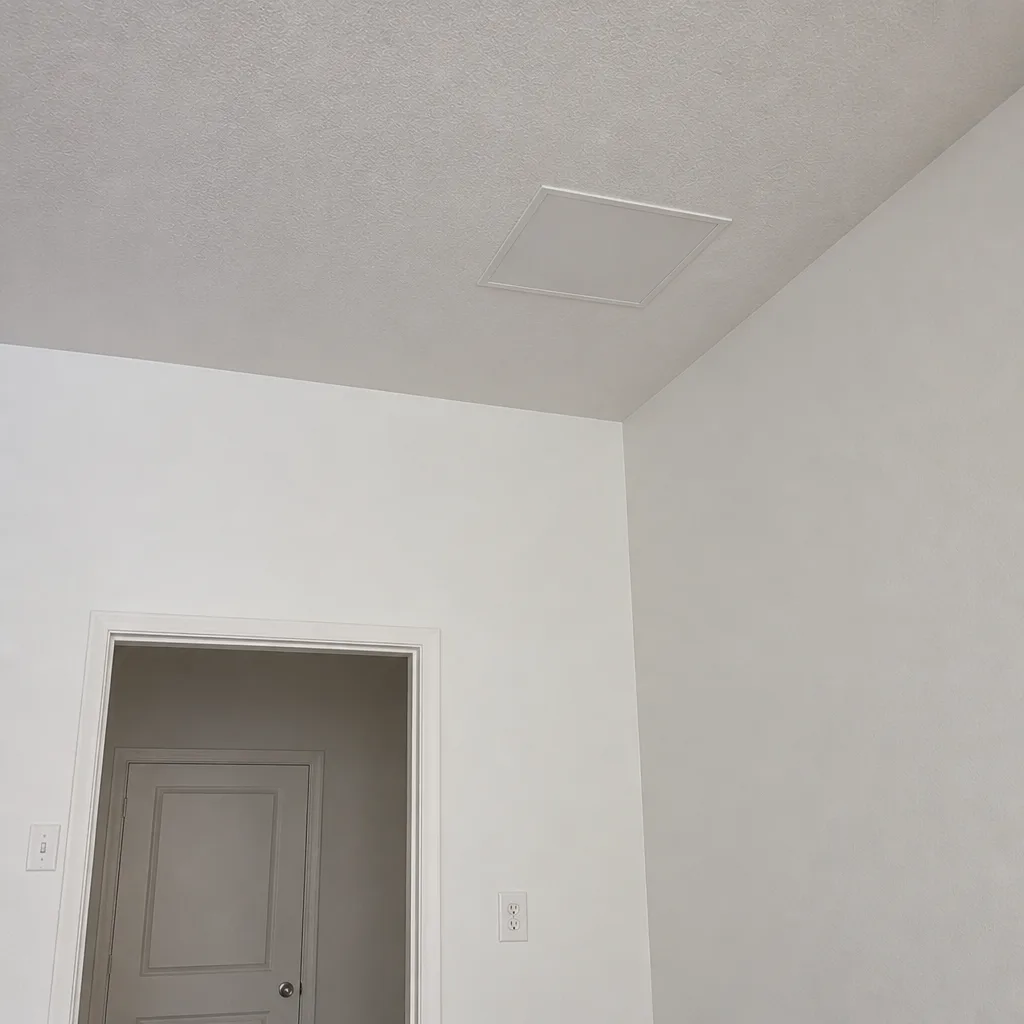 After
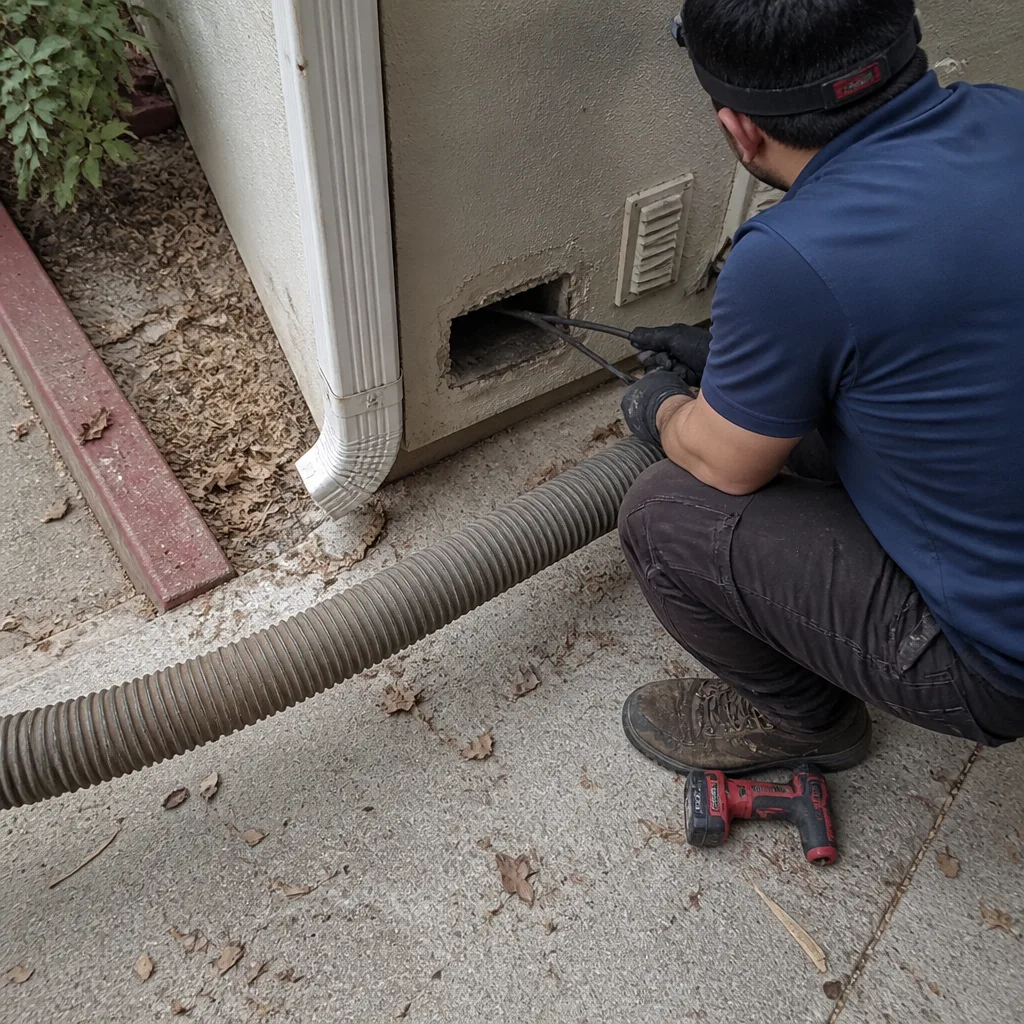 Before
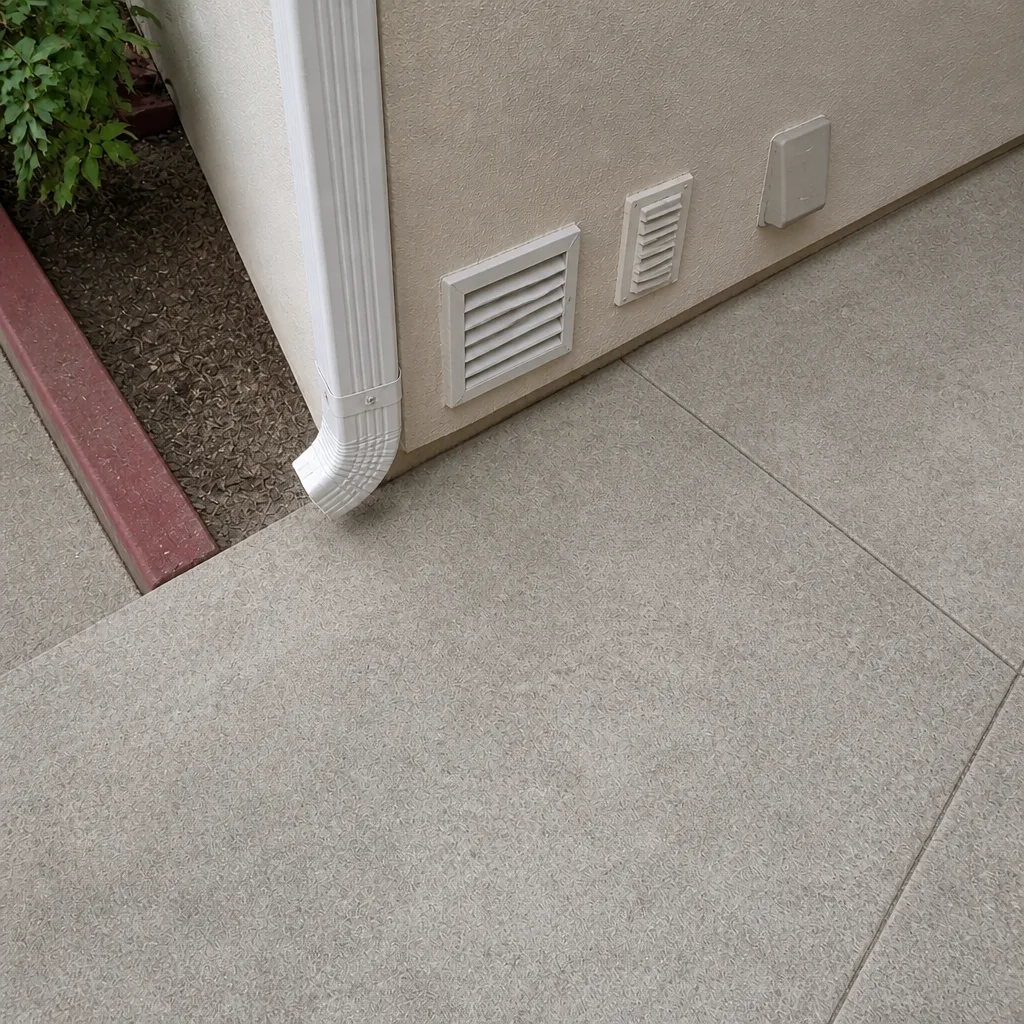 After
Common Mistakes to Avoid
- Running the HVAC system to clear smoke odor. This drives particles deeper into the liner and coil. The right move is off first, filter upgrade next, then professional cleaning before restart.
- Relying on a filter to fix a smoke contamination problem. Filters capture what passes through the cabinet. They don’t reach settled residue in the liner. A new filter alone leaves the interior contamination in place.
- Drying out a wet flex duct and putting it back into service. The insulation sleeve stays damp even after the liner dries. Assume replacement if it took water. That’s the only safe assumption.
- Vacuuming rodent droppings with a household vacuum. Dried droppings become airborne the moment they’re disturbed. This is a HEPA-protocol job with containment, not a Saturday afternoon DIY.
- Replacing the wet section without cleaning the trunk. The trunk carries airborne moisture and spores downstream. If it isn’t cleaned, you’ve treated the symptom.
- Cleaning before documenting. Once material is removed, the pre-loss condition is gone. Photos and moisture readings cost nothing. They protect a claim that could otherwise be disputed.
- Skipping filter cabinet upgrades when the system can take one. A 1-inch slot isn’t going to handle the next smoke event any better than the last one. If a media cabinet is possible, it’s worth planning for.
When to Call a Professional
Call us when these are true. You’ve had any of the three events – wildfire smoke reaching your home and sitting in the air, water intrusion into a duct run, or rodent activity in the attic or supply compartments. Your filter changes haven’t cleared the smell. You see dust streaks around registers after cleaning. You’re preparing an insurance claim for duct damage and need documented condition and a written scope. Or you’re about to buy a home and want the system inspected before closing.
Westpark Air Duct Cleaning offers free estimates in Westpark. We use Rotobrush rotary-brush cleaning systems and Nikro HVAC vacuums, the same class of equipment commercial contractors use, and we run Abatement Technologies air filtration on-site so what comes off the duct surface goes into a filter instead of back into your home. We clean, we sanitize, we repair what needs repairing, and we document the condition we found. Call (877) 820-9652. We answer 24/7. Fast dispatch from 7am to 7pm, Sunday through Friday. You can also start at the main Westpark Air Duct Cleaning page for a full look at what we cover.
Frequently Asked Questions
Schedule the cleaning after any active smoke event has passed and before you return to normal system operation. The reason is containment – the earlier you clean, the less time contamination has to settle into the coil and the duct liner. Filter upgrade and cleaning together are the post-smoke response. Call (877) 820-9652 for an exact quote. Estimates are free.
Replacement is the expected outcome for saturated flex duct. The insulation sleeve holds water after the inner liner appears dry, and it doesn’t have airflow through it to dry it out. Replacing the saturated section and cleaning the trunk is the only way to close the mold clock. If you’re not sure how wet it got, call us and we’ll check with a moisture meter.
Because the material in the duct is a health hazard, not dust. Droppings and urine carry pathogens and become airborne when disturbed, so the work requires HEPA vacuum capacity, containment under negative pressure, and a sanitizing wash afterward. Standard duct cleaning equipment isn’t set up for that. If you’ve seen rodents in the attic or heard them in the walls, the duct inspection is the next step. Call (877) 820-9652 to book it.
Coverage depends on your policy and the cause of the loss. Wildfire smoke and sudden water damage are commonly covered under standard homeowner policies; gradual leaks and pest damage are often excluded. Document the condition with photos and moisture readings before any cleaning starts, and we can supply the pre-cleaning photo record and written scope to support the claim. We can work with your insurer on the documentation you need.
There’s no single price because the scope varies by system size, contamination type, and whether repairs are needed. One thing we do commit to: one flat price per system, agreed before any work starts. No per-vent pricing. No bait-and-switch. You get the number before we start, and the written estimate sets the final price. Call (877) 820-9652 for an exact quote. Estimates are free.
You’ll see before-and-after photos of your own ducts, taken during the process. We document what we find and what comes off the surfaces, and you get the photo set. If a filter cabinet or air quality product is part of the scope, we install and verify it before we leave. That’s the standard we work to. Call (877) 820-9652 to set up an estimate.
The Bottom Line
Three emergencies, three protocols. Wildfire smoke means shut down, filter up, then clean – never run the system to chase the smell. Water intrusion means the clock is running on flex duct, and wet sections get replaced, not dried. Rodent intrusion means HEPA-protocol cleaning with containment, sanitizing, and exclusion, not a shop vac. All three are easier and less expensive to handle when the system is documented before the event and sealed against leaks. And all three are the kind of work that needs the right equipment, not a surface vacuum. Westpark Air Duct Cleaning handles the full air pathway – dryer vent cleaning included, because the fire risk in a dryer vent is part of the same preparedness picture.
Call (877) 820-9652 for a free estimate. We answer 24/7. Fast dispatch from 7am to 7pm, Sunday through Friday.
Written by the team at Westpark Air Duct Cleaning.