
Last updated November 23, 2026
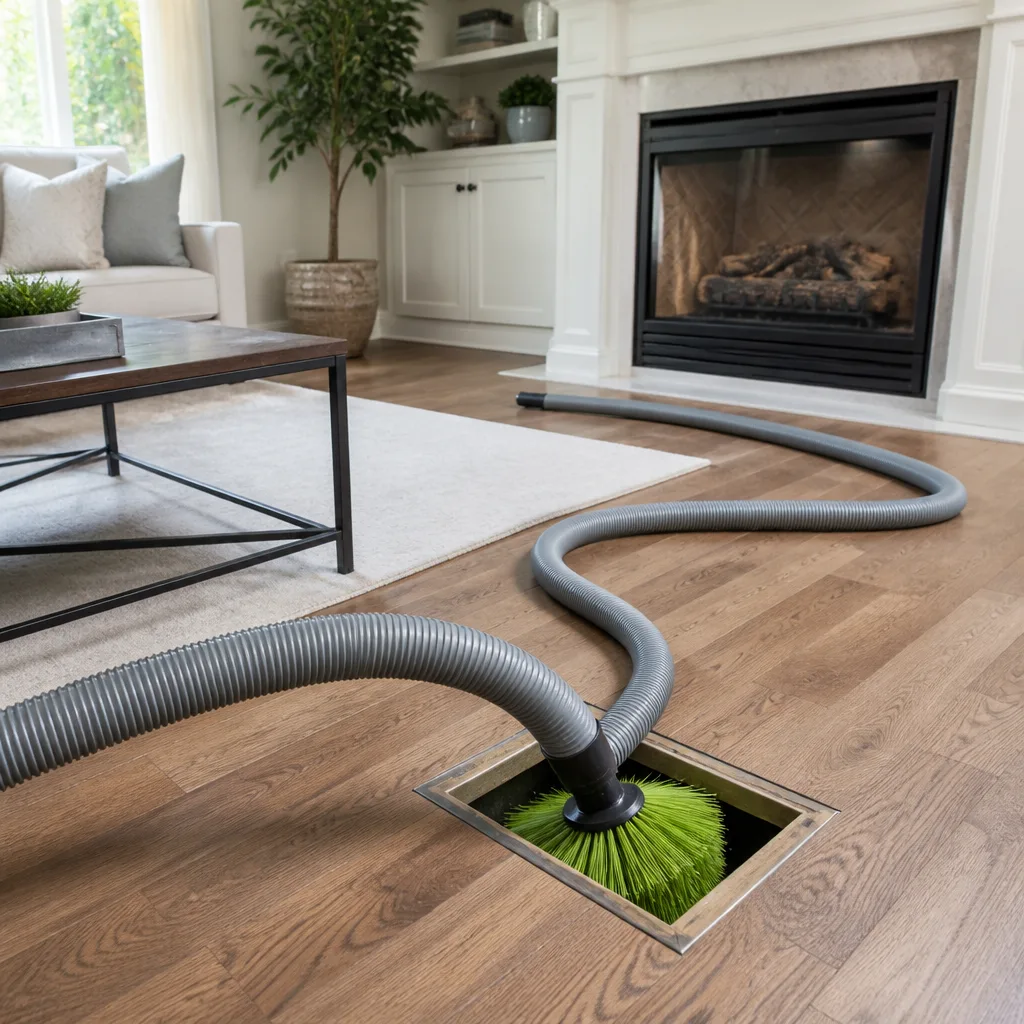 Whole-home duct cleaning
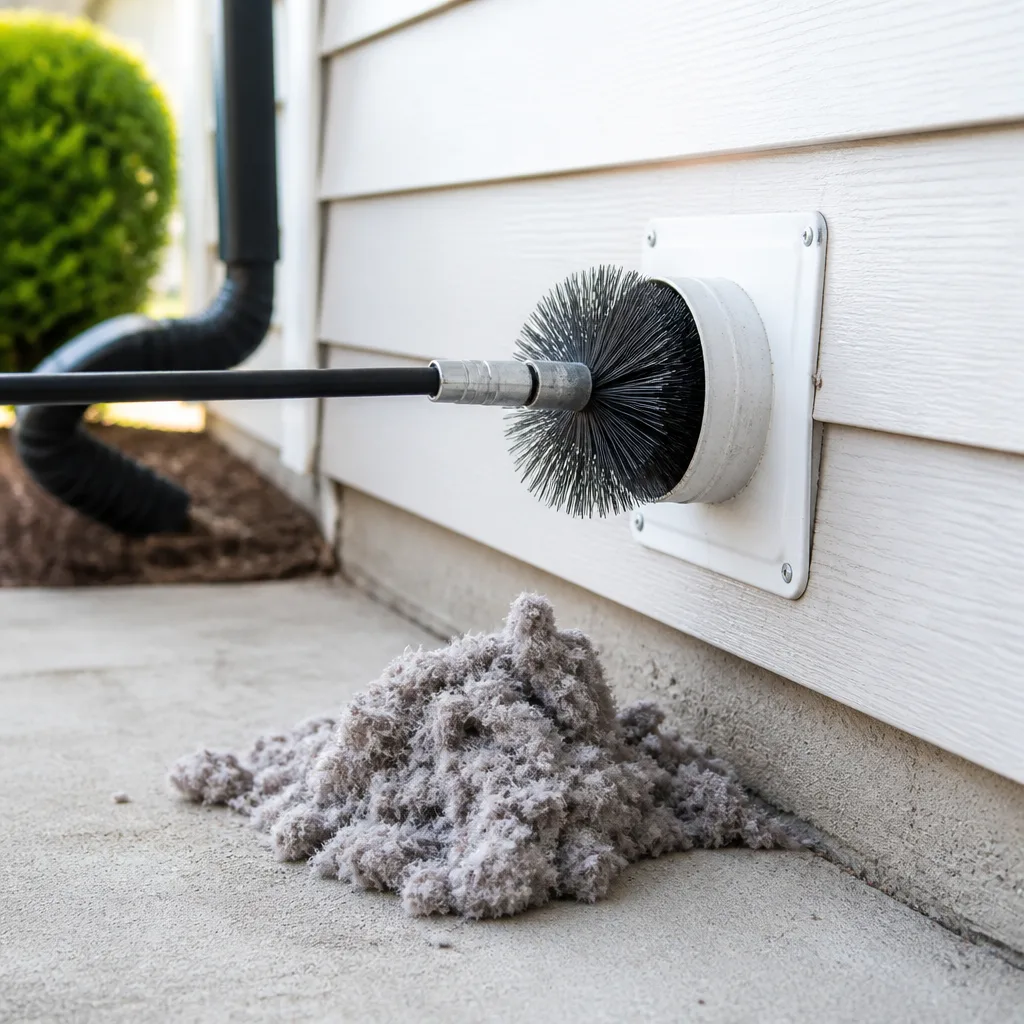 Dryer vent cleaning
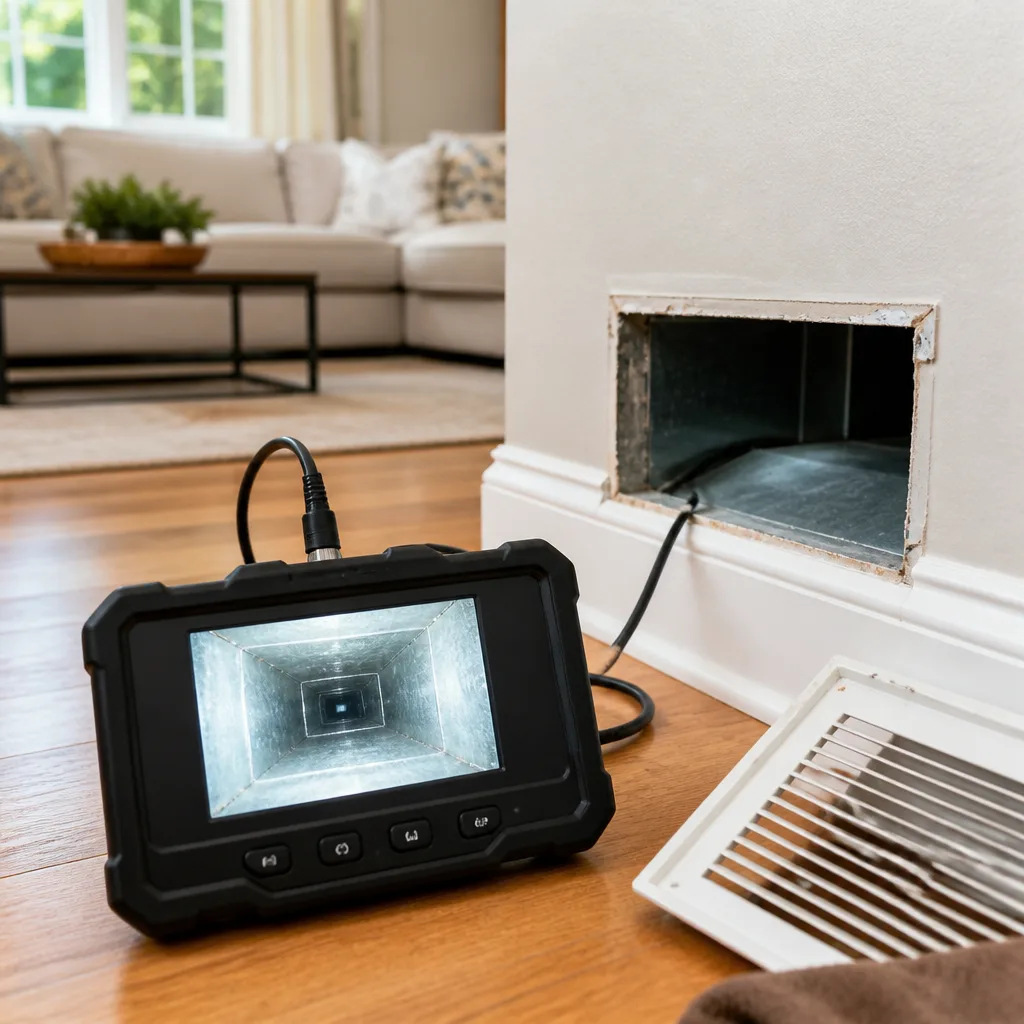 Camera inspection
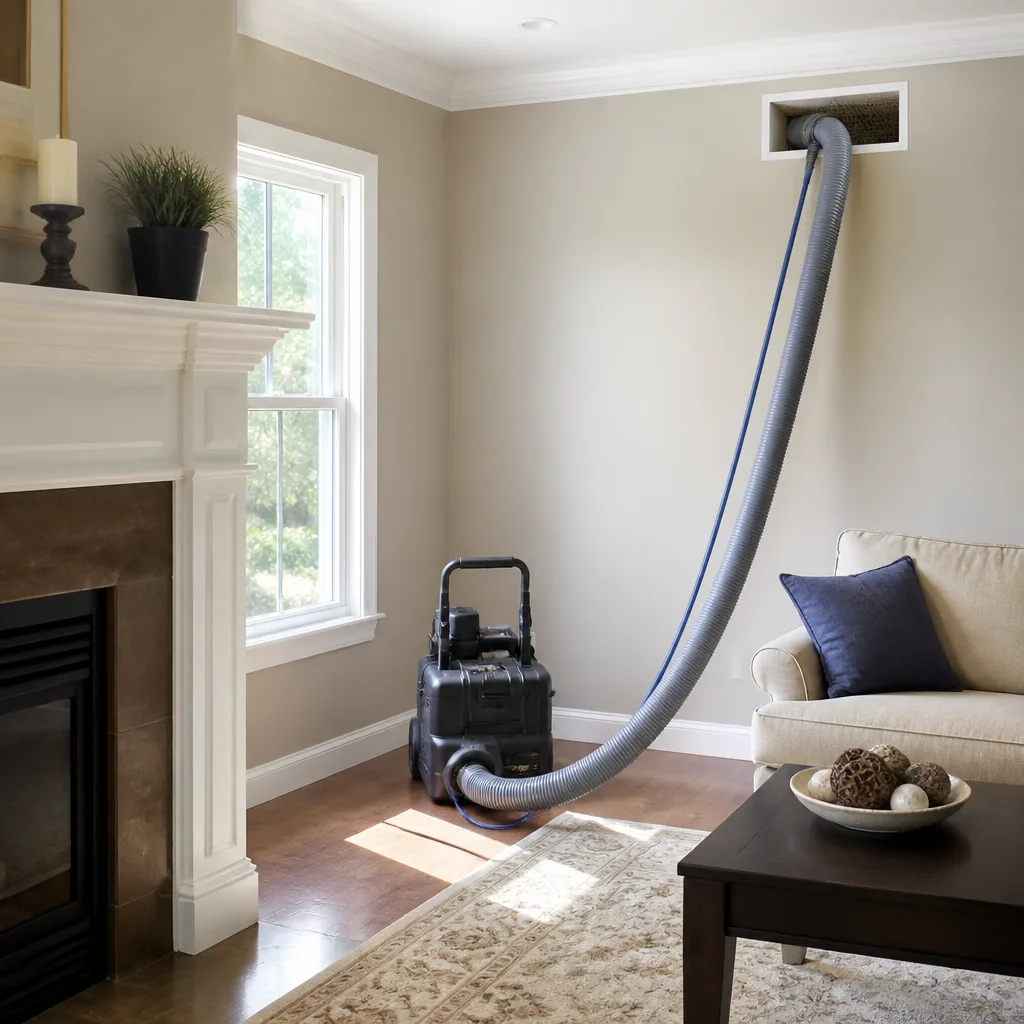 Sanitizing & deodorizing
Whole-system duct and dryer vent check with before-and-after photos - you see exactly what came out of your vents
That "$99 whole-house special" is a bait ad - the real number appears once they are in your hallway, or the "clean" is a shop-vac at the register. We photograph the inside of your ducts before and after instead.
Choosing the Right Air Duct Cleaning Brand: A Buyer’s Guide for Westpark
A five-star review for duct cleaning usually tells you two things: the technician was pleasant and the floors were clean when they left. It rarely tells you whether the air inside the ducts actually got cleaner. Most homeowners have no reference point for what a properly cleaned system looks or performs like, so they rate the visit on everything except the result that matters. We’re Westpark Air Duct Cleaning, and we wrote this guide because the equipment and method behind the visit determine the outcome far more than the star rating above it. You’ll learn what to ask before booking, what a credible scope looks like, and how to tell technical knowledge from a sales script.
Quick Answer
The right air duct cleaning brand in Westpark is the one that can tell you exactly what equipment it uses (Rotobrush rotary-brush systems, Nikro vacuum units, HEPA or Abatement Technologies filtration on the extraction), what negative pressure it maintains during service, and what documentation you’ll receive afterward. Reviews are a starting filter, not a decision. Ask about equipment, method, scope, and verification, and the choice tends to make itself.
Styles & brands we work with
- Whole-home duct cleaning
- Dryer vent cleaning
- Camera inspection
- Sanitizing & deodorizing
Table of Contents
- What equipment specifications should you ask about before booking?
- How does a company’s scope measure against NADCA ACR standards?
- Why do sealing, sanitizing and filtration signal a real air quality specialist?
- How to use a pre-service walkthrough to read technical knowledge
- What post-service documentation should a credible company provide?
- How a full-system clean actually runs, step by step
- What Westpark homes need from a duct cleaning brand
- Common mistakes to avoid
What equipment specifications should you ask about before booking?
Equipment is the variable most reviews never capture, and it’s the first thing to ask about. A company can be polite, punctual and well-reviewed while running a portable vacuum that lacks the airflow to move settled debris out of a long trunk line. The system looks the same from the living room. It isn’t.
Here’s what to ask, and what the answers tell you:
- What powers the vacuum? Truck-mounted extraction units typically pull far more air than portable units, though well-specified portables with proper HEPA filtration can do a solid job on smaller residential systems. Ask which one shows up at your door.
- What CFM does the extraction unit move? CFM (cubic feet per minute) is the airflow measure that determines whether the vacuum can actually carry debris out of the ducts rather than just stir it. A credible technician knows their unit’s rating without checking a binder.
- Does it hold negative pressure on the system? Negative pressure means air is being drawn into the ducts and out through the vacuum, not pushed into your rooms. Without it, loosened debris relocates to your furniture and your lungs.
- Is the extraction unit HEPA-filtered? HEPA filtration captures fine particulate at the exhaust. A unit without it can exhaust microscopic material back into the living space.
- What agitates the duct walls? Rotary-brush and air-whip tools contact the duct surfaces. Suction alone won’t lift adhered debris from metal or flex duct.
At Westpark Air Duct Cleaning, we run Rotobrush rotary-brush systems and Nikro HVAC vacuum equipment: purpose-built cleaning systems rather than consumer-grade shop vacuums. We also integrate Abatement Technologies air filtration on-site to capture dislodged contaminants as they come loose. That setup is the standard we’d want a competitor to meet before we let them touch our own homes.
How does a company’s scope measure against NADCA ACR standards?
NADCA’s ACR standard (Assessment, Cleaning and Restoration of HVAC systems) is the recognized baseline for what a duct cleaning job should include. You don’t need to read the whole document. You need to ask enough questions to know whether the company you’re considering follows it, because a company operating below that baseline is producing a clean that looks finished and isn’t.
Ask these questions on the phone or in a consultation:
- Do you clean the full system or just the visible runs? ACR covers the air handler, supply and return trunks, and branch runs. A company that only touches what it can see from the registers is performing surface work.
- Do you open the air handler? The blower, coil and interior of the air handler collect debris too. Proper procedure includes access and cleaning there.
- Do you verify cleanliness with photo documentation? Before-and-after photographs of opened access points and duct interiors are the audit trail for scope.
- Do you protect the living space during the job? Floor protection, containment and negative pressure are all part of the standard, not extras.
- Do you note conditions found? Leaking joints, disconnected sections, biological growth and pest intrusion are all things a credible company documents for you, regardless of whether you hire them for the fix.
When you book air duct cleaning with us, that full-system scope is the starting point. Our technicians have up to 12 years of experience, and they’ll tell you what your system actually needs rather than running a fixed routine on autopilot.
Why do sealing, sanitizing and filtration signal a real air quality specialist?
If a company’s entire menu is “duct cleaning,” they treat the air system as a set of tubes containing debris. If a company also offers sealing, sanitizing, filtration and dryer vent work, they treat it as a system with leaks, contaminants, pressure balance and fire risk. Ask what else they offer, and listen for whether the answer sounds like a system or a service.
Here’s why each additional capability matters:
- Duct repair and sealing. A leaking return or supply joint pulls attic or crawlspace air into your living space. Cleaning a system with leaking joints doesn’t stay clean because contaminated air keeps coming in. We seal, not just clean, because a leaking system is never truly clean.
- Air quality sanitizing. In homes with moisture history or visible growth, sanitizing after cleaning treats the surfaces the clean just exposed. We use Guardsman-grade treatment products for documented antimicrobial protection.
- Filtration and air quality products. Whole-home filtration and humidity control extend the engagement from a one-time clean to an ongoing solution. Westpark Air Duct Cleaning is authorized to supply and install Honeywell and Aprilaire indoor air quality products.
- Dryer vent cleaning. Dryer vent lint is a leading cause of household dryer fires. A company that cleans the vent as part of the visit is addressing a safety issue, not just a comfort one.
That last one matters more than new customers expect. Dryer vents and HVAC ducts are separate systems with separate hazards, and a company that treats only the ducts has declined half the job that keeps Westpark Air Duct Cleaning homes safer. If you’ve needed dryer vent cleaning for years and haven’t booked it, that’s the conversation to start with.
How to use a pre-service walkthrough to read technical knowledge
A walkthrough or consultation call is your best chance to distinguish technical competence from sales scripting. A trained technician will ask about your home, look at the system, and talk about what they see. A salesperson will talk about your home, run a script, and steer toward a package before asking anything.
Here’s how to structure the conversation:
- Describe symptoms first, not solutions. Tell them about musty smells, allergy flaring, visible dust at registers or uneven airflow. Listen to whether their questions follow up on the symptom or jump to a price.
- Ask them to open the air handler. A technician who opens the access panel and points out the condition of the blower, coil and filter is doing the assessment. A technician who won’t open it isn’t going to clean it properly.
- Ask what they’d do differently in your home. Every house has different duct routing, duct material (flex vs. rigid metal), attic conditions and filtration setup. If the answer is the same as what they’d say to anyone, you’ve learned something.
- Ask about pre-existing problems. A real specialist will flag visible leaks, disconnected sections, pest evidence or mold-like growth as conditions to address, not as upsell.
- Ask how they’d verify the work. Before-and-after photography, scope confirmation and a written summary of any recommendations is the sign of a professional process.
- Ask what they’d charge and how. A branded company quoting a flat price per system after the assessment is on solid ground. A quote that shifts with each vent you point out is a red flag.
For HVAC cleaning and full-system jobs, the walkthrough is where the technical knowledge shows. If you’re unsure what you’re listening for, ask them to walk you through the system layout in your house. If they can’t, that’s your answer.
What post-service documentation should a credible company provide?
The work isn’t finished when the equipment leaves. A credible company backs up the job with documentation you can keep, because you can’t verify what happened inside a sealed duct system without it. Here’s what to expect:
- Before-and-after photographs. Interior shots through opened access points and at the air handler, taken at the start and again at the end. You should see a visible difference, and the photos should match your actual system, not stock imagery.
- A written scope confirmation. The name of the components that were cleaned (supply, return, air handler, branch runs, dryer vent, as applicable), so the next contractor or home inspector can see what’s been done.
- Recommendations for follow-up. If the technician noticed a leaking joint, damaged flex duct, filter bypass, moisture problem or evidence of biological growth, it should be written down even if you don’t decide to fix it right away.
- Sanitizing product details, if applicable. If sanitizing or antimicrobial treatment was applied, the products used should be documented. At Westpark Air Duct Cleaning, Guardsman-grade treatment products are our standard and their use is written into the report.
- A filter recommendation. Filtration upgrades, MERV ratings appropriate for your equipment, and any specific filter change timing you should follow.
If a company hands you a receipt and nothing else, they’re leaving you without a way to confirm the job. Ask ahead of time what documentation is included; how they answer tells you how seriously they take verifiability.
How a full-system clean actually runs, step by step
A real duct cleaning job follows a sequence. If the company you’re considering can’t describe it without improvising, that’s a sign the process isn’t standardized. Here’s the sequence a full-system clean should follow, and the one we run in Westpark homes:
- Assessment and protection. Walk through the system, identify access points, lay floor protection, and set up containment so the living space stays clean.
- Set up negative pressure. Connect the Nikro vacuum to the trunk line through an access port so the whole system is under draw before any agitation begins.
- Bring in filtration. Run Abatement Technologies air filtration in the work area to capture fine particulate as it comes loose.
- Agitate the duct walls. Work the Rotobrush rotary brush through supply and return trunks and accessible branch runs, contacting debris that suction alone won’t lift.
- Clean the air handler. Open the air handler, clean the blower and coil as accessible, and clear the interior cabinet.
- Address the dryer vent. For homes with a vent run to be cleaned, pull lint and blockages from the duct and exterior termination.
- Sanitize where warranted. Apply treatment to surfaces where cleaning has exposed them and conditions call for it.
- Verify and document. Photograph interiors and air handler, confirm the scope, note any defects or leaks, and hand you the report.
If the company you’re considering can walk you through a comparable sequence without reading from a brochure, they know what the work involves. If the answer is “we use a specialized high-powered machine,” that’s not a sequence, it’s a slogan.
What Westpark homes need from a duct cleaning brand
Westpark’s mild winters mean the HVAC system typically runs year-round on both heating and cooling, so debris and dust accumulate continuously rather than seasonally. Homes with pets and homes recently renovated both tend to see more debris load in the first several months after the change, and a full-system clean restores baseline performance faster than filter changes alone.
Westpark’s housing stock is mixed, which affects what to look for:
- Older homes with retrofitted ductwork. These often show leaky or disconnected joints where ducts were routed around existing structure. Sealing questions are worth prioritizing if your home is older.
- Newer homes with flex duct in the attic. Flex duct is smooth-walled and cleans well, but it also tears easily and bypasses at joints. Ask how the company handles flex duct rather than assuming it’ll be dealt with.
- Renovation aftermath. Drywall dust, sawdust and construction particulate settle into return ducts first. If you just finished a remodel, ask whether the company’s method includes post-construction particulate removal.
- Multi-unit and property-managed buildings. Shared systems, stack routing and access considerations change the scope. Ask whether the company serves property managers and how it handles access scheduling.
When we assess a Westpark home, we start with the same questions regardless of neighborhood or system age, and we quote by the system after seeing it. The scope should reflect what’s actually there, not a package price and a guess.
Common Mistakes to Avoid
- Choosing on stars alone. A five-star review is one household’s overall impression, not a technical verification. A company with an excellent phone manner and one cordless vacuum can earn those stars.
- Never asking about equipment. If you don’t ask about CFM, negative pressure and filtration, you’re speculating about what will happen behind the register covers.
- Buying a quoted-per-vent price without seeing the system. Angled pricing per vent rewards the company for counting vents, not for cleaning a system. A flat price per system after an assessment is the sign of a professional scope.
- Ignoring the air handler question. Some cleaners only clean the accessible duct runs. The blower and coil house a substantial share of what’s circulating in your air.
- Skipping the documentation request. If you don’t ask what evidence you’ll get back, you likely won’t get any.
- Treating duct cleaning and dryer vents as one job. Airing out one doesn’t address the other. Dryer vent lint is a fire hazard separate from duct debris, and both need professional cleaning at reasonable intervals.
- Overlooking the system-level fix. Cleaning a leaking duct system is a partial fix. If the walkthrough reveals disconnected joints or open return paths, address them.
See the difference
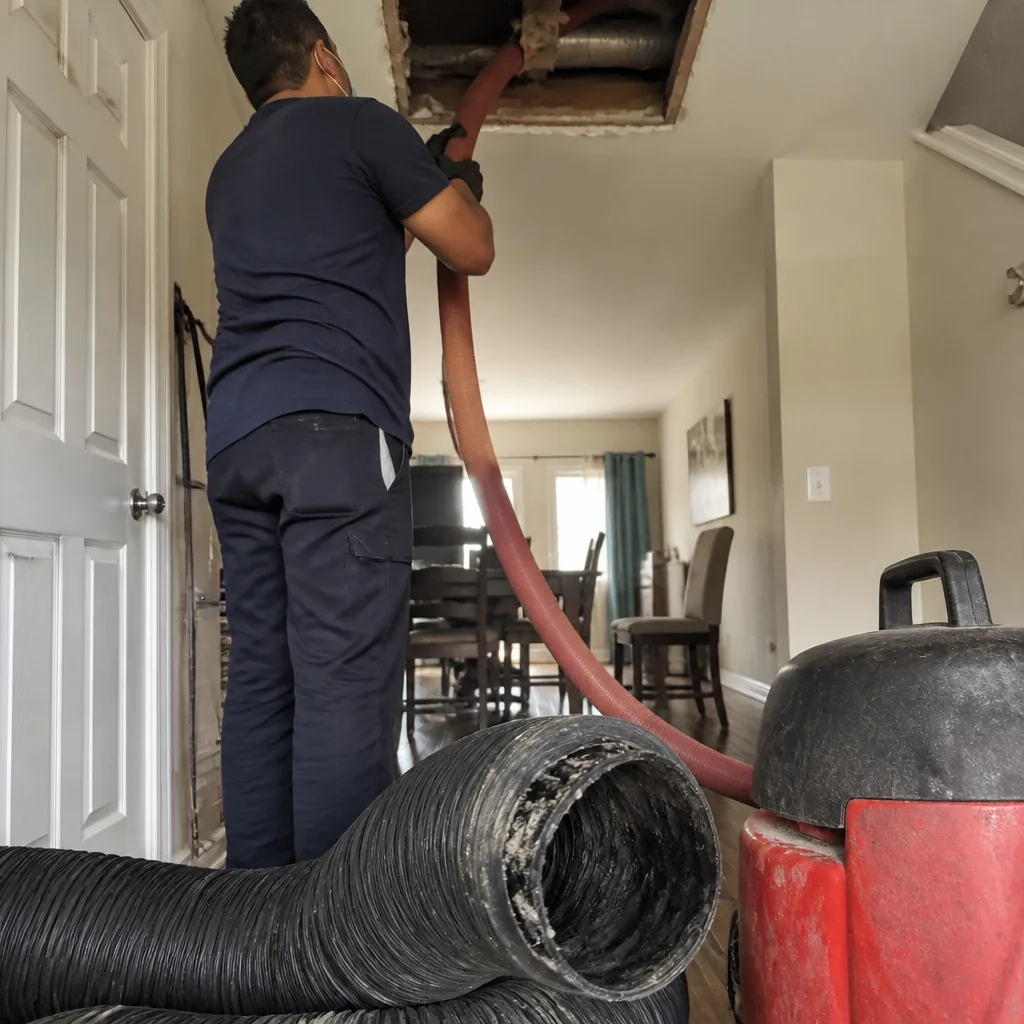 Before
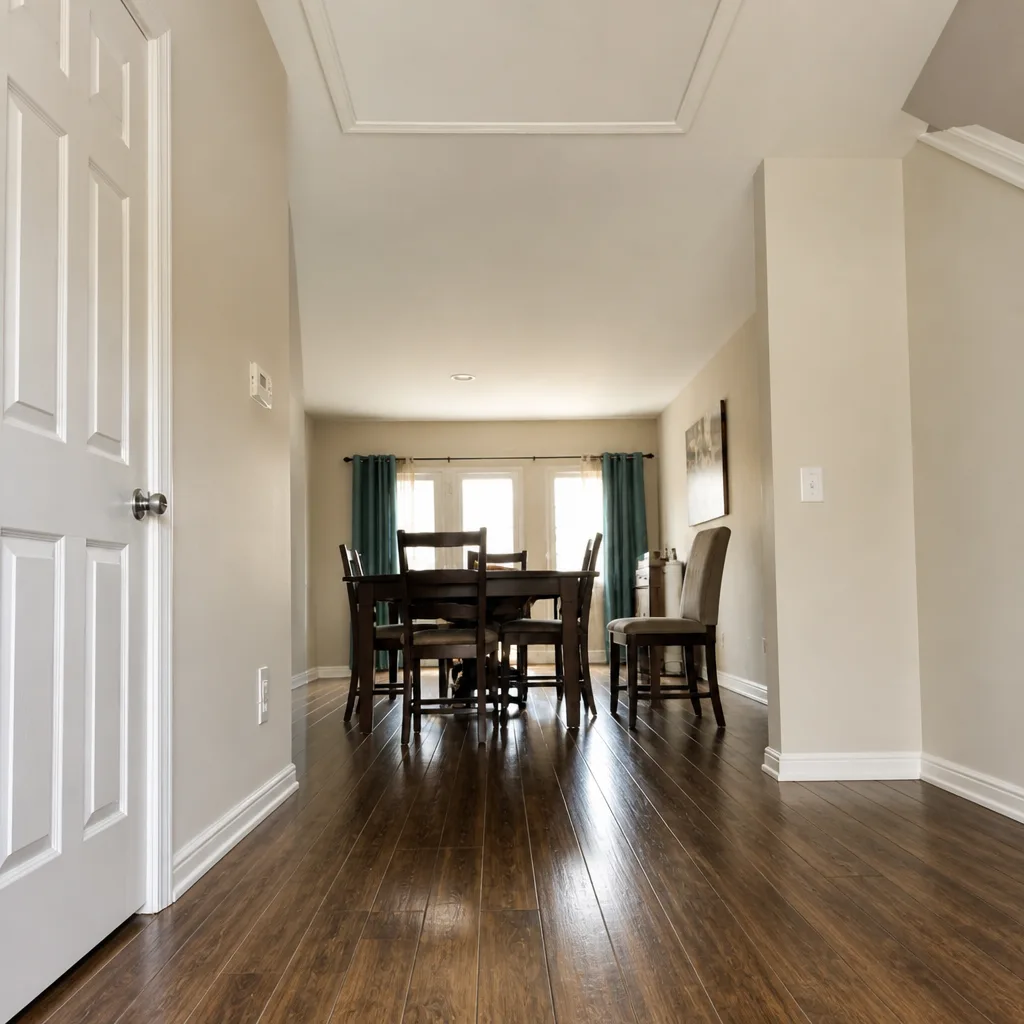 After
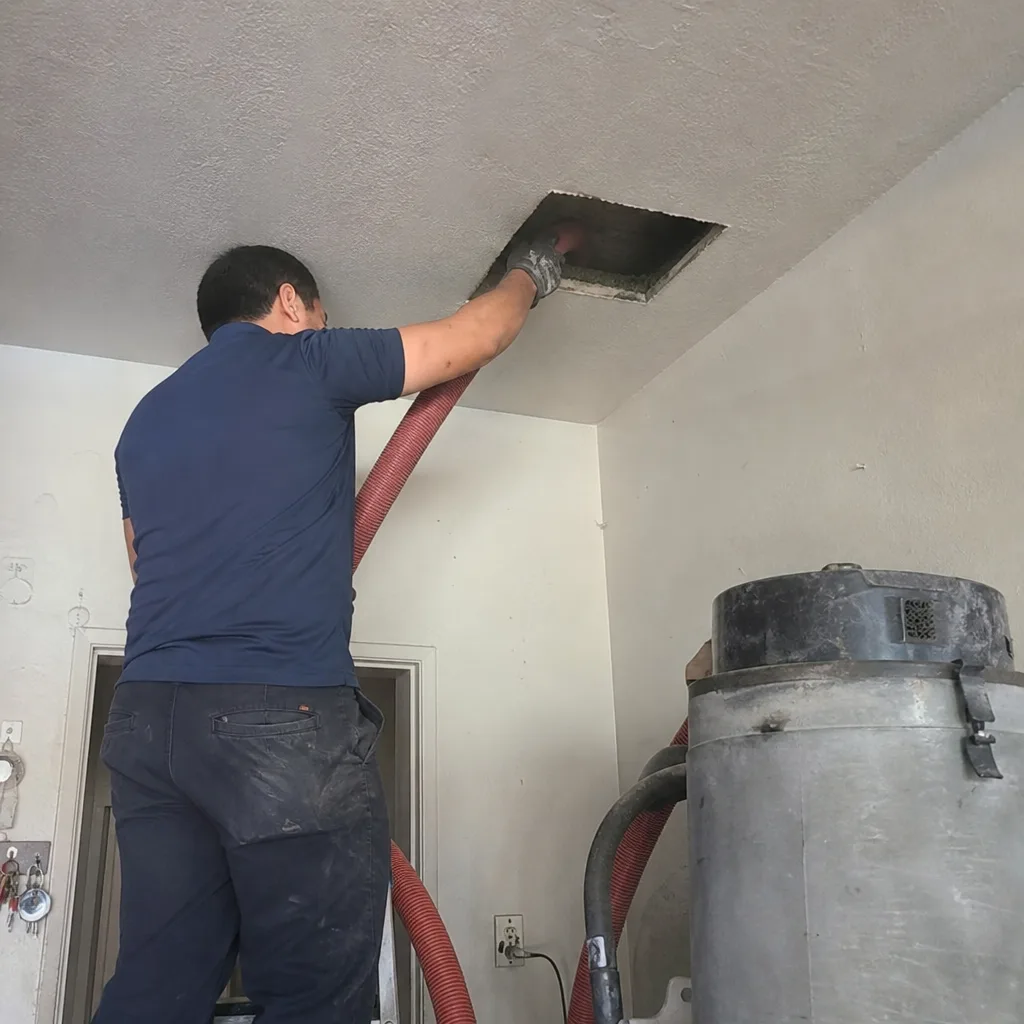 Before
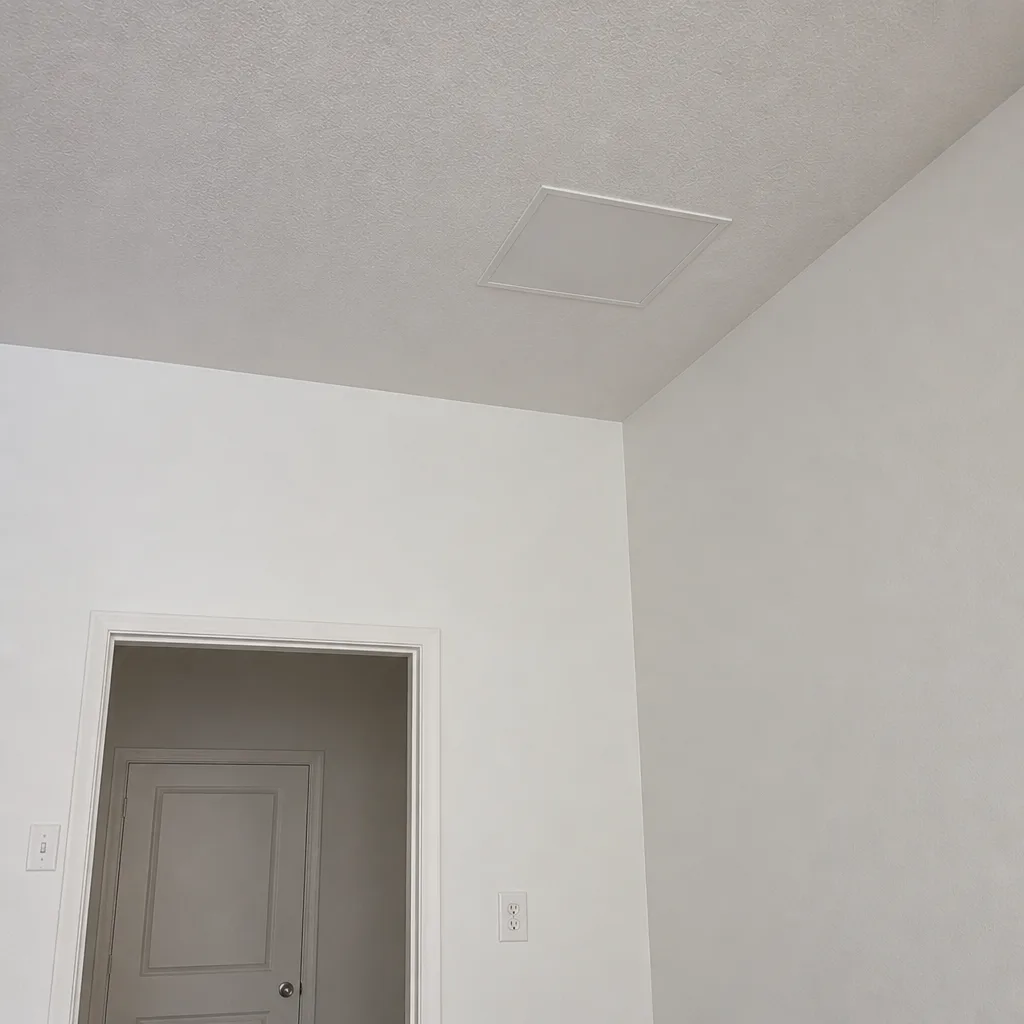 After
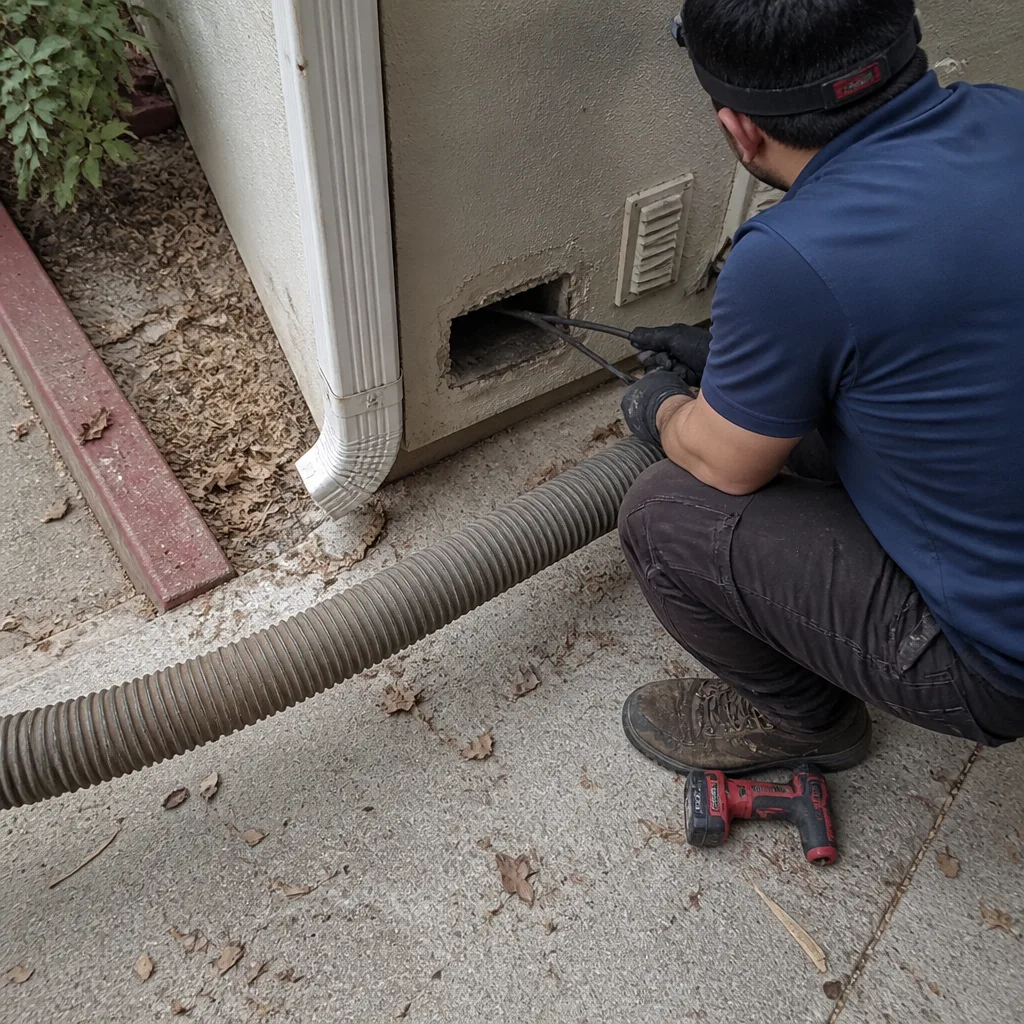 Before
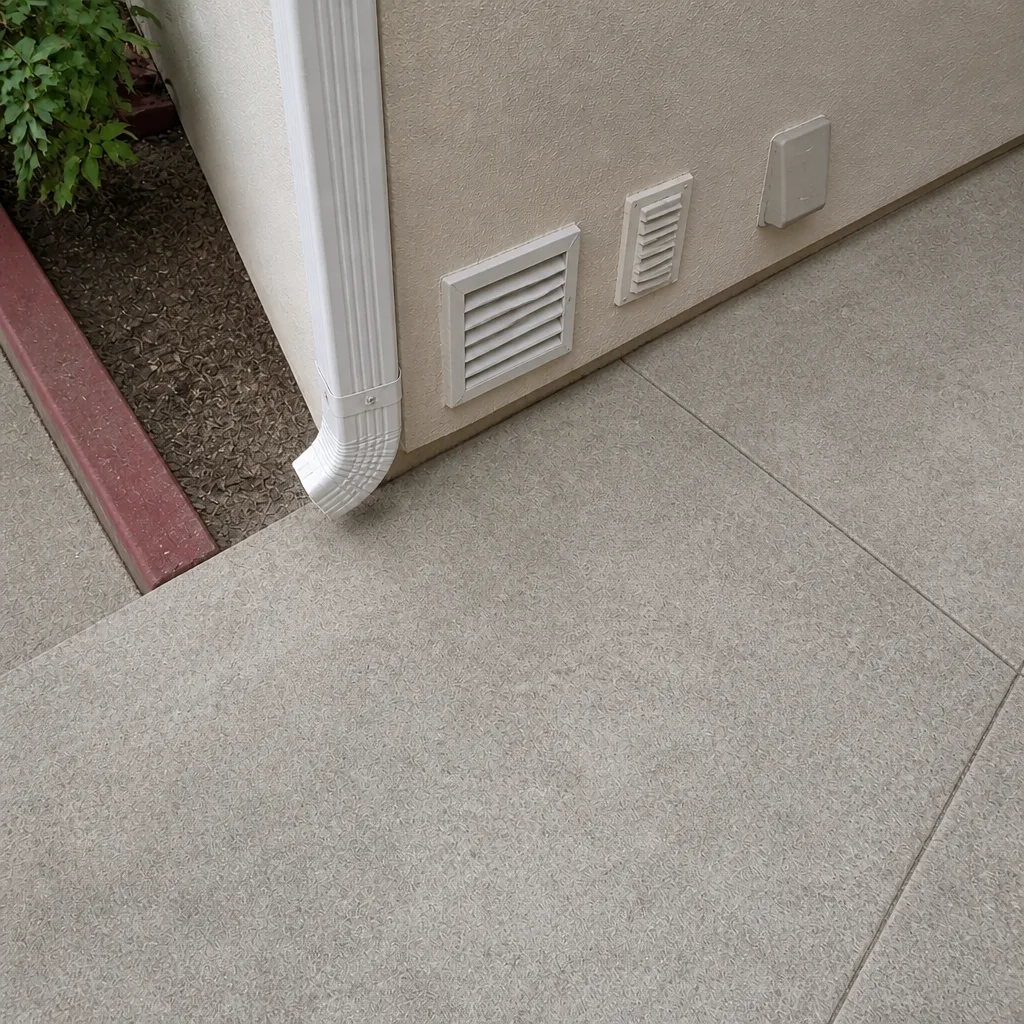 After
When to Call a Professional
Call a professional if you’ve moved into a new home and don’t know the last time the ducts were cleaned, if you’ve just finished a renovation, if you notice musty smells or visible dust at registers after a filter change, or if anyone in the household has developed allergy or asthma symptoms that seem tied to indoor air. Pet owners and parents of young children often benefit from an assessment before symptoms show up at all. So do property managers preparing a unit for turnover. Don’t attempt to clean the air handler, coil or duct interiors yourself: improper cleaning can damage flex duct, dislodge organic growth and spread contamination to the living space instead of removing it. Westpark Air Duct Cleaning offers free estimates in Westpark. Call (877) 820-9652.
Frequently Asked Questions
Air duct cleaning in Westpark is priced per system after an assessment, and the written estimate you receive sets the final price. Companies that quote a low number sight-unseen and then add charges on site are the primary reason customers distrust this industry. Ask for a flat price per system agreed before work starts, and confirm what scope that price covers (supply, return, air handler, dryer vent). Call (877) 820-9652 for an exact quote; estimates are free.
Cheap quotes usually reflect less equipment, less scope and less time on the job. A portable vacuum without sufficient CFM, no containment, no air handler cleaning and no photo documentation can all be performed in an hour or two. Purpose-built equipment (Rotobrush, Nikro, Abatement Technologies filtration) and a full-system scope are what you’re paying the difference for. When the quote is unusually low, ask what the equipment is and what’s not in scope. Call (877) 820-9652 for an estimate we’ll walk you through line by line.
You should receive before-and-after photographs of the duct interiors and air handler, taken at your system during the visit. A scope confirmation, a written summary of conditions found and any follow-up recommendations should come with them. Ask the company what documentation they provide before you book. Call (877) 820-9652 to talk through what a full report from us includes.
Most homes benefit from cleaning roughly every three to five years, more often if you’ve had a renovation, a pet addition, visible mold growth or a water intrusion event. Homes with heavy shedding pets or recent drywall work sometimes need it sooner. If you can’t recall the last clean or you’ve just bought the home, an assessment is worth booking. Call (877) 820-9652 to schedule.
Yes. Alongside residential work, we clean commercial air systems and offer the same documentation and scope confirmation. We also handle dryer vent cleaning for multi-unit buildings and property managers preparing units for turnover. Call (877) 820-9652 to discuss your property.
We answer 24/7, and fast dispatch runs from 7am to 7pm, Sunday through Friday. We’re closed Saturdays. If a duct issue comes up and you need it addressed quickly, call and we’ll book the earliest opening. Call (877) 820-9652 for a free estimate.
The Bottom Line
Reviews are a filter, not a decision. The variables that actually determine whether a duct cleaning job improves the air in your home are equipment, scope, process and documentation, and none of those show up in a star rating. Ask what vacuum and brush systems a company uses, whether it holds negative pressure, how it handles the air handler and dryer vent, and what evidence you’ll receive when the job is done. A company that answers those questions clearly is doing professional work. A company that changes the subject isn’t. If you want the short version: ask questions before you book, and expect concrete answers.
Westpark Air Duct Cleaning offers free estimates across Westpark. We use Rotobrush and Nikro equipment, integrate Abatement Technologies filtration on-site, seal and repair ducts rather than only cleaning them, and supply and install Honeywell and Aprilaire air quality products. Call (877) 820-9652. We answer 24/7. Fast dispatch from 7am to 7pm, Sunday through Friday.
Written by the team at Westpark Air Duct Cleaning.