
Nikro Air Duct Cleaning in Westpark: A Homeowner’s Guide
Most homeowners in Westpark judge a duct cleaning company by the logo on the vacuum outside their house. That’s a mistake. A Nikro Industries negative-air unit can pull more than 5,000 CFM, and a technician who doesn’t understand the tool can collapse flex duct in under ten minutes of steady suction. The brand name means something; the hands operating it mean more. This guide explains what Nikro equipment actually does, how it should be matched to your ductwork, and the questions that separate a skilled operator from a homeowner with a branded machine.
Key Takeaways
- Negative-air systems like Nikro’s move far more debris than shop-vac setups, but pressure has to be tuned to the duct material.
- Sheet metal and flex duct need different tools, brush speeds, and suction levels.
- Equipment brand alone proves nothing; NADCA standards and technique do.
- Ask how a technician handles flex duct, then listen for a real answer.
- A clean system usually includes sealing and filtration, not just extraction.
What does Nikro’s negative-air system actually do?
Nikro’s negative-air unit creates a pressure drop inside your duct system so that dislodged debris travels toward the vacuum rather than into your rooms. While a shop vac pulls a narrow stream of air at the wand, a negative-air setup depressurizes the whole duct run and holds that pressure while contact tools loosen the dirt. The result is extraction rather than redistribution.
The mechanics matter because of what’s inside your ducts: settled dust, pet dander, construction debris from a recent remodel, and whatever the previous owner tracked in. In a mild Westpark climate, your system pulls air year-round without the long heating-season breaks that colder regions get, so that material keeps cycling back into living space. A high-CFM unit removes it, provided the operator knows where to create the return path.
At Westpark Air Duct Cleaning, we pair a Nikro vacuum with Abatement Technologies air filtration on-site. That filtration captures contaminants the vacuum lifts near the register or access port, so the job doesn’t end with a fine layer of dust on your furniture. Equipment without containment is only half the work.
Contact vacuum tools versus agitation tools: which duct gets which?
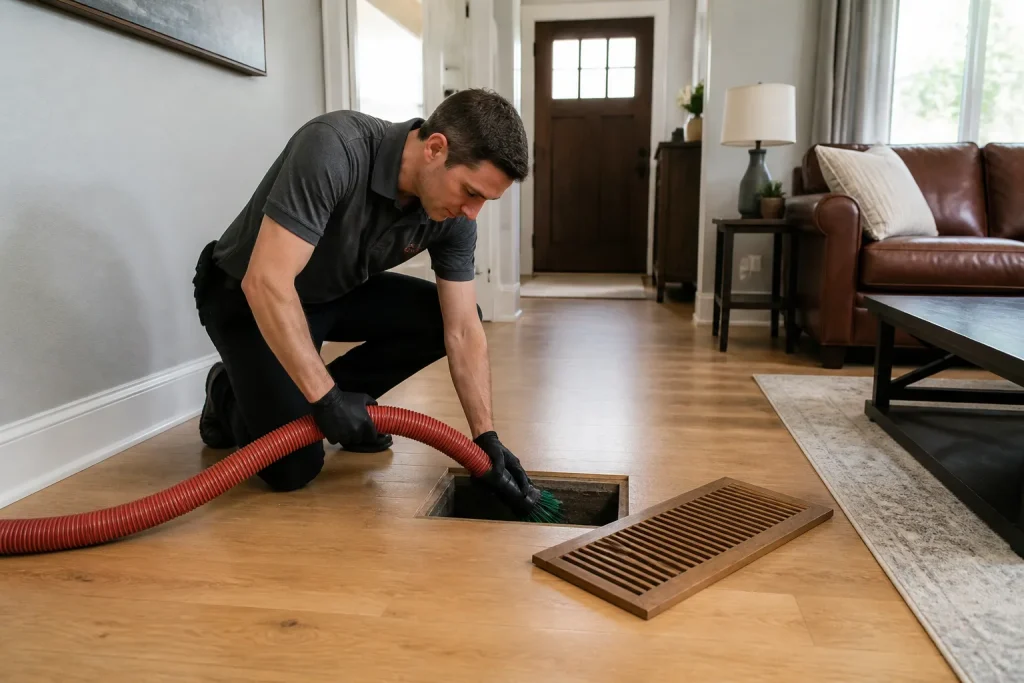
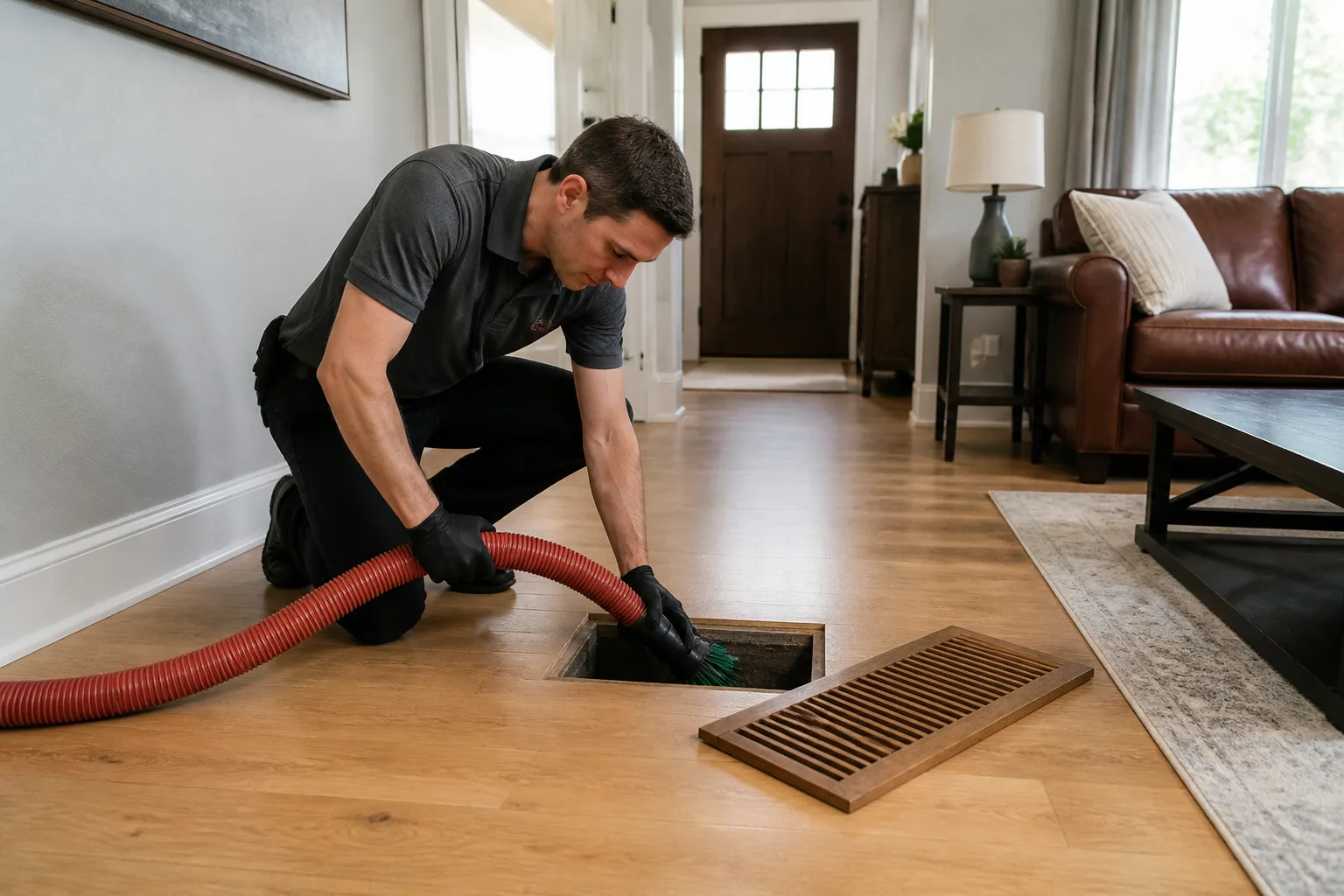
Contact vacuum tools and agitation tools solve different problems. Contact tools put suction directly against the duct surface; agitation tools use brushes or air whips to break debris loose first. Knowing which to use where is the real skill.
- Sheet metal ducts handle aggressive agitation. Rotary brushes and air whips scour the walls, then negative pressure carries the debris out.
- Flex duct needs a light hand. Too much suction or brush speed can tear the inner liner or collapse the spiral, and repairs get expensive fast.
- Transition points and plenum areas usually call for contact tools, since debris collects on flat surfaces that agitation can’t reach.
- Register boots and near-vent surfaces get contact vacuuming before extraction begins, so loosened material doesn’t enter the main run.
A tech who names a single brush for every job is telling you something. Ask what tool they’d use in a flex-duct run versus a sheet metal trunk. If the answer is the same, the Nikro brand on the machine won’t save the liner. This is where Rotobrush rotary-brush systems complement a Nikro vacuum: the brush does the agitation, the vacuum does the extraction, and the technician decides the combination.
Why do sheet metal and flex ducts need different pressure settings?
Flex duct’s inner liner is a plastic layer usually a few thousandths of an inch thick. Under high negative pressure, that liner can delaminate from the wire helix, or the entire assembly can flatten. Sheet metal doesn’t have that problem; it tolerates aggressive suction and scrubbing. A Nikro vacuum built to move five thousand cubic feet per minute will do real damage to flex duct if the operator leaves the unit at full draw with no bypass.
Matching pressure to duct type involves several adjustments:
- Reducing suction at the machine or by opening a bypass for flex runs.
- Using a soft-bristle or non-rotary tool in the flex sections.
- Keeping agitating hardware off the inner liner entirely.
- Checking for collapsed sections and torn liner after the job, and reporting them rather than hiding them.
- Recommending duct repair and sealing where the liner is already compromised.
In our experience running jobs around Westpark, flex duct is common in newer builds and remodels. A homeowner can’t see a collapsed run from the register. Ask your tech how they adjust pressure for flex, and whether they inspect the liner after cleaning. That question alone filters out plenty of operators.
What do NADCA standards require beyond equipment brand?
The point of NADCA standards isn’t to sell a machine. It’s to set expectations for the process: source removal rather than surface vacuuming, containment during cleaning, verification after the job, and clear reporting to the homeowner. Those standards apply whether the crew brings Nikro gear, Rotobrush systems, or anything else.
Verification matters most. NADCA guidance calls for photographic before-and-after documentation, so you can see what your ducts looked like when the crew opened an access port and what they look like when the job wraps. Ask the company you hire whether they’ll show you photos of your own system, not stock images.
Westpark Air Duct Cleaning follows that approach on every job. We photograph before and after, contain the work area with Abatement Technologies filtration, and note anything that needs repair rather than leaving you to guess. The standard, not the logo, is what protects your home.
When to call a pro
If your registers show dust streaks, if you’ve just finished a renovation, or if anyone in the house has allergies that seem to flare indoors, it’s worth an inspection. You could try a homeowner vacuum at the registers, and that might catch the surface dirt. It won’t touch a compromised run or a crushed flex section. Call us when the symptoms outpace the DIY fixes.
Related services in Westpark: air duct cleaning and HVAC cleaning cover the whole pathway, and dryer vent cleaning tackles the lint problem most homeowners forget entirely.
Red flags: Nikro equipment used below its capability
Equipment on the truck is easy to verify. What happens inside your home is harder. The warning signs below usually show up long before the invoice does, and they rarely depend on which brand of machine pulled up.
- No access ports created. A real cleaning requires access to the main trunk, not just a register. If the crew never opens the system, the Nikro unit is decoration.
- One tool for every duct type. Flex and metal need different handling. A single brush run end to end suggests the pressure notes never got read.
- No containment. If you don’t see filtration equipment during the job, dust is being redistributed, not captured.
- No before-and-after photos. Verification is part of the standard. Skipping it is a red flag regardless of equipment.
- Cleaning with no repair conversation. If the tech never mentions leaky joints or a sagging flex run, they weren’t looking.
We repair ducts, not just clean them. A leaking system is never truly clean; the leaks pull from unconditioned spaces and undo the work. That’s why our service plan includes duct repair and sealing alongside extraction, and why we carry Guardsman treatment products for sanitizing when contamination calls for it. Your entire air system, cleaned, sealed, and treated, is the goal, not a machine running for an hour.
What should you ask before hiring anyone with a Nikro truck?
Ask a few questions before you book. The answers tell you more than the side of the van. Here’s the list we’d want a homeowner to run through with any company they’re considering:
- How do you adjust suction for flex duct?
- Will you create access ports in the main trunk?
- What filtration equipment do you run during the job?
- Will I see before-and-after photos of my own system?
- What do you do if you find a damaged or collapsed run?
- Does the job include duct repair and sealing if needed?
- Are you providing a written estimate with one flat price per system?
One flat price per system, agreed before the work starts, is how every Westpark Air Duct Cleaning job is quoted. No per-vent creep, no bait-and-switch from a teaser coupon price into a bigger invoice. You’ll know what the work costs before anyone touches a register. That’s the standard you should set for anyone operating a Nikro or Rotobrush system in your home.
Our technicians have up to 12 years of experience reading duct systems in homes like yours. We work with Honeywell and Aprilaire products to extend the job beyond a one-time clean into air quality you can maintain. If the air in Westpark feels heavier than it should, there’s usually a reason in the ducts, and there are usually questions worth asking before you let anyone open them.
The Bottom Line
Nikro equipment belongs to a class of professional tooling that outperforms consumer-grade vacuums by a wide margin, but the operator decides whether that power gets tuned correctly for your duct material. Ask about flex versus sheet metal settings, verify the process beyond the badge, and insist on before-and-after photos of your own system. A good company will welcome every one of those questions.
If you’re in Westpark and need help, Westpark Air Duct Cleaning offers free estimates. Call (877) 820-9652. We answer 24/7. Fast dispatch from 7am to 7pm, Sunday through Friday. From the duct to the vent to the air you breathe, we cover the whole path: start with Westpark Air Duct Cleaning for the full service overview.
Frequently Asked Questions
Nikro negative-air systems depressurize the entire duct run and hold that pressure while contact tools loosen debris, extracting material rather than pushing it around. Shop vacuums pull a narrow stream of air at one register and can’t reach the main trunk. The difference shows up in what’s left inside the system afterward.
Yes, if it’s run at full draw without adjustment. Flex duct’s inner liner can delaminate or collapse under high negative pressure, and the fix is a real repair. Ask your technician how they reduce suction and which tools they use on flex before booking. Call (877) 820-9652 for an exact quote on our Westpark work; estimates are free.
No. NADCA standards cover process, containment, verification, and reporting, not equipment brand. A company can own excellent equipment and still skip access ports, filtration, or before-and-after photos. Verify the process, not just the machine.
Pricing depends on the system size, duct configuration, and whether repair or sealing is needed. We quote one flat price per system in a written estimate before work starts, so there’s no per-vent surprise. Call (877) 820-9652 for a free estimate and we’ll walk through what your specific system needs.
Written by the team at Westpark Air Duct Cleaning.
Need Air Duct Cleaning Help?
Call Westpark Air Duct Cleaning - the local pro we connect you with is licensed and insured, here with fast help in Westpark.
(877) 820-9652