
Honeywell Air Duct Cleaning in Westpark: A Homeowner’s Guide
Here’s the mix-up we run into most: people search for “Honeywell air duct cleaning” expecting Honeywell to make the machine that cleans their ducts. It doesn’t. Honeywell makes the filters, UV systems, and air quality monitors that keep a freshly cleaned system clean. That’s an important distinction, because it changes what you should actually buy and who should do the work. If you’d rather skip the research and get a straight answer, call (877) 820-9652.
What does Honeywell actually make that relates to your ducts?
Honeywell doesn’t manufacture duct cleaning equipment. What Honeywell builds are components that sit inside or alongside your HVAC system to filter, treat, or monitor the air moving through it. If you’re comparing “Honeywell duct cleaning” offers, it helps to know exactly which category of Honeywell product you’re being sold, because each one does a different job. Here’s the breakdown:
- Media filters: High-efficiency pleated filters that replace the standard 1-inch filter in your return air grille or filter cabinet. They capture finer particles than a basic filter and are the simplest Honeywell upgrade most Westpark homes can use.
- Electronic air cleaners: Powered units that charge particles electrically and trap them on collection cells. They need periodic washing and occasional service, but they don’t create the airflow restriction a very dense media filter can.
- UV germicidal lights: Lamps mounted inside the duct or at the evaporator coil that shine ultraviolet light on a surface to inhibit microbial growth.
- Whole-home air purifiers: Larger installed units that combine filtration stages and sit in the duct run, treating all the air that passes through rather than one room at a time.
- Air quality monitors and thermostats: Controls that sense particulate levels and humidity and can trigger filtration or ventilation in response.
None of these products clean a dirty duct. They maintain a clean one. At Westpark Air Duct Cleaning, we’re authorized to supply and install Honeywell and Aprilaire indoor air quality products, so we see the whole picture: the state of the ducts and what belongs in them.
How is a Honeywell whole-home filter or purifier installed in relation to your ducts?
A Honeywell whole-home filtration product installs into the duct system itself, usually in a filter cabinet on the return side or as an inline unit in the main trunk. That’s the key difference from a portable purifier. A portable unit cleans the air in one room, and only as well as that room’s air happens to circulate into it. A duct-mounted product treats every cubic foot of air your system moves, in every room the system serves.
Installation typically involves cutting into the return duct to fit a cabinet or housing, sealing the new opening so it doesn’t leak, wiring the unit if it’s powered, and confirming static pressure stays within the blower’s range. A filter that’s too restrictive for the system is worse than no upgrade at all: it starves airflow, raises energy use, and can shorten equipment life. That’s why we check the system before recommending a specific filter or purifier model in a Westpark home.
What a Honeywell filtration product does address: fine airborne particles, pollen, pet dander, and the general dust load that keeps landing on your furniture. What it doesn’t address: debris already sitting in the ducts, gaps and disconnected joints leaking conditioned air, or a dryer vent packed with lint. Those need cleaning and duct repair first. Westpark Air Duct Cleaning handles the full air pathway so the equipment downstream has something worth protecting.
Why does UV germicidal treatment inside ducts work differently from a portable UV purifier?
UV light only affects what it can actually reach, and that’s the whole story. A portable UV air purifier passes a small volume of room air close to a lamp, so exposure time and intensity are limited to one appliance’s reach. A UV germicidal lamp installed inside the duct sits in the airstream or at the evaporator coil, where moisture and microbial growth tend to collect, and it runs continuously while the system operates.
But here’s the part sales pitches leave out: a UV lamp treats surfaces and air that pass within its effective range. It does not sterilize an entire duct run. It won’t clean caked dust off duct walls, and it isn’t a substitute for removing the food source that microbial growth feeds on. In our experience, UV makes the most sense when it’s added after cleaning, mounted where the coil and drain pan stay damp, and paired with proper filtration. Adding a lamp to a dirty system is like putting a UV wand in a dusty closet: the light works, but the mess stays.
Guardsman-grade treatment products used in our sanitizing applications provide documented antimicrobial protection, and a UV lamp can complement that work. The order matters: clean, then sanitize, then treat with UV if the system calls for it.
Is a Honeywell product a complement to professional duct cleaning, or a substitute being sold in its place?
It’s a complement, every time. No filtration product, UV lamp, or purifier on the market removes debris from inside a duct system. If someone tells you a Honeywell filter or purifier means you can skip cleaning, that’s the wrong answer, and it’s worth walking away from.
Use this checklist when you’re comparing offers in Westpark:
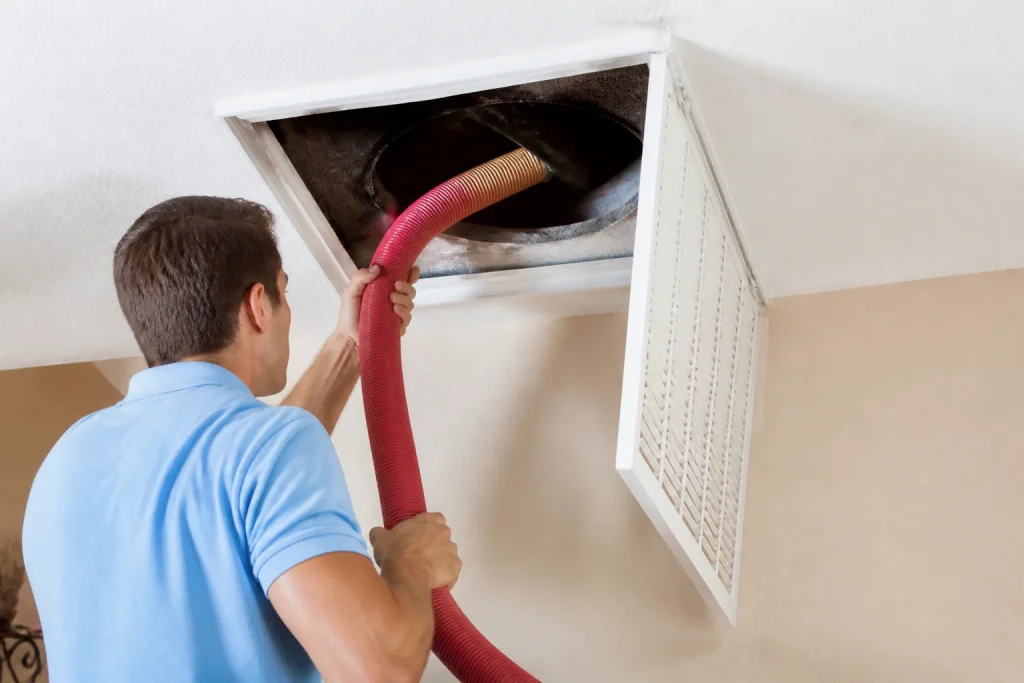
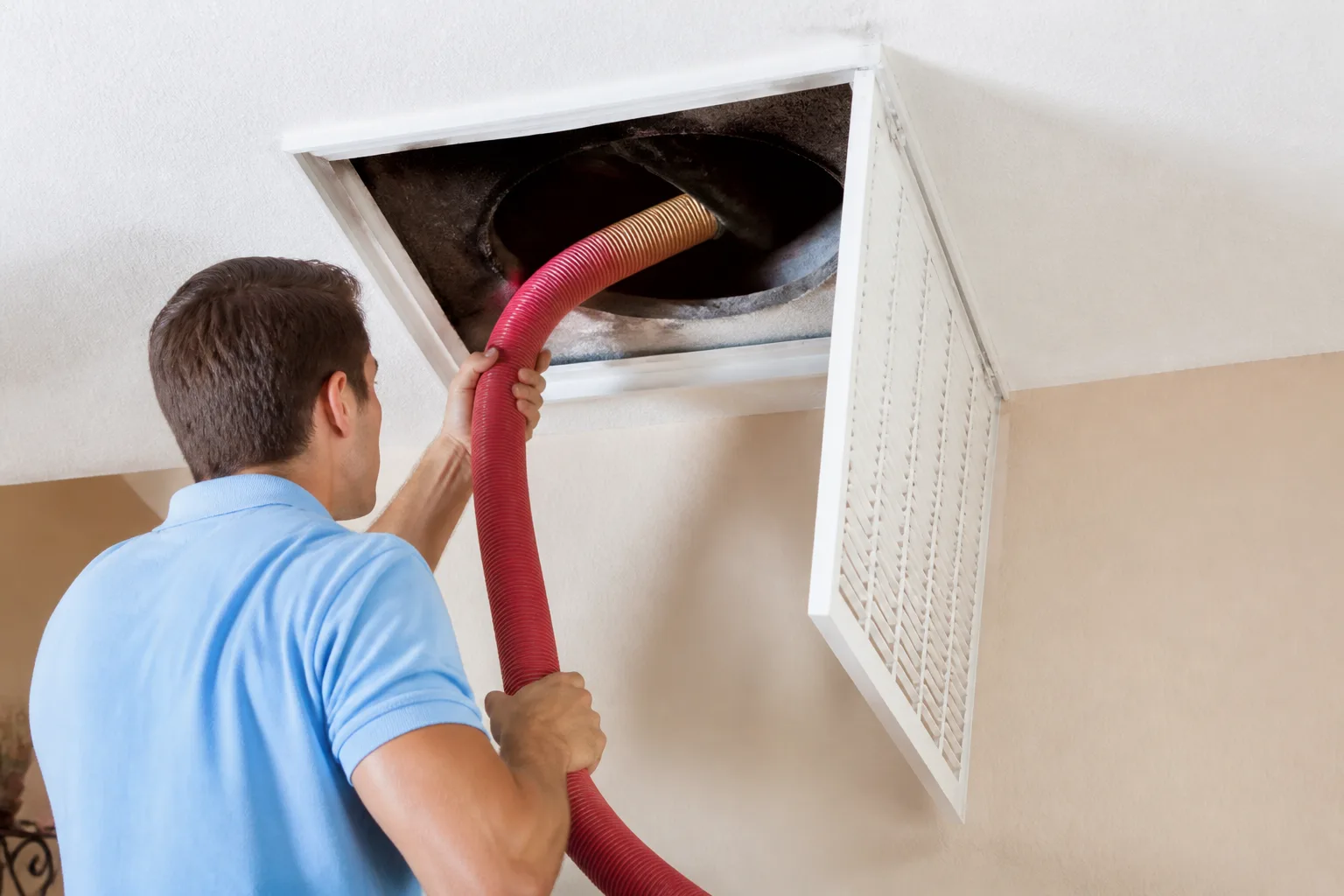
- Ask what equipment does the cleaning. Professional systems from Rotobrush and Nikro are purpose-built for HVAC cleaning and use rotary brushes and high-powered vacuum. A shop vac and a hose is not the same job.
- Ask about containment. Cleaning dislodges debris. We run Abatement Technologies air filtration on-site so contaminants are captured instead of redistributed through your home.
- Ask whether the company repairs ducts. A leaking, disconnected duct system is never truly clean. Cleaning without sealing the leaks just means the dirt comes back through the gaps.
- Ask if the Honeywell product is being sold as a replacement for cleaning. If yes, that’s a red flag.
- Ask for before-and-after photos. A legitimate clean is documented. You should see the inside of your own ducts, not a stock photo.
- Ask what the whole job costs, before anyone starts. One flat price per system, agreed in writing, so the invoice matches the quote.
What questions should you ask about post-cleaning treatment?
The right time to plan treatment is before the cleaning, not after. Once the ducts are clean, you have a short window to add filtration or sanitizing before everyday dust starts settling again. These are the questions worth asking any company you’re considering:
- Will you measure my system’s airflow before recommending a filter? A restrictive filter on an undersized return will cause problems.
- What filter size and MERV range fits my existing cabinet, and do I need a new cabinet to get there?
- Is a UV lamp compatible with my air handler, and where would it mount?
- Do you supply and install the Honeywell or Aprilaire product, or just recommend it? We stock neither, but we can supply and install both, which means one party is accountable for fit and function.
- What does routine upkeep look like? Media filters need changing, electronic cells need washing, UV lamps need replacing. Ask how often so the upgrade doesn’t quietly become a maintenance burden.
One thing we’d add: ask about the ductwork itself. A Honeywell purifier installed ahead of a leaking duct run wastes a portion of its work on attic or crawlspace air. That’s why air duct cleaning and sealing belong in the same conversation as any filtration upgrade.
When should you call a professional instead of buying a product?
If you’re noticing musty smells when the system kicks on, visible dust blowing from vents right after cleaning, uneven airflow between rooms, or a dryer that takes longer than it used to, a product purchase won’t solve it. Those are signs of a system problem: contamination, leakage, or a clogged vent. That’s when a professional assessment earns its keep.
Our technicians have up to 12 years of experience reading exactly these symptoms, and we use HVAC cleaning and duct repair together because cleaning a leaking system is only half a job. Safety matters here too: dryer vents are the leading cause of household dryer fires, and lint packed behind a dryer is a real fire hazard worth having removed by someone who knows how to do it without damaging the vent run. That’s what dryer vent cleaning is for.
Related services in Westpark: air duct cleaning, dryer vent cleaning, HVAC cleaning, and duct repair and sealing.
The Bottom Line
Honeywell doesn’t clean ducts. It makes the filtration, UV, and monitoring equipment that keeps a clean duct system clean, and that equipment only performs as intended when the system underneath it is clean, sealed, and moving air properly. So the useful sequence for a Westpark homeowner is straightforward: clean the system with professional-grade equipment, seal the leaks, sanitize where needed, then add a Honeywell or Aprilaire product if it fits your system and your goals. If you’re in Westpark and need help, Westpark Air Duct Cleaning offers free estimates – call (877) 820-9652. We answer 24/7. Fast dispatch from 7am to 7pm, Sunday through Friday.
Frequently Asked Questions
No. Honeywell makes filters, UV germicidal lamps, electronic air cleaners, whole-home purifiers, and air quality controls. None of them clean ductwork. Duct cleaning requires purpose-built equipment like Rotobrush and Nikro systems operated by a trained technician.
No. A whole-home Honeywell purifier treats air passing through the system but cannot remove debris already inside the ducts, fix leaking joints, or clear a clogged dryer vent. Cleaning and repair come first; filtration maintains the result afterward.
It can be, particularly when mounted at the evaporator coil where moisture collects. It’s most worthwhile after cleaning and sanitizing, paired with good filtration, and sized to your system. It isn’t a substitute for removing the buildup that microbes feed on, and it only reaches surfaces within the lamp’s range.
The price depends on the size and layout of your system, the number of vents and returns, and whether duct repair, sealing, or sanitizing is added. We quote one flat price per system before any work starts, and the written estimate sets the final price, so there are no surprises once a technician is on site. Call (877) 820-9652 for a free estimate – we’re glad to walk you through what your system actually needs.
Written by the team at Westpark Air Duct Cleaning.
Need Air Duct Cleaning Help?
Call Westpark Air Duct Cleaning - the local pro we connect you with is licensed and insured, here with fast help in Westpark.
(877) 820-9652