
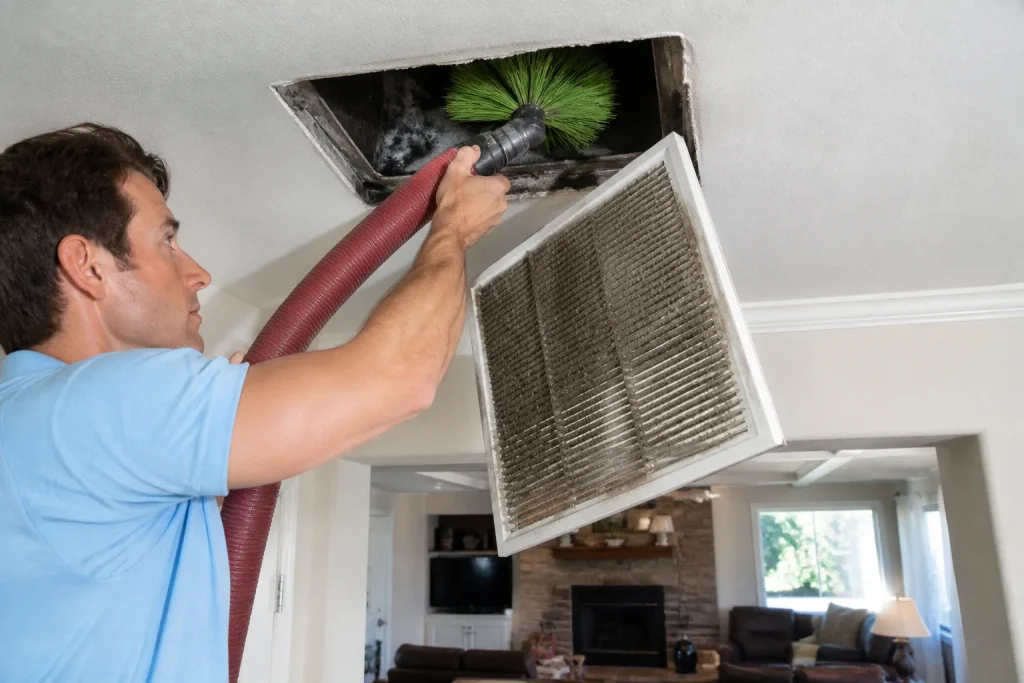
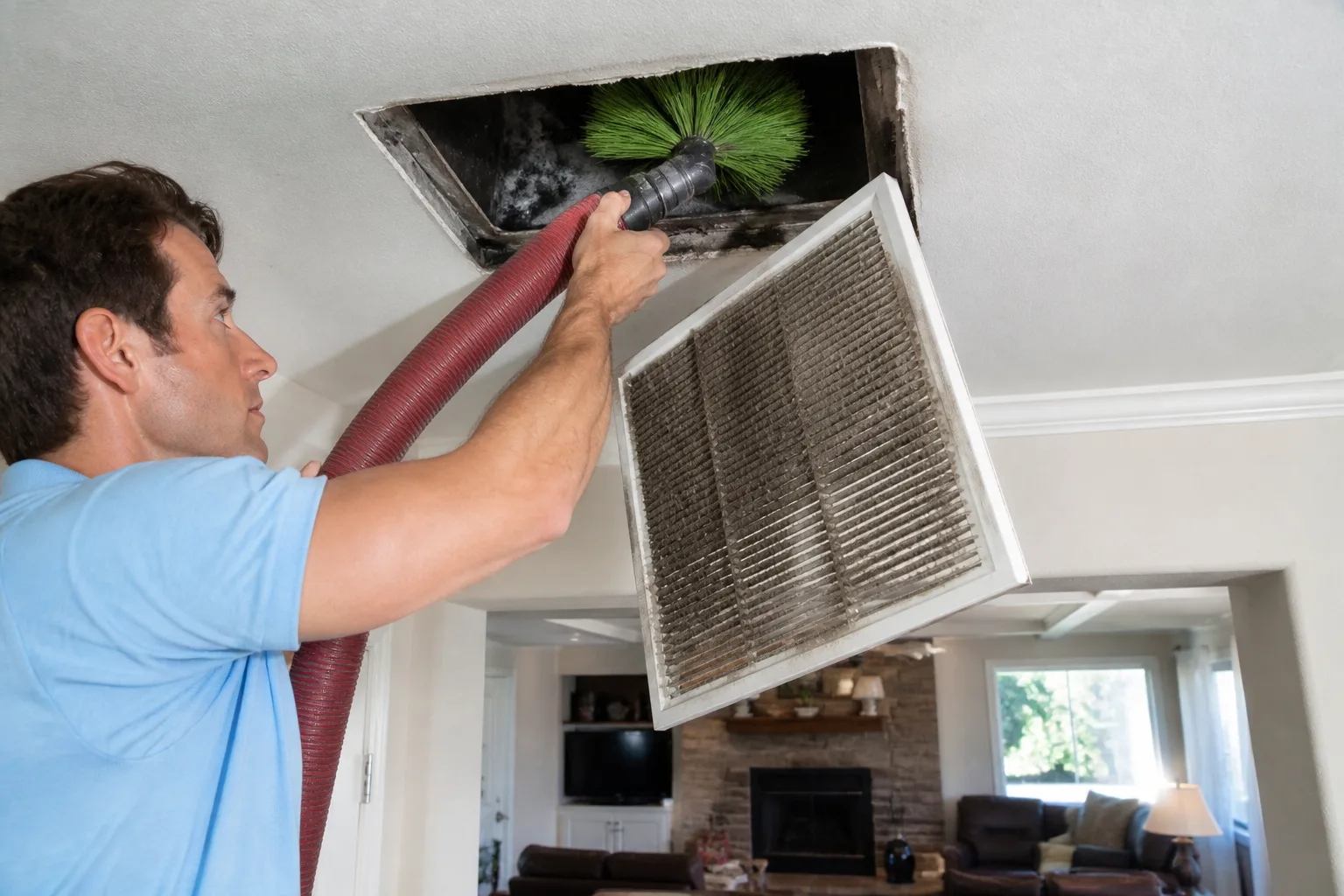
Air Duct Cleaning: Repair or Replace? How Westpark Homeowners Decide
Most homeowners assume dirty ducts just need cleaning. That’s often true. But if your duct system leaks, sags, or has been chewed through by rodents, cleaning it without fixing the underlying damage is like mopping a floor with a leaky pipe dripping above it – you’ll be back to square one within months. In Westpark, older homes and hot attics make this a real question. Here’s how to tell which path your system actually needs.
Why Cleaning Isn’t Always the Answer
Cleaning removes contamination. It does not restore structure. That distinction matters because a compromised duct system pulls air from places you don’t want: attic cavities, wall voids, crawl spaces, and gaps around old joints. Every time your air handler runs, it can draw particles in through those openings and distribute them back into your living space. In our experience, this is why some homeowners clean their ducts, notice a difference for a few weeks, and then feel the air quality slide back to where it started.
The fix has to match the problem. If ducts are intact and simply dirty, cleaning is the right call. If they’re leaking or damaged, cleaning without repair throws money at a symptom. And in Westpark’s older housing stock, leakage is more common than most people realize. Attic runs in particular take heat exposure year after year, and that slowly stresses joints, flex duct connections, and any taped seams that were installed decades ago.
Here’s the quick way to think about it:
- Contamination only – cleaning solves it, no structural work needed.
- Leakage – cleaning plus sealing addresses it.
- Collapse, rodent damage, or failed connections – physical repair or replacement of the affected runs.
You can’t decide which category you’re in until someone actually inspects the system. That’s the starting point.
How to Read a Duct Leakage Test
A duct leakage test measures what percentage of the air your system moves escapes before it reaches your rooms. The result is expressed as a percentage, and it’s the single most useful number for deciding between sealing and replacement. If the test shows a leakage rate in the low double digits, sealing is usually the practical fix. If it climbs toward 20% or beyond – which is not uncommon in Westpark homes built before 1990 – you’re paying to condition air that never makes it into the house.
Interpreting the result takes context. A tester should tell you not just the number but where the leakage is concentrated:
- Distributed leakage along many joints and seams – a strong candidate for sealing.
- Leakage at the air handler connection – often correctable with mastic or a mechanical connection fix.
- Leakage from disconnected or crushed runs – sealing won’t help; that section needs physical repair.
The number alone doesn’t decide it. Location does. Ask for the breakdown, not just the total. A company that hands you a percentage with no location detail hasn’t done the diagnostic work that tells you which fix you actually need.
Signs Your Ducts Have a Structural Problem, Not Just Dirt
Dirt and damage show up differently. Contamination looks like dust streaks at the registers and a stale smell when the system kicks on. Structural failure shows up as performance problems, and those are the clues worth acting on.
Watch for these indicators:
- Certain rooms never get comfortable no matter how long the system runs.
- Dust returns quickly after a recent cleaning.
- You can see sagging, crushed, or disconnected flexible duct in the attic.
- Rodent droppings, nesting material, or chew marks near duct runs.
- Higher energy bills with no other explanation.
- Whistling or rattling at joints, suggesting separation.
Any two of these together is a signal to have the system inspected before booking a cleaning. A dirty system and a broken system can feel similar from the couch, but they need very different work. If you want to understand what a thorough air duct cleaning involves when the system is sound, that page lays out the process step by step.
What’s Common in Westpark’s Older Homes
Westpark’s housing mix spans several decades, and duct construction changed along the way. Homes built before 1990 often have flex duct runs through hot attics, taped seams that have aged out, and connections that were never sealed to current standards. Those conditions add up to leakage. Homes from the 1990s and 2000s may have better duct materials but still show poorly sealed joints at the air handler and at register boots.
Attic heat is the quiet culprit here. A duct run that bakes through hot afternoons season after season can degrade tape, stiffen flexible duct, and loosen connections. Westpark winters are mild, so freezing isn’t the concern. Heat cycling is. What that means practically is that leakage is often concentrated in attic runs, not in the walls. A technician who checks only the visible registers will miss it. The attic inspection is where the real answers usually come from.
Rodent intrusion also turns up in older homes with vented crawl spaces and older attic penetrations. Chewed flex duct is a replacement job. There’s no sealing around a torn section that gets you anything but more contaminated air.
Sealing vs. Replacement: Two Different Fixes
Duct sealing and duct replacement solve different problems, and mixing them up wastes money. Sealing closes the small leaks – joints, seams, boot connections, and pinholes – that let air escape or contaminants get pulled in. It’s the right answer for a system that’s structurally intact but leaky. Mastic sealing handles accessible joints and connections by hand. Aerosol-based sealing reaches leakage spread across the system that a technician can’t physically get to, applying an internal sealant that closes small openings from the inside.
Replacement is for the parts that can’t be sealed:
- Crushed or collapsed duct sections
- Disconnected runs
- Duct damaged by rodents
- Runs that are undersized and can’t deliver airflow to a room no matter how well they’re sealed
Sealing a collapsed run is a wasted service call. Replacing a leaky but sound system is an expensive overcorrection. The diagnostic work tells you which side of that line you’re on. For more on the repair side of the work, our HVAC cleaning process covers how we address the system’s moving parts and connections in tandem with the ducts.
When Repeated Cleaning Costs More Than One Replacement
Here’s the math that changes minds. If a duct system leaks badly enough, it will re-contaminate. Cleaning twice over a few years to keep up with the problem adds up to more than the one-time cost of repairing or replacing the failing sections. The worst outcome is paying for cleaning, watching the problem return, and paying again – without ever fixing the reason it keeps coming back.
Our own teams work with a lineup of professional equipment that includes Westpark Air Duct Cleaning services backed by Abatement Technologies filtration to contain contaminants on site, plus dryer vent cleaning as part of the broader air pathway work. Cleaning the ducts while ignoring the leaks is the mistake we see most often. If the diagnosis is structural, repair isn’t a sales pitch. It’s the more economical answer over time. Our technicians have up to 12 years of experience reading systems and telling homeowners the difference honestly.
How We Approach a Diagnostic in Westpark
We start with an inspection of the full air pathway – registers, visible runs, attic connections, and the air handler. We use professional-grade equipment from Rotobrush and Nikro, and we run Abatement Technologies filtration on site during any cleaning work so dislodged debris is captured rather than redistributed through your home. Where duct repair and sealing are part of the plan, we scope that separately so you see what each step costs before work begins.
If you’d rather not work through this yourself, call (877) 820-9652. We answer 24/7. Fast dispatch from 7am to 7pm, Sunday through Friday.
The Bottom Line
Clean your ducts if they’re structurally sound and simply dirty. Repair or replace them if they leak badly, sag, disconnect, or show rodent damage. Cleaning a compromised system wastes money because the contamination returns. In Westpark’s older homes and hot attics, a leakage test and a careful inspection are the two steps that tell you which path is right. A written estimate sets the final price, and every job starts with an honest assessment of what your system actually needs.
If you’re in Westpark and need help figuring out where your system stands, Westpark Air Duct Cleaning offers free estimates. Call (877) 820-9652. We answer 24/7. Fast dispatch from 7am to 7pm, Sunday through Friday.
Frequently Asked Questions
Clean them if they’re structurally intact and just dirty; repair or replace them if they leak badly, collapse, disconnect, or show rodent damage. A leakage test and visual inspection make the difference clear. Call (877) 820-9652 for a free estimate.
There’s no single cutoff, but leakage climbing toward 20% is a strong sign sealing or repair is warranted rather than cleaning alone. The location of the leaks matters as much as the number. Call (877) 820-9652 to have the system inspected.
Sealing fixes small leaks at joints and connections on a structurally sound system. It can’t fix collapsed, disconnected, or rodent-damaged runs – those need physical repair. Call (877) 820-9652 and we’ll tell you which applies to your home.
Because the leakage is still there. A system that pulls contaminants in through gaps will re-contaminate a clean duct system within months. Fixing the leaks is what makes a cleaning last. Call (877) 820-9652 for a diagnosis.
Written by the team at Westpark Air Duct Cleaning.
Need Air Duct Cleaning Help?
Call Westpark Air Duct Cleaning - the local pro we connect you with is licensed and insured, here with fast help in Westpark.
(877) 820-9652