
Top Signs You Need Air Duct Cleaning Service – Don’t Ignore These
By the time you can see dust blowing from a supply vent, the particulate load inside that duct has likely been building for a year or more. The vent is just the last place it shows up. Most homeowners wait for the obvious signs and miss the quieter ones that arrive months earlier, which means the system keeps recirculating what it has already collected. Here’s how to read the early signals, and how to tell duct contamination apart from problems cleaning alone won’t fix.
Why Visible Dust Is the Last Warning Sign, Not the First
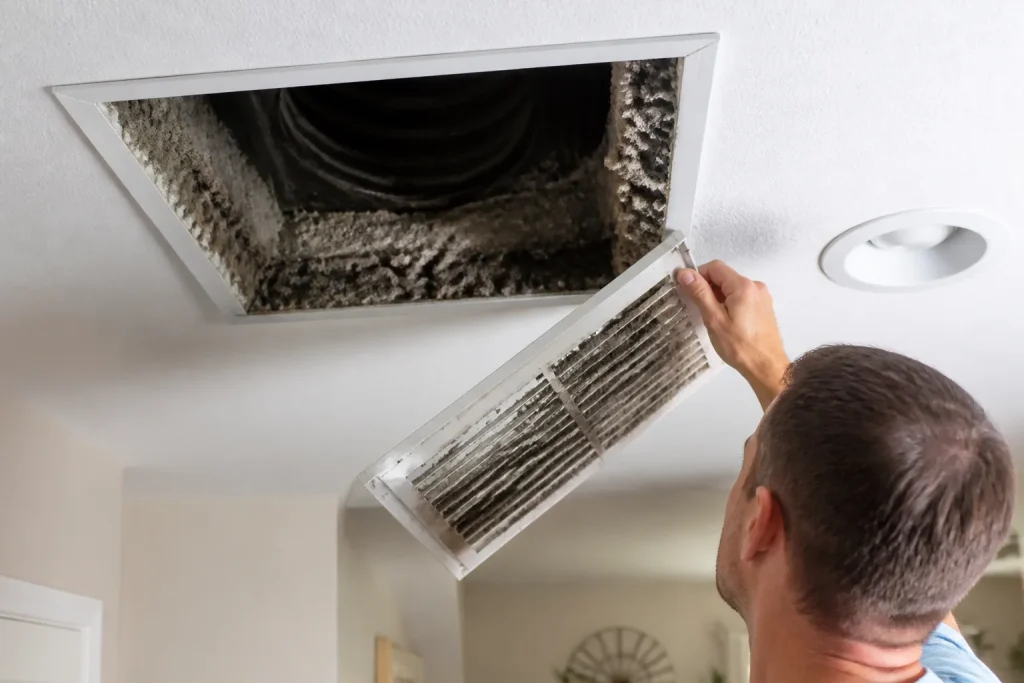
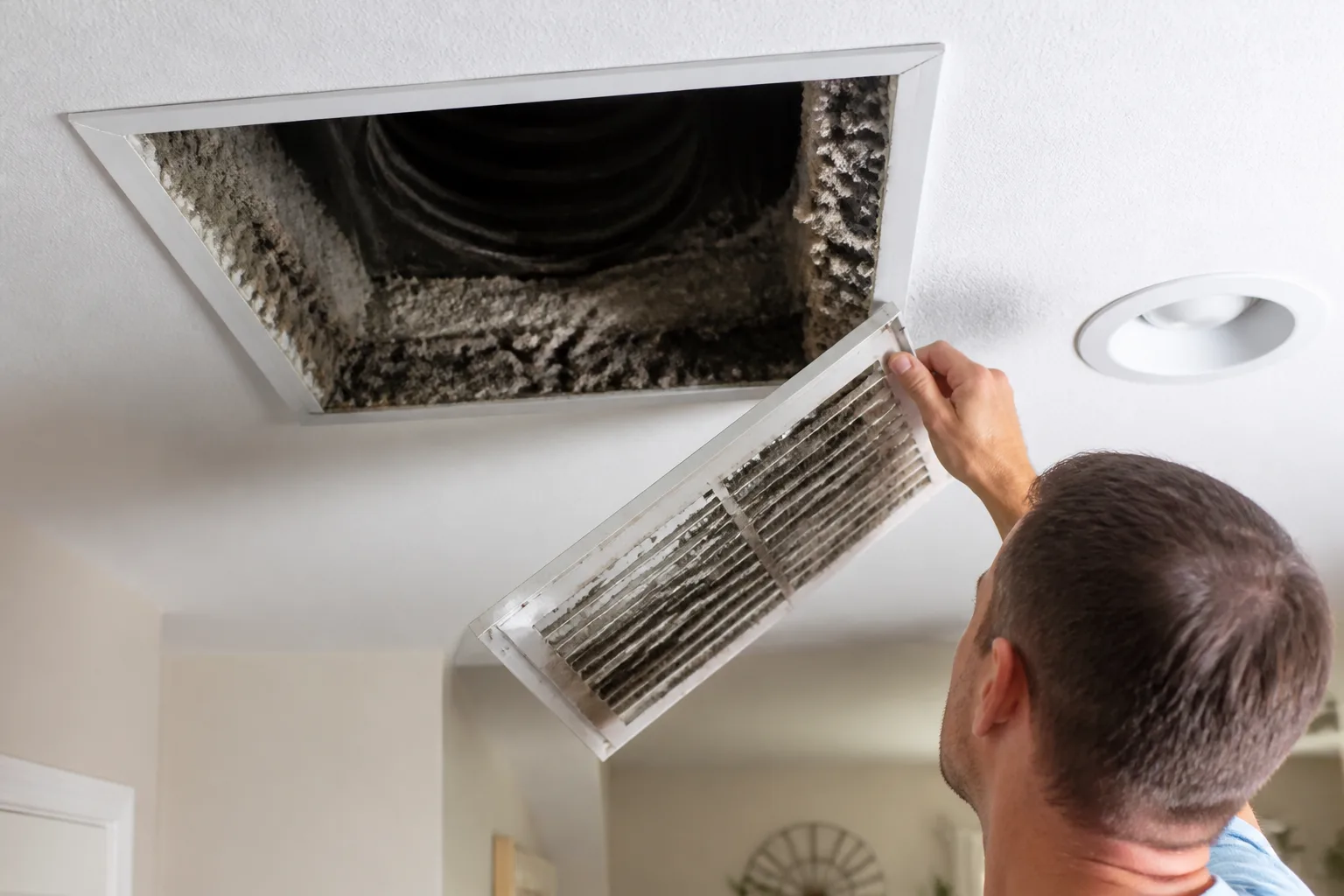
A forced-air system pulls air through the return, past the filter, across the blower and heat exchanger, then pushes it out every supply. Along the way, air moves slowly enough in the trunk lines and branch runs that particles settle out of it. Fine dust, skin cells, pet dander, and renovation debris coat the duct walls in thin layers. That layer builds long before it becomes heavy enough to slough off and blow into a room.
What this means practically: dust on a vent register is a lagging indicator. It tells you contamination reached the point where airflow can carry it back out. The early indicators are subtler, and they show up in how the system behaves rather than how it looks.
- Filters load faster than they used to. If a filter that once lasted a season is now gray and matted in half that time, the ductwork itself is contributing particulate. The filter is catching what the ducts release.
- Rooms feel starved for air. Rising static pressure means the system is fighting resistance. Contamination and leakage both raise it, which is why we check both.
- The system cycles more often. A blower working against a restricted pathway runs longer to move the same air. Short cycling that isn’t tied to a thermostat issue is worth investigating.
None of these prove a dirty duct on their own. Together, they’re the pattern that prompts a closer look. Our technicians have up to 12 years of experience reading exactly this kind of evidence, and it’s why Westpark Air Duct Cleaning starts with the airflow picture rather than the vent surface.
How to Tell Duct Contamination From an HVAC Mechanical Problem
This is the distinction that saves homeowners money in both directions. Cleaning a duct won’t fix a failing blower motor. Replacing a blower motor won’t fix a contaminated duct. Getting it wrong means paying twice.
Here’s a short guide to which symptoms point where:
- Points to duct contamination: dust settling on horizontal surfaces shortly after cleaning, musty or earthy odors when the fan runs, visible debris at registers, and no change in system noise.
- Points to a mechanical issue: grinding, squealing, or rattling from the air handler, refrigerant or ignition faults, uneven temperatures that track to a specific component, or a system that won’t hold a set point at all.
- Points to leakage or poor sealing: rooms that never quite reach temperature, higher energy use with no other explanation, and dust concentrated near joints and connections.
A sealed system matters as much as a clean one. We repair ducts, not just clean them, because a leaking system is never truly clean. Air pulled in through an unsealed joint in an attic or crawl space brings whatever is out there straight into your living room. That’s why our work pairs cleaning with air duct cleaning and sealing done together rather than one without the other.
What Post-Renovation Dust Actually Tells You
Renovation dust behaves differently from household dust, and how it settles tells you something useful. Drywall sanding produces an extremely fine powder that stays airborne for hours. If it’s settling on every surface in rooms far from the work zone, that’s surface settling. If it clusters near returns or reappears after you’ve wiped everything down, that’s duct infiltration.
The pattern to watch:
- Dust appears in rooms the work never touched. The system moved it there.
- Wiping surfaces brings it back within days. The reservoir is still in the ductwork.
- Returns are dirtier than supplies. Contamination entered through the return side and settled before the filter caught it.
- Odors linger after the work is finished. Construction debris in the duct can hold moisture and smell long after the rooms are clean.
During service we run Abatement Technologies air filtration on-site to contain what’s loosened instead of pushing it back through the house. That containment step is what separates a real cleaning from a dust event. If you’ve just finished a renovation in Westpark, this is the single most useful sign in this article.
The Allergy Symptom Pattern That Points to Duct Contamination
Allergy symptoms are ambiguous. Outdoor allergens and duct contamination can feel identical on a bad day, so the pattern matters more than the symptom itself. The tell is timing and location.
- Indoor-only reactions. Symptoms that ease when you leave the house and return when you get home point inside, not outside.
- Symptoms that spike when the system kicks on. A reaction that starts within minutes of the air handler running is the clearest signal.
- Room-specific patterns. Symptoms concentrated in bedrooms or rooms above the air handler suggest the supply serving those rooms.
- Seasonal mismatch. If your symptoms don’t track the local pollen calendar, look at the ducts.
We aren’t medical professionals and we don’t diagnose anything. What we can say is that when homeowners describe this pattern, the duct interior usually confirms it. Pet owners and parents of young children tend to notice it first because the household exposure is constant. Professional-grade equipment from Rotobrush and Nikro lets us clean the full run rather than the accessible stretch, which is where a surface vacuuming stops.
Why Some Homes Need Cleaning With Zero Visible Signs
Contamination and visible dust aren’t the same thing. A home with strong filtration, a well-sealed system, and a low-occupancy household can go a long time before anything shows on a vent. Meanwhile, a house with a poorly sealed return in a dusty crawl space can pull in debris continuously without ever producing a dramatic dust plume.
Context decides the answer:
- Needs a closer look: recent renovation, new construction, a move-in from a home with pets, a return located in an unconditioned space, or a system that has never been cleaned.
- Can likely wait: a household with no pets, a well-sealed and well-filtered system, no recent work, and stable filter life.
A dusty home isn’t automatically a dirty-duct home. Sometimes the answer is a better filter and a sealed return, and we’ll say so. Extending the work to air quality products from Honeywell and Aprilaire is a long-term move, not a sales tactic, and it only makes sense once the pathway itself is clean.
When to Call a Pro (and What Not to Touch)
Some of this you can safely check yourself: filter condition, thermostat behavior, dust patterns, and whether returns run dirtier than supplies. What you shouldn’t do is open the air handler, work around the blower, or reach into ductwork connected to gas or electrical components. Those are jobs for a trained technician, and a system that’s running is a system with moving parts and live connections.
Two safety items worth flagging on their own. Dryer vents are a genuine fire hazard when lint accumulates, and that’s a real risk, not a marketing line. Electrical and gas components should never be handled by anyone without the training. If you’re unsure which category your symptoms fall into, that’s the moment to call. Our team runs HVAC cleaning and dryer vent cleaning as part of the same visit when both need attention.
Related services in Westpark: air duct cleaning, dryer vent cleaning, HVAC cleaning, and duct repair and sealing.
The Bottom Line
The signs everyone lists are real, but they arrive late. Watch filter life, airflow, and cycling frequency first. Then check whether symptoms track the system running, whether dust returns after you clean, and whether recent work introduced debris the filter never caught. That’s the sequence that tells you whether cleaning is the answer, whether sealing is, or whether you’re looking at a mechanical problem entirely.
If you’re in Westpark and need help, Westpark Air Duct Cleaning offers free estimates. Call (877) 820-9652. We answer 24/7. Fast dispatch from 7am to 7pm, Sunday through Friday.
Frequently Asked Questions
Most homes fall somewhere between every few years and much longer, and the honest answer depends on your situation rather than a fixed schedule. Recent renovation, pets, a move-in, or a system that’s never been cleaned pulls that timeline shorter. A well-sealed, well-filtered home with no pets can often wait. We’d rather look at your system and tell you it can wait than sell a cleaning you don’t need.
Yes. Visible dust is a late indicator, and contamination can be present long before it reaches a vent. The pattern to watch is symptoms that ease when you leave the house or spike when the system runs. We don’t diagnose medical conditions, but that timing pattern is the one homeowners most often describe. Call (877) 820-9652 for a free estimate if it sounds familiar.
Sometimes, but not always. Restricted airflow from contamination or leakage can push a blower to cycle more, and cleaning plus sealing can resolve that. Grinding, rattling, or a system that won’t hold temperature points to a mechanical fault cleaning won’t touch. Call us and we’ll help you sort out which one you’re dealing with before you spend anything.
Drywall dust is fine enough to stay airborne for hours and get pulled straight into the return. If it clusters near registers or keeps reappearing after you wipe, it’s in the ductwork rather than just on the surfaces. Containing it during cleaning matters, which is why we run Abatement Technologies filtration on-site. Call (877) 820-9652 for a free estimate.
Written by the team at Westpark Air Duct Cleaning.
Need Air Duct Cleaning Help?
Call Westpark Air Duct Cleaning - the local pro we connect you with is licensed and insured, here with fast help in Westpark.
(877) 820-9652