
Emergency Air Duct Cleaning Near Me: What Westpark Homeowners Should Do First
If you smell something burning from your vents and your first move is to run the HVAC to “check if it clears up,” you may have just circulated debris or smoke residue through every room in the house. The right first step in almost every duct emergency is the same: shut the system down and keep it off until you know what you’re dealing with. This guide walks Westpark homeowners through the sequence that actually helps – what to do in the first hour, what to have ready before you call, and how to tell a duct problem from an equipment problem that cleaning won’t fix. If you’d rather not sort it out alone, call (877) 820-9652 and we’ll help you make sense of it before anyone touches your system.
Key Takeaways
- Turn the thermostat off first, and cut power at the breaker if you smell burning or see smoke.
- Don’t run the fan to “test” the air – you can push contaminants deeper into the system.
- Some smells and stains come from ductwork, and some come from a failing component that cleaning won’t fix.
- Have the system age, duct type, and the event that sparked the call ready before you dial.
- Same-day cleaning after a fire or smoke event is a different process than routine maintenance cleaning.
What should you do in the first hour of a duct emergency in Westpark?
In the first hour of a duct emergency in Westpark, shut the HVAC system off at the thermostat, and cut power at the breaker if you smell burning, see smoke, or hear unusual noise from the equipment. Then ventilate the home with windows and a door, keep people and pets out of the affected rooms, and write down what you noticed. What you don’t do matters just as much: don’t run the system on fan-only to see if it clears, and don’t spray air freshener into a return grille to mask a smell you haven’t identified.
Here’s the sequence we walk homeowners through, in order:
- Stop the airflow. Turn the thermostat to off. If anything smells hot or burnt, or smoke is visible, go to the breaker panel and switch off the circuit that feeds the air handler or furnace.
- Open the house up. Crack windows and open an exterior door on the opposite side of the home so air moves through rather than settling.
- Isolate the space. Keep children, pets, and anyone with allergies or asthma out of rooms where the smell is strongest.
- Note the details. What does it smell like – burnt plastic, musty, chemical? Which rooms are affected? When did it start? Did it follow a specific event like a kitchen fire, a remodel, or a water leak?
- Don’t restart the system to “see if it’s better.” That’s the mistake that spreads contamination through the whole house. Leave it off until someone qualified has looked at it.
The thermostat off/breaker off distinction matters. The thermostat tells the system not to run. The breaker makes sure it can’t. For anything that smells electrical or burning, cutting power at the breaker is the safer choice, and it’s the one we recommend first.
Thermostat off or breaker off? When each one is the right call
Turn the thermostat off for a smell you can’t place yet, and cut power at the breaker whenever you smell burning, see smoke, or suspect an electrical or motor problem inside the air handler. A thermostat is a control; a breaker is a hard stop. When you’re not sure which problem you have, the breaker gives you the wider margin.
In practice it breaks down like this:
- Thermostat off is enough for a musty odor, a dusty smell after a remodel, or a smell you suspect is coming from a room rather than the system. It stops the fan and the call for heat or cooling without touching the electrical panel.
- Breaker off is the right move if you smell burnt insulation, hot plastic, or an acrid electrical odor; if you see smoke from a vent or hear a rattle, grinding, or humming from the equipment; or if there’s been a small fire or smoke event nearby. In those cases you don’t want the equipment cycling on its own.
One note for Westpark homeowners with older panels: if you’re not sure which breaker feeds the air handler, don’t start flipping switches in the dark. Turn the thermostat off, keep the system off, and have someone trace the circuit safely. Electrical panels are not a place for guesswork, and we always recommend a licensed electrician or HVAC technician for anything inside the panel itself.
Is it a duct problem or an HVAC component problem?
Visible contamination at the vents, musty smells that get stronger when the system runs, and dust that reappears quickly after cleaning usually point to the ductwork. A burnt or electrical smell, a smell that only appears when heat or cooling kicks on, or a system that won’t stay running points to a component – and no amount of duct cleaning fixes a failing part.
Here’s how we help homeowners tell the difference before they spend money on the wrong service:
- Signs the ducts are the likely source: dark staining or fuzz around a supply or return grille, musty or “dirty sock” odor that intensifies when the fan runs, visible dust plumes from a vent, a recent renovation or water intrusion, or a home that’s newly purchased and hasn’t been cleaned.
- Signs it’s an equipment issue: burnt or hot-wire smell, a smell that arrives only when the heat exchanger runs, soot around the furnace, a flame that looks wrong, or a system that trips the breaker. These call for an HVAC technician, not a cleaning crew – and gas and electrical components should only be handled by a trained professional.
- Signs it’s both: leaky, disconnected, or crushed duct runs are common and often coexist with a struggling system. A leaking system is never truly clean, which is why we repair and seal ducts rather than just vacuum them.
If you’re not sure which side of that line you’re on, that’s exactly the conversation to have before booking anything. We’d rather tell you the cleaning won’t fix it than sell you a service that doesn’t address the real problem.
What to have ready before you call a duct cleaning company
Before you call a duct cleaning company, have four things ready: the age of your HVAC system, the type of ductwork you have, the event that triggered the call, and a short description of what you’re seeing and smelling. Those four answers let a company size the job correctly and tell you honestly whether it’s a cleaning job or a repair job.
Here’s what we ask Westpark homeowners when they call, and why each one matters:
- System age. A system nearing the end of its life changes the recommendation – cleaning a system that’s about to be replaced is a different value calculation than cleaning a newer one.
- Duct type. Sheet metal, flex duct, and ductboard each handle cleaning tools differently. Flex duct in particular needs gentler handling, which is one reason professional rotary equipment matters.
- The triggering event. A kitchen fire, a remodel, a water leak, a pest issue, or a new-home purchase each lead to a different cleaning approach. Smoke residue and construction dust are not the same job.
- What you’re observing. Smell, staining, noise, dust, or a specific room that’s worse than the rest. Small details help more than you’d think.
If you can, snap a photo of any staining at a vent and any label on your furnace or air handler. It saves time and helps the person on the phone give you a straight answer instead of a generic one.
Why same-day cleaning after a fire or smoke event is different
Same-day cleaning after a fire or smoke event is a different process than routine maintenance cleaning because smoke residue is acidic, sticky, and settles into every surface of the system – not just the ducts. Standard cleaning removes accumulated dust. Smoke remediation has to capture and contain residue without redistributing it, and it often includes treatment and odor control that a maintenance clean doesn’t.
What that difference looks like in practice:
- Containment comes first. Loose smoke residue can be pulled into living spaces if the work isn’t contained. We use Abatement Technologies air filtration on-site to capture contaminants as they’re dislodged, rather than pushing them back through the home.
- The whole air pathway is in scope. Ducts, the air handler, the blower, and the return side all hold residue. Cleaning only the ducts leaves the source in place.
- Treatment follows cleaning. After the residue is removed, sanitizing products like Guardsman-grade treatments are used where appropriate to address what’s left behind on surfaces. It’s not a substitute for cleaning – it’s a step that comes after.
- Repair is often part of it. Smoke events and the heat that comes with them can loosen duct connections. Sealing leaks after cleaning is how you keep the system from pulling in the next round of contaminants.
If your event involved an actual fire, coordinate with your insurer and the restoration team first – duct cleaning is one part of a larger process, and we can work alongside your insurer and the other trades.
What “emergency cleaning” companies actually do – and what to confirm
Most companies advertising emergency duct cleaning will show up, run a vacuum and a brush through the accessible runs, and leave. What’s often missing is containment during the work, treatment after it, and any look at whether the duct system is leaking or disconnected. Those are the three things to confirm before anyone arrives.
When you call, ask directly:
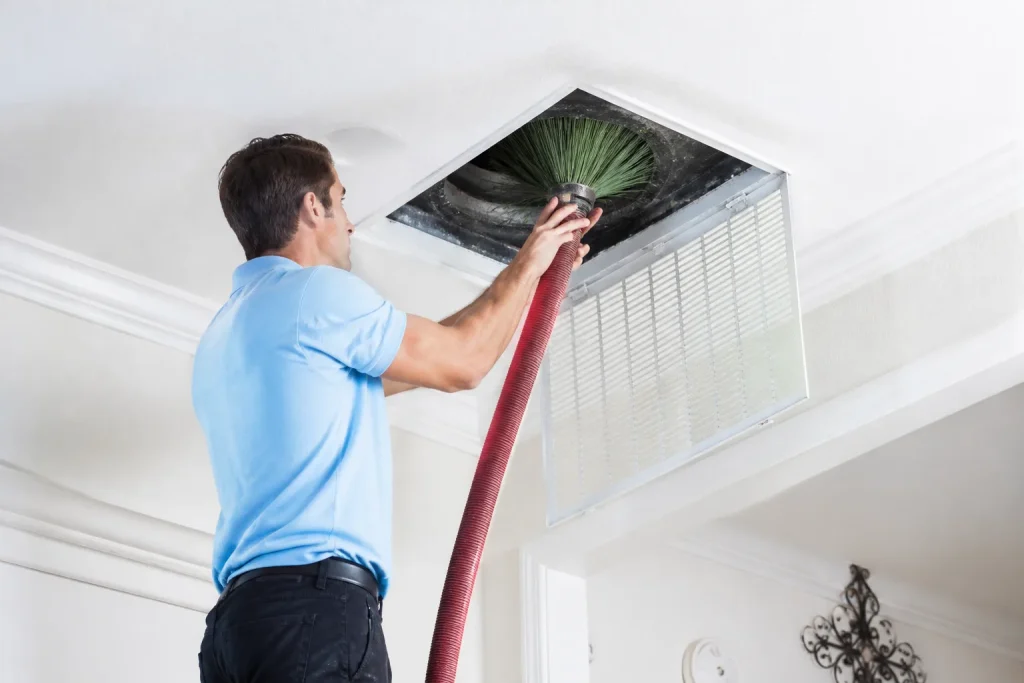
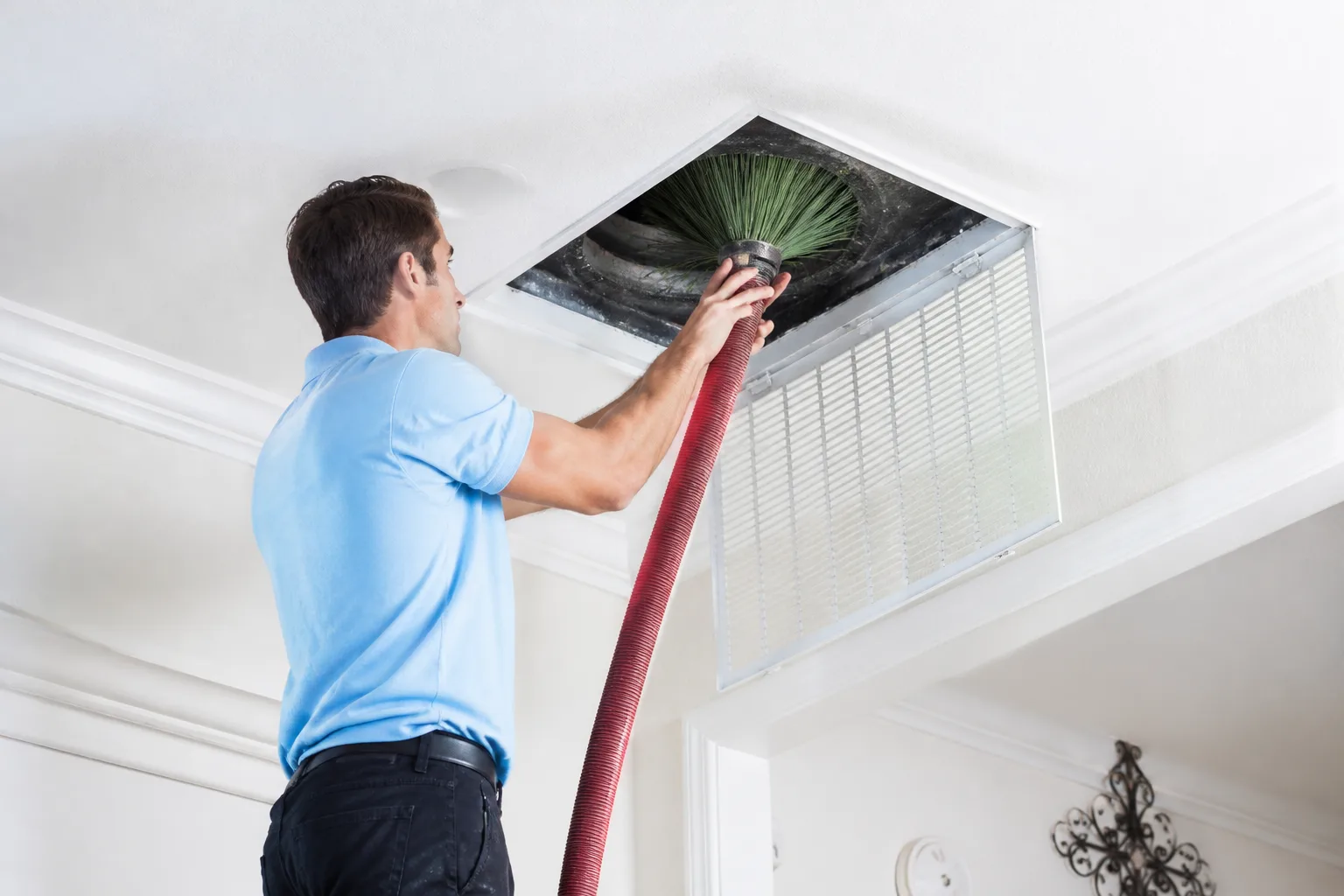
- What equipment are you using? Professional rotary-brush systems and HEPA-filtered vacuums are purpose-built for HVAC work. Consumer shop vacs and a hose are not. We use Rotobrush rotary-brush systems and Nikro vacuum equipment – the same class of tools commercial HVAC contractors use.
- How will you keep debris from spreading? Containment and negative air during cleaning is the answer you want to hear.
- Will you check for leaks and disconnected runs? If a company only cleans, they won’t catch the leaks that cause the problem to return. We repair and seal as part of the same visit when the system needs it.
- What happens after cleaning? Sanitizing and treatment options, and whether they supply air quality products afterward. We install Honeywell and Aprilaire products when a homeowner wants to keep improving the air after the clean.
- Is the price set per job by a written estimate? It should be, agreed before work starts.
And while we’re on the subject of the whole air pathway: dryer vents are part of the same conversation. A clogged dryer vent is a documented fire hazard, and it’s the kind of thing worth addressing at the same visit as dryer vent cleaning. If your emergency started with heat or smoke anywhere in the home, it’s worth checking.
When to call a pro
Call a professional the moment you smell burning, see smoke from a vent, find visible mold near a grille, or have had a fire or water event that touched the system. Those aren’t situations to sit on, and they’re not situations to solve with a shop vac from the garage – the risk of spreading contamination is real, and the wrong action in the first hour costs more to fix later.
For a homeowner who wants a straight, professional run at the full system, our air duct cleaning service covers the ducts end to end, and HVAC cleaning takes on the equipment side of the pathway. If the problem turned out to be leaks or disconnected runs, we handle that too. Our technicians have up to 12 years of experience, and we use professional-grade tools because the results depend on them.
Related services in Westpark
Whole-system air duct cleaning, dryer vent cleaning, HVAC cleaning, plus duct repair and sealing and air quality sanitizing. Start with Westpark Air Duct Cleaning if you’re not sure which one fits.
The Bottom Line
If you take one thing from this page, make it the shutdown. Turn the system off, cut power at the breaker if anything smells or looks like it’s burning, and don’t run the fan to see if the smell clears. Then write down what you noticed, gather the system age and duct type, and call someone who can tell you whether it’s a cleaning job, a repair job, or a component that needs an HVAC technician.
If you’re in Westpark and need help, Westpark Air Duct Cleaning offers free estimates – call (877) 820-9652. We answer 24/7. Fast dispatch from 7am to 7pm, Sunday through Friday. The estimate is free, and the written estimate sets the price before any work starts, so there are no surprises once the equipment is on site.
Frequently Asked Questions
Emergency air duct cleaning is priced per job from a written estimate, and the estimate is free. We don’t publish a flat teaser number because system size, duct type, and whether the job is standard maintenance or smoke/contamination cleanup all change the scope. The written estimate sets the final price, agreed before any work starts. Call (877) 820-9652 for an exact quote.
No. Running the fan or setting the thermostat to fan-only can pull debris and smoke residue through every room in the house, making the problem worse and the cleanup more involved. Turn the thermostat off, cut power at the breaker if there’s any burning smell or smoke, and ventilate with windows instead. Then call (877) 820-9652.
It depends on the symptom. Musty odors, visible dust, and staining at the vents usually point to a duct issue. A burnt smell, soot around the furnace, or a system that trips the breaker points to a component that needs an HVAC technician. When you’re not sure, describe the smell and when it appears, and we’ll help you tell the difference. Call (877) 820-9652 for a free estimate.
Have the system age, the duct type if you know it, the event that triggered the call (fire, smoke, remodel, water leak, new home), and a short description of what you’re seeing and smelling. Photos of any staining at a vent help too. Those details let us tell you honestly whether cleaning will fix it. Call (877) 820-9652 to walk through it.
Written by the team at Westpark Air Duct Cleaning.
Need Air Duct Cleaning Help?
Call Westpark Air Duct Cleaning - the local pro we connect you with is licensed and insured, here with fast help in Westpark.
(877) 820-9652